Creamer Media’s Engineering News Online
Advanced Search


We have detected that the browser you are using is no longer supported. As a result, some content may not display correctly.
We suggest that you upgrade to the latest version of any of the following browsers:
         
close notification
powered by
GOLD 1360.10 $/ozChange: -5.72
PLATINUM 1455.00 $/ozChange: -6.70
R/$ exchange 9.40Change: -0.09
R/€ exchange 12.07Change: -0.07
 
Defence & Electronics
 
SA Defence Electronics Company Fills Gap In World Markets
 
22nd February 2008
TEXT SIZE
Text Smaller Disabled Text Bigger
 

Specialist South African radar and related systems company Reutech Radar Systems (RRS) hopes to be able to win export orders for its new RSR 900 StealthRad family of radars in the near future. StealthRad is an acronym for stealthy radar.

"We're hoping to secure an export order for StealthRad in the next two months," reveals RRS CEO James Verster. "It would be in what we call a ‘homeland security' role, specifically border control."

The StealthRad family fills a gap in the world radar surveillance market. "Its a fantastic little product, its technical performance is quite impressive," he enthuses, "there is nothing like this out there." It was launched 18 months ago and has been developed and trialled since then. All the system's qualified software is based on software already developed and proved by the company on radars in service with both army and navy clients.

StealthRad is a family of low-cost, high-mobility, difficult to detect, short-range, persistent surveillance radars, primarily intended for homeland security missions but with other potential applications as well. "There is a big requirement for this kind of radar, from both armies and navies, for border, river, and coastal surveillance," he reports. "We've had a huge response from the international market. It also has applications for artillery surveillance, and we are having talks with a potential client, an artillery corps, in this regard."

The StealthRad family are frequency modulated continuous wave (FMCW) radars.
FMCW radars have a low continuous power output, which increases reliability, reduces component cost, and make them more difficult to detect.

The RSR 900 StealthRad family is composed of five main models divided into two modes of operation. These are - continuous scanning surveillance, and sector scanning surveillance. The StealthRad continuous scanning surveillance radars have a unique architecture which means they are simultaneously optimised for both surface and air targets. They have 360 ˚ coverage. The sector scanning surveillance radars have a lower scan speed and can "stare" at targets, giving them a high-resolution capability; they are optimised to detect and identify small moving targets. They are intended to cover pre-defined sectors.

The StealthRad family comprises the Spider (subdivided into the RSR 940 and RSR 942), the Ngada RSR 950, the Kestrel RSR 952, the Seagull RSR 960, and the Fish Eagle RSR 970. The Spider RSR 940 and RSR 942 are both highly mobile, rapidly-deployable, land-based systems; the former is a continuous scanning model and the latter is a combined continuous and sector scanning model.

The Ngada RSR 950 is a man-portable sector scanning system, optimised for use on the battlefield, while the Kestrel RSR 952 is a mast-mounted version of the Ngada, optimised for fixed sector surveillance. The Seagull RSR 960 is a ship-mounted continuous scanning model, but it can also be employed in the sector scanning mode, whereas the Fish Eagle RSR 970 is a transportable, land-based, continuous scanning system optimised for coastal surveillance.

While the local market is too small and too intermittent to secure the future of the company, making exports essential, that does not mean that the domestic market is unimportant. "Its extremely important for us to win local orders and have local support," highlights Verster.

"Without that, we are certainly not going to penetrate the international market." But the international market is essential to the survival and growth of the business. "Currently, our sales are about 60% local and 40% international," he reports. "I'm aiming to reverse this - 40% local and 60% international - in the next two years, and I want to achieve revenue and earnings growth of around 15% a year."

Not long ago RRS' parent group, Reunert, put the radar company on the market, only to subsequently to decide not to sell it. "Our parent changed its mind because the types of offers coming in made no commercial sense - the bidders had no idea of the value of RRS and were all focused on the South African, and not the international, market," he explains. "Regarding the future, our parent recognises us as a strategic capability and as part of the country's defence related industries."

RRS recently won a contrract to supply the Royal Norwegian Navy with its RSR 210N air/sea surveillance radar (see Engineering News February 8, 2008).

* To watch a video of James Verster discussing RRS's recently developed technology, log on to www.engineeringnews.co.za and click on 'Video Clips'.
Edited by: Martin Zhuwakinyu


To subscribe to Engineering News's print magazine email subscriptions@creamermedia.co.za or buy now.

FULL Access to Mining Weekly and Engineering News - Subscribe Now!
Subscribe Now Login


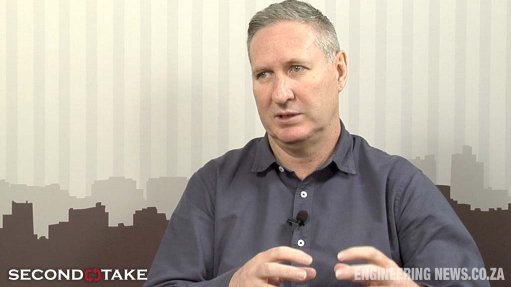
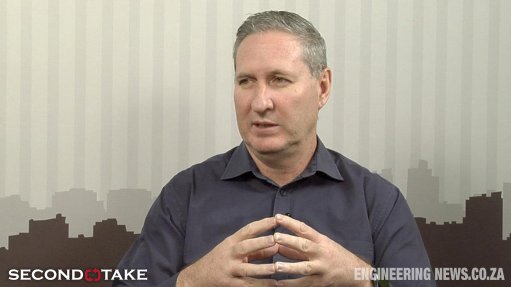
Keith Campbell asks RRS CEO James Verster if it is really possible to sustain a radar business in South Africa, given the sophistication of the products and the international competition. (22-02-2008) Cameraperson: Danie de Beer. Editing: Darlene Creamer
This video is licensed under a Creative Commons License
GET SELECTED VIDEO
Embed
Selected Video Download (3.73mb)