Creamer Media’s Engineering News Online
Advanced Search


We have detected that the browser you are using is no longer supported. As a result, some content may not display correctly.
We suggest that you upgrade to the latest version of any of the following browsers:
         
close notification
powered by
GOLD 1389.49 $/ozChange: 1.24
PLATINUM 1460.50 $/ozChange: 2.00
R/$ exchange 9.53Change: 0.05
R/€ exchange 12.37Change: -0.07
 
 
FIFA WORLD CUP
 
SA may just break even on 2010 World Cup, research shows
 
19th March 2010
TEXT SIZE
Text Smaller Disabled Text Bigger
 

South Africa could possibly break even on the expenditure of the 2010 FIFA World Cup, but only in a best-case scenario, estimates Human Sciences Research Council executive director of the Centre for Service Delivery research programme Dr Udesh Pillay.

He explains that the country's expenditure on the event has been R63-billion, which is 6,4% of the 2010/11 gross domestic product (GDP). Currently, the only known revenue is R2-billion from FIFA and it is estimated that the event's contribution to the GDP will be 0,5%.

Taking these figures into account, Pillay says that the best-case scenario deficit that South Africa will experience is R26,1-billion, while the worst-case scenario deficit will be R56,1-billion. But these figures do not take ticket sales, marketing and merchandising into account.

He estimates that ticket sales, marketing and merchandising could add up to a total of about R20-billion, therefore it could be possible to break even in a best-case scenario, but there is a current possible conundrum. There are a total of 3,2-million tickets available for the event. To date, local supporters have bought about 350 000 tickets, or 11%, of these, resulting in 2,8-million remaining tickets.

If each foreigner buys about four tickets, this means that it is necessary for about 700 000 foreigners to buy tickets, but current estimates state that 450 000 foreigners, which Pillay says is already a high figure, will probably purchase tickets.

"If local sales do not increase and only 450 000 foreigners attend, the potential shortfall from ticket sales could be half-a-billion rand," he says.

There are also concerns regarding readiness, ability to cope, cost escalation, displacement of expenditure, safety and security, sustainability, institutional arguments, political will, the Zuma administration and strikes and protest action.

Pillay adds that five years ago, one in three South African hoped to benefit from the 2010 World Cup, but this fell to one in five in 2009 and only about 1% of South Africans now believe that 2010 will bring benefits from service delivery and upgrades in infrastructure. Upgrades have also been more sector-based for 2010, rather than at a municipal level and do not constitute part of the integrated development plans of the country.

However, there will be some positive spinoffs from the event and the legacy could be social, developmental and economic. He points out that a 0,5% contribution to the GDP is not insignificant and 130 200 direct, indirect and induced jobs have been created, although these are mostly for short durations and do not provide a large amount of skills transfer.

The expenditure has been South Africa's equivalent of a fiscal stimulus package and has given the economy a slight boost. It has created the momentum to accelerate the government's R846-billion infrastructure spending programme and led to an improved public transport system, that has been partially integrated.

The event also still offers some of the promise of development, poverty reduction, job creation, GDP contribution, accelerated service delivery, trade and investment, a tourism boost, sports development, expedited investment in infrastructure and increased international standing, as well as softer, less tangible legacies.

Pillay says that the World Cup is putting South Africa on the international map and the expedited investment in specific types of 2010 infrastructure is a big positive for the country. There have been developments, but less so the fulfilment of dreams.

"The huge hype provides hope and bodes well for a fractured society. The programmes continuing on 2010 projects, such as the road improvements, will continue to create a number of employment opportunities after the event," he concludes.

STORY HIGHLIGHTS
>> South Africa's expenditure on the 2010 FIFA World Cup has been R63-billion
>> Ticket sales, marketing and merchandising could add up to a total of about R20-billion

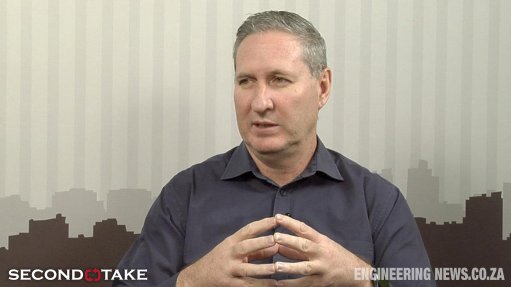
To watch a video of HSRC executive director of the Centre for Service Delivery research programme Dr Udesh Pillay discussing South Africa's expenditure on the 2010 FIFA World Cup go to www.engineeringnews.co.za and click on 'Multimedia' and then on 'Video Clips, or watch it on the Engineering News App on your iPhone.


Edited by: Martin Zhuwakinyu


To subscribe to Engineering News's print magazine email subscriptions@creamermedia.co.za or buy now.

FULL Access to Mining Weekly and Engineering News - Subscribe Now!
Subscribe Now Login


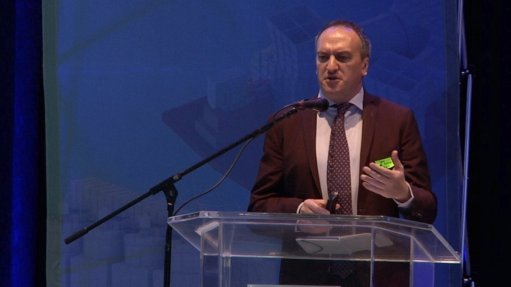
HSRC executive director of the Center for Service Delivery Research Programme Dr Udesh Pillay discusses South Africa's expenditure on the 2010 FIFA World Cup. Cameraperson: Nicholas Boyd. Editing: Darlene Creamer.
This video is licensed under a Creative Commons License
GET SELECTED VIDEO
Embed
Selected Video Download (8.03mb)


Facts
In fact
By 2008, FIFA had already ensured through television rights, ongoing corporate sponsors and event-based sponsors that the 2010 World Cup would be 25% more profitable than the 2006 event