Creamer Media’s Engineering News Online
Advanced Search


We have detected that the browser you are using is no longer supported. As a result, some content may not display correctly.
We suggest that you upgrade to the latest version of any of the following browsers:
         
close notification
powered by
GOLD 1734.30 $/ozChange: -2.47
PLATINUM 1655.00 $/ozChange: 9.00
R/$ exchange 7.57Change: -0.02
R/€ exchange 10.02Change: -0.11
 
ENERGY EFFICIENCY
SA completes energy-efficiency retrofit of 4 000 State buildings
 
7th July 2009
TEXT SIZE
Text Smaller Disabled Text Bigger
 

The Department of Public Works on Tuesday said that it has completed the energy-efficiency retrofit of some 4 000 public buildings in South Africa, and was also taking seriously the challenge of water efficiency and recycling.

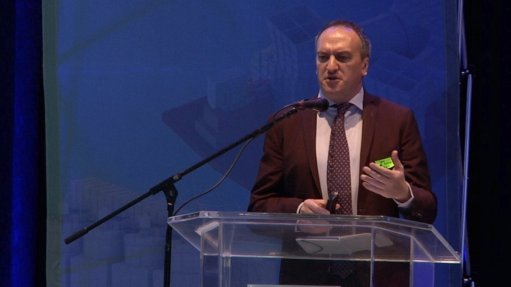
Addressing delegates at a green building convention in Sandton, Deputy Minister of Public Works, Hendrietta Bogopane-Zulu, noted that the department needed assistance from green building professionals so that it could do more in this regard.

Integrating green building into the rehabilitation projects of public buildings, and facilities management thereof, was said to be a priority.

“We are in an era of renewal,” she said, referring to the new government administration, and added that this included the built environment, as the government sought to provide green and sustainable cities, human settlements and amenities.

She further noted that participating in green building, and making use of innovative green technologies would hopefully have the added benefit of creating so-called ‘green jobs’.

The South African government has indicated the need to create some 500 000 jobs. It was expected that about 10% of these jobs could be ‘green jobs’.

Bogopane-Zulu noted the difficulties of pursuing green building in a developing country and questioned whether or not built environment professionals were rising to the specific challenges faced in South Africa.

She said that some of the challenges to consider were to renovate buildings to make them cost effective; to use new technologies; to find new waste management solutions; to make greener homes; to build cities independent of the traditional electricity grid; and to find alternatives to traditional sewerage systems.

The Council for Scientific and Industrial Research (CSIR) built environment researcher Nosizo Sebake assured the Deputy Minister that the built environment professionals gathered at the convention were committed to rising to these challenges.

CSIR research group leader Llewllyn van Wyk further emphasised the ability of green building to act as an instrument of transformation, stressing the importance of exercising opportunities to encourage human interaction with the environment.

Van Wyk said that the message from Bogopane-Zulu was encouraging, and added that in order to get established institutions to do more to deliver on their mandate, it would take leadership, as well as understanding and appreciation of the challenges. Built environment professionals would need to create awareness and make leaders mindful of the needs of the society, which they sought to cater for.

Edited by: Mariaan Webb
FULL Access to Mining Weekly and Engineering News - Subscribe Now!
Subscribe Now Login


Hide Comments  
 
Readers Comments
 
image image
The process of making requires reconsideration. By increasing the recycling of materials like excavated soils and rock, demolished materials and selected materials from the various waste streems, the opportunity arises where the unemployed and unskilled can enter the maket. The recycling of material is labour intensive, reduces the amount of waste going to landfill and gives value to waste. Their are volumes of excellent building materials going to dump sites. In some cases up to 50% of the landfill material is from the constuction industry alone! New damaged materials (laminated glass, tiles. granite tops etc) are dumped. There is a need for economic housing, there is massive unemployment. Join these concepts to solve both these problems and more. I have demonstrated this concept with 13 prototype economic houses at Mbekweni near Paarl. The professions have the knowhow, and the regulations are not as limiting as often thought. Possibly an article to share this project where engineering concepts were put to use in a creative way and with a very low carbon footprint to boot?
image image 
image
Vernon Collis (PrEng PrArch) on 14 Jul 09