Creamer Media’s Engineering News Online
Magazine in Store Now!
Advanced Search
 
 
powered by
GOLD 1127.46 $/ozChange: 15.19
PLATINUM 1634.50 $/ozChange: 10.00
R/$ exchange 7.36Change: 0.04
R/€ exchange 10.14Change: -0.01
 
 
SKILLS DEVELOPMENT
SA casts new skills-development die amid acute shortages
0 COMMENTS  |  
ADD A COMMENT PRINT
 
 
7th September 2007
TEXT SIZE
Text Smaller Disabled Text Bigger
 
South Africa is casting a new die to supply the economy with the skills required to achieve the economic growth objective of 6% a year.

“This is not business as usual,” National Business Initiative (NBI) director: education and skills Marianne Scott tells Engineering News.

Beyond providing the secretariat for the Joint Initiative on Priority Skills Acquisition (Jipsa), the NBI is actively involved in an initiative in which six of South Africa’s largest companies – Sasol, ArcelorMittal South Africa, Anglo Platinum, Gold Fields, Eskom and Transnet – have combined forces as the Technical Skills and Business Partnership to tackle the national skills shortage.

The working group facilitaed by the NBI has been set up under this initiative, and a plan is currently being prepared to restock and stock up the South African economy with artisan, technologist, technician and engineering skills.

These skills are in short supply as South Africa is rolling out large public and private infrastructure projects at an unprecedented rate.

Government alone is spending R430-billion on infrastructure in a bid to realise the targets of the Accelerated and Shared Growth Initiative for South Africa (Asgisa).

The private sector is spending billions more in the run-up to the 2010 soccer World Cup, while Asgisa’s targets are to halve unemployment and poverty by 2014.

TARGET: 50 000 ARTISANS IN THREE YEARS

To achieve these targets, it is estimated that South Africa needs to train, among other skilled personnel, 50 000 artisans in the next four years.

The Sasol, ArcelorMittal South Africa, Anglo Platinum, Gold Fields, Eskom and Transnet working group has compiled a framework document that is taking into account the current requirement for skilled personnel in South Africa, the quality of skills available and the nature of the labour market.

Scott says that, based on their findings, these companies will follow through on their commitment to skills development by making a significant investment in training facilities and educators.

These companies will also act as anchor companies in their different industry sectors to involve other relevant companies that were not part of the initiative from the beginning.

The framework document is part of the overall plan that the working group will present to the next meeting of the Jipsa Joint Task Team in October.

“The initiative is not a numbers game. Instead, the focus is on creating a well-skilled workforce over the longer term and a well-stocked labour pool that all companies can access,” Scott says.

If the plan were accepted, implementation and rollout would start by the beginning of next year.

Scott emphasises that the initiative commits the six founding members in the group to voluntarily increasing the skills development initiatives that they would usually undertake.

“The benefit to business is that a larger skills pool would, for instance, reduce the competition for skilled tradespeople that is currently being experienced, and enable more companies to find the skilled personnel they require.

“The availability of suitably skilled personnel will make it easier and less expensive for everyone to do business,” Scott says.

She tells Engineering News that the construction industry is looking at a similar initiative to grow a skills pool into which all construction companies can dip to find the skills they need.

Another initiative of five construction companies – Murray & Robberts, Aveng and Grinaker-LTA, Basil Read, Group Five, and WBHO – focuses on public further education and training (FET) colleges.

A memorandum of understanding between the five listed companies, the Department of Education and the NBI was signed in November 2006.

The intent of the memorandum of understanding is to indicate the commitment of the partners to deepen the foundations for an ongoing, mutually beneficial partnership between FET colleges and the civil engineering and construction industry to build an expanded, high-quality skills base to meet the needs of the industry and the country.

The vision of the partnership is to develop selected colleges into centres of excellence in the field of education and training for the building and civil construction industry and for the colleges to become preferred providers of well-trained and educated personnel for the industry.

Tackling A mismatch

To align the requirements of business with the training and education provided by South Africa’s schools, training FET colleges and universities, there has been growing interaction between business, government and labour.

Jipsa was established about a year and a half ago. Jipsa’s Joint Task Team comprises government ministers, the CEOs of some of South Africa’s largest companies, members of organised business associations and organised labour. Deputy President Phumzile Mlambo Ncguka heads the task team.

Scott says that several stumbling blocks have to be overcome to bridge the divide between the skills available to the economy and the skills demanded by the economy.

Research undertaken by the University of Cape Town’s (UCT’s) Development Policy Research Institute – which was commissioned by the Business Leadership South Africa and funded by Standard Bank – pointed out the mismatch between the large pool of low-skilled unemployed workers and the unfilled vacancies in high-skilled positions.

It is expected that this skills mismatch, which results in structural unemployment, will continue as skilled workers are required to keep up with technological advances and the pressure to remain competitive in global markets.

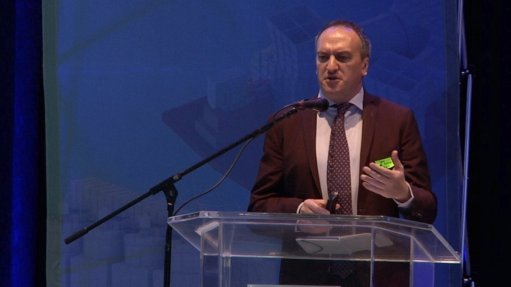
Speaking at a recent skills conference, the director of the UCT’s Development Policy Research Unit, Dr Haroon Bhorat, said that the skills shortage in South Africa could be attributed to insufficient technical training at company-level as well as at educational institutions.

At company-level, weak economic conditions in the 1980s and 1990s hamstrung training.

Company-level training further declined as a result of confusion concerning the future of apprenticeships and the appropriateness of learnerships in technical occupations.

School learners performed poorly in key study areas, such as mathematics and science.

Concerning FET colleges and historically-black institutions, the research indicated concerns about the quality of education.

The research also found that the enrolment of large numbers of students, instead of focusing on the quality of education exacerbated the problem.

Interventions to tackle these challenges have achieved mix successes.

While 25% of South Africa’s budget is awarded to education, some schools still lack basic services, learning materials and teachers.

On the positive side, the recapitalisation of FET colleges to the tune of R1,9-billion bodes well for the training of artisans.

The NBI has been engaging with the FET sector in the construction, mining and steel industries, in particular, to ensure that courses offer the relevant skills training required by employees.

Scott says that the outcomes have been fruitful. However, she adds that South African employers are waiting for clarity on issues surrounding learnerships, apprenticeships and the introduction of new curriculum vocational (NCV) courses.

Among other matters, these issues include government funding and the institution of similar taxing regimes.

One of the issues that has received considerable attention is the four routes that a person can take to become an artisan.

These are the apprenticeship route, the learnership route, the recognition of prior learning route and the intership route after the completion of certain NCV programmes at FETs.

These routes will be gazetted for public comment before they are entrenched in legislation.

The Department of Labour will be presenting a Bill to cabinet in November to modernise the way in which artisans are trained.

The new legislation will bring artisan training in line with the Constitution and other legislation, such as the Basic Conditions of Employment Act.

The proposed Bill will incorporate the 17 sections of the Manpower Training Act that were retained when the Skills Development Act was promulgated in 1998.

Thinking out of the box

To meet the massive demand for skills required by the economy, South African organisations are required to think out of the box.

One of the most promising local initiatives to timeously train artisans has its roots in a social responsibility project funded by the Steel and Engineering Industries Federation of South Africa (Seifsa).

In the last two years, Seifsa has developed and proved the accelerated artisan training model in a bid to unblock the engineering skills pipeline.

Seifsa skills development services manager Janet Lopes says that the average duration of apprenticeship training is usually more than three years.

The training model developed in a joint effort by Seifsa and the Fundi training centre on the East Rand reduces the training programme to 80 weeks.

Seifsa has been successfully running the accelerated artisan training model at the Fundi training centre since October 2005.

The programme tackles the low apprentice intake in the manufacturing industry.

Between 1982 and 2005, the intake of apprentices declined from almost 13 000 a year to 3 400 a year. The apprenticeship intake for 2007 is a mere 3 475.

Under the Fundi accelerated artisan-training model, apprentices who have completed theoretical training at FET colleges are selected.

They then complete 24 weeks’ institutional training at Fundi, followed by a company indenture of 26 weeks.

After a total of 80 weeks’ training, the apprentices are ready to take their respective trade tests. After passing the trade test, they become artisans.

To date, 69 artisans have been trained in scarce skills trades – including boilermaker, electrician, fitter, fitter and turner, millwright and tool-jig and –die-maker – at Fundi under the accelerated training model.

The majority of the artisans that have completed the training are previously disadvantaged individuals.

Lopes says that feedback from the employers at which the apprentices were placed have all been satisfactory.

Earlier this year, Seifsa successfully applied to the Department of LabourGauteng South division for funding to train more apprentices in scarce skills trades under the accelerated training model.

The organisation obtained R3,2-million in funding, which will be used to train 132 young people in scarce skills trades.

The money comes from the Social Development Funding Window of the National Skills Fund.

Under the contract between the Department of Labour and Seifsa, Seifsa has to make a substantial contribution the cost of the project. Ninety-two participants will be trained at the Fundi training centre, and 36 at the SAJ training centre, in Wadeville.

The July intake at the Fundi training centre comprises 54 apprentices, including 24 electricians, 12 fitters and turnners, 12 boilermakers and six tool-, die- and mouldmakers.

The July intake at the SAJ training centre consists of 36 apprentices, including 12 fitters and turners, 12 boilermakers and 12 welders.

Based on the success achieved by the Seifsa initiative, the Manufacturing Engineering and Related Services education and training authority (Merseta) has approved the accelerated training model, and is funding a pilot project to train 650 artisans in 14 metal and engineering trades and 650 artisans in automotive trades.

Merseta will be directing R150-million to the project.

Speaking at a recent skills conference, Merseta CEO Dr Raymond Patel said that the organisation has been in ongoing discussions with the Department of Labour to obtain the additional funding required for rolling out the pilot project on a wider scale.

The organisation proposes that the Department of Labour allocates money from its budget surplus towards funding the accelerated artisan-training project.

Patel said that, if granted additional funding, the project, as proposed by Merseta, would increase the number of new artisans in South Africa to between 3 000 and 4 000 in the next 18 months to 36 months.

It is estimated that additional funding of R700-million a year will enable Merseta to train 13 000 artisans.

“The Setas currently do not have the financial resources to fund the training of 50 000 artisans, as required by the South African economy,” Patel states.

He added that greater emphasis should also be placed on aligning education and training curricula with the needs of employers.

“All decision-making should be based on fact.

“We must ensure that we are not training people for unemployment,” Patel said, referring to the fact that only about a third of the students who complete FET courses were able to find work.

Patel is also in favour of the creation of generic courses in scarce trades, such as welding.

“The content of courses and qualifications should move from the specific to the general.
“Artisans should be able to work in all sectors of the economy, and not be limited by the very specifics of their qualifications,” Patel stated.

The Setas that offer artisan training have combined forces to register the first three generic artisan qualifications.

“However, we believe that there should be greater interaction between the Setas.

“Together, we can do so much more,” Patel avered.

Edited by: Martin Zhuwakinyu


Hide Comments  
 
This article contains no Comments


All comments must be approved by our editors, click here to read the editorial guidelines for comments. Please allow some time for our editors to approve your comment after posting.
 * Required Fields

image
image
 *


image
image
 *
 

image
image
 

Verification Image

image
image
 * Please enter the text you see in the above image.


Facts
From January 2007, the National Certificate (Vocational) will replace the NATED courses (N1 – N3). The National Certificate (Vocational) is a new and modern qualification at levels 2, 3 and 4 of the National Qualifications Framework (NQF). This NC (Vocational) will be introduced at FET Colleges at NQF Level 2 in 2007, Level 3 in 2008 and Level 4 in 2009. The National Certificate (Vocational) is the new curriculum that is being introduced to public FET colleges around the country. It gives Grade 9 learners a Vocational alternative to an academic Grade 10 – 12 by offering industry focussed training on the NQF levels 2 – 4. These qualification are designed to provide both the theory and practice. The practical component of study may be offered in a real workplace environment or in a simulated workplace environment. It will provide students with an opportunity to experience work situations during the period of study The qualification will also provide an opportunity to enter higher education studies subject to appropriate subject combinations.