Creamer Media’s Engineering News Online
Advanced Search


We have detected that the browser you are using is no longer supported. As a result, some content may not display correctly.
We suggest that you upgrade to the latest version of any of the following browsers:
         
close notification
powered by
GOLD 1384.24 $/ozChange: -4.01
PLATINUM 1452.00 $/ozChange: -6.50
R/$ exchange 9.59Change: -0.01
R/€ exchange 12.40Change: -0.10


STEEL DEMAND
 
Restocking to drive steel demand recovery in Q1
 
10th February 2010
TEXT SIZE
Text Smaller Disabled Text Bigger
 

The medium-term outlook for South African steel demand remained uncertain, but ArcelorMittal South Africa expected first quarter sales to rise by between 15% and 20% relative to the fourth quarter of 2009, on the back of anticipated restocking, as well as some fundamental demand growth.

However, prices would probably remain flat for the remainder of the quarter, with the JSE-listed group having kept its prices stable for the past three months.

Any recovery would also be off a low base, with total dispatches having fallen 12% to 4,5-million tons in 2009, and with high-margin domestic consumption having fallen to 69%, or 3,1-million tons from 4,4-million tons in 2008.

The decline in sales volumes and prices (some of which declined by over 60% from the records achieved in the first half of 2008) resulted in a dramatic change of fortunes for the company in 2009.

Its year-on-year headline earnings descended in to loss of R440-million for the year ended December 31, 2009, compared with a record profit of R9,5-billion in the previous financial year.

Merchant inventory levels were currently estimated at about eight weeks, as compared with a historical average of ten weeks, while end-user stocks were closer to the four-week level.

Therefore, CEO Nonkululeko Nyembezi-Heita said that there was definitely room for replenishment, but warned that consumers remained cautious, following the ructions of 2009, and that this restocking would probably be "slow".

She said it was also difficult to be definitive about underlying demand, indicating that visibility would probably only begin to emerge from the second quarter.

"Steel use will be a leading indicator . . . so we could see the underlying demand coming through even before it hit the gross domestic product (GDP) numbers," she added.

The company was forecasting a 2,5% rise in South Africa's GDP for 2010, following the country's first recession in 17 years, and was particularly bullish about packaging and construction sector growth.

In fact, it expected the packaging sector to expand by 13,6% during the year and that the building and construction market would grow by 11,7%.

Manufacturing growth had been pegged at 4,8% for 2010, but the group was less bullish about transport- and automotive-sector growth rates, estimating these at 3,3% and 1,3% respectively.

The pricing outlook, meanwhile, would depend materially on the direction of the South African rand, which had emerged as one of the top-three performing currencies in 2009, after the Brazilian real and the Australian dollar.

Indeed, its decision to hold prices into February was based on the fact that the stronger rand was balancing out the effect of rising international steel prices.

The company sets its prices after analysing domestic selling prices in four markets (the US, Germany, Brazil and China) and then adjusting these to its expectations for the South African currency for the forthcoming month.


Edited by: Creamer Media Reporter


To subscribe to Engineering News's print magazine email subscriptions@creamermedia.co.za or buy now.

FULL Access to Mining Weekly and Engineering News - Subscribe Now!
Subscribe Now Login


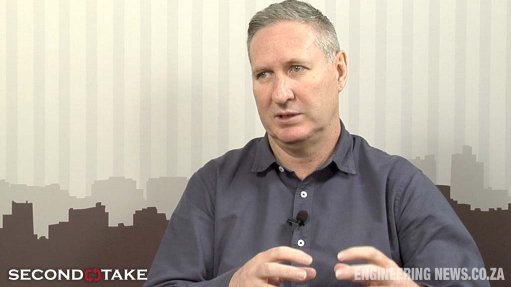
ArcelorMittal South Africa CEO Nonkululeko Nyembezi-Heita in conversation with Terence Creamer about the outlook for the steel market in South Africa. Camera Work and Editing: Darlene Creamer.
This video is licensed under a Creative Commons License
GET SELECTED VIDEO
Embed
Selected Video Download (5.56mb)