Creamer Media’s Engineering News Online
Advanced Search


We have detected that the browser you are using is no longer supported. As a result, some content may not display correctly.
We suggest that you upgrade to the latest version of any of the following browsers:
         
close notification
powered by
GOLD 1386.60 $/ozChange: -0.70
PLATINUM 1452.50 $/ozChange: -1.00
R/$ exchange 9.58Change: -0.03
R/€ exchange 12.38Change: -0.05
 
 
Renewable energy presents major opportunities for SA corporations
 
5th October 2012
TEXT SIZE
Text Smaller Disabled Text Bigger
 

Amid the uncertainty of electricity supply and rising energy costs, South African corporations should consider the move to renewable energy, as the self-generation of electricity can offer significant advantages over relying on the national grid, global strategy consultancy AT Kearney principal Martin Sprott says.

He observes that there has been a noticeable shift in the last 12 months among heavy industrial companies from relying on the national grid to adopting renewable energy.

AT Kearney associate Niriksha Singh adds that energy-intensive companies, in particular, are more likely to switch from conventional energy to using renewable energy in the near future.

“It is not always possible to get energy from the grid, especially for those companies that are located in remote areas. In these cases, self-generation is necessary,” says Sprott.
Many industrial companies are beginning to invest in biomass plants, as well as wind energy and solar energy. Sprott observes that the proposed introduction of a carbon tax has led many companies to consider the implemen- tation of renewable energy projects, as this tax will have an impact on company expenses.

Additionally, the United Nations Framework Convention on Climate Change’s seventeenth Conference of the Parties (COP17), held in Durban last year, highlighted the importance of renewable energy.

Sprott says many CEOs and senior officers have acknowledged the importance of renew- able energy. He recalls that, following the awareness raising activities around COP17, there was a noticeable uptake in carbon credit and renewable energy projects in South Africa.

However, he believes there is a need to develop coherent companywide strategies for implementing such projects, as many were only sporadically introduced.

Other challenges faced by companies considering the use of renewable energy include the geographical distance between the point of generation and the point of consumption and the lack of available materials for biomass.

Nevertheless, Sprott is hopeful that more companies will implement renewable energy projects, saying this will create good opportunities not only for the company but also for the surrounding communities where these projects are implemented.

Renewable energy offers a stable and secure electricity supply. It also reduces carbon dioxide emissions, which result not only in less carbon being taxed but also in a company’s reputation being boosted.

Singh agrees that the implementation of renewable energy is a good strategy for all companies, as it drives transformation and communicates to staff and customers that the companies are responsible.

“This is a good way for companies to build loyalty among their customers. A drive towards clean energy can lead to better operational and financial performances,” she notes.

Industries such as mining can imple- ment renewable energy projects to create job opportunities, provide electricity for local communities and as a means of community engagement.

For instance, mining companies can implement biomass projects and involve the local communities in growing biomass resources.

Sprott advises companies to consider partnership structures that will help overcome the capital constraints faced by renewable energy projects, but says a major barrier is the low rate of the return on investment.

“Typical retail companies and companies in other industries will want to see a 10% internal rate of return with relatively short payback periods. Most renewable energy projects, however, have lower rates of return and payback periods of up to 20 years.

“Companies need to find partners that have balance sheets and business models in place to support renewable energy projects. Such companies could be utility companies that negotiate offtake agreements with their partner companies,” he suggests.

Sprott says international development agencies and international development banks can potentially provide risk capital to companies to establish renewable energy projects.

Edited by: Chanel de Bruyn


To subscribe to Engineering News's print magazine email subscriptions@creamermedia.co.za or buy now.

FULL Access to Mining Weekly and Engineering News - Subscribe Now!
Subscribe Now Login
 
 
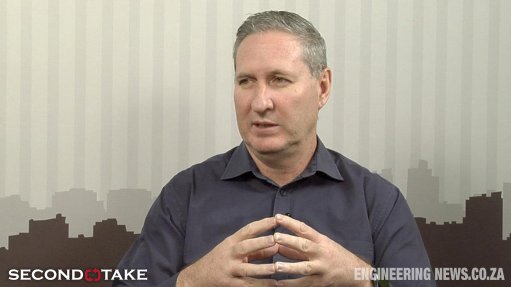
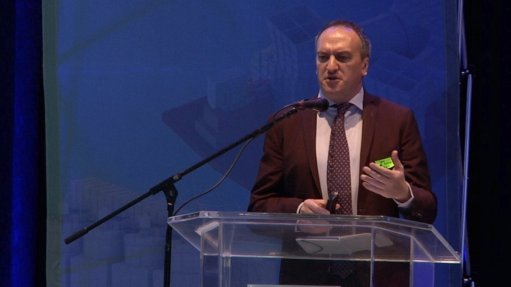
MARTIN SPROTT Many CEOs and senior officers have acknowledged the importance of renewable energy
 

MARTIN SPROTT Many CEOs and senior officers have acknowledged the importance of renewable energy