Creamer Media’s Engineering News Online
Advanced Search


We have detected that the browser you are using is no longer supported. As a result, some content may not display correctly.
We suggest that you upgrade to the latest version of any of the following browsers:
         
close notification
powered by
GOLD 1355.00 $/ozChange: -10.82
PLATINUM 1452.00 $/ozChange: -9.70
R/$ exchange 9.39Change: -0.07
R/€ exchange 12.08Change: -0.08
 
RENEWABLE ENERGY
 
Renewable energy firm wants small solar PV systems included in Refit
 
24th August 2009
TEXT SIZE
Text Smaller Disabled Text Bigger
 

Solar photovoltaic (PV) installation and monitoring firm, The Power Company, on Monday said that there were numerous benefits to the inclusion of small-scale solar PV systems under the renewable energy feed-in tariff (Refit).

There was a push from the industry, for the National Energy Regulator of South Africa (Nersa) to consider including small-scale PV systems in the second phase of the Refit, the Power Company Gauteng regional manager Alan Curtis told Engineering News Online.

Nersa published the initial Refit in March this year, which included concentrated solar power (CSP), wind power, small hydro power, and landfill gas technologies.

A qualifying renewable energy generator under phase two of the Refit, a draft of which was currently out for comment, would be defined as a new investment in electricity generation using the following technologies: CSP plant without storage; solid biomass; biogas; solar PV systems, large (more than 1 MW) ground or roof-mounted; concentrating PV; and CSP central tower.

“We have said: bring down the 1-MW level to residential standing, because it’s going to cost R60-million or R70-million to establish a solar PV installation that can generate as much as 1-MW,” said Curtis.

Every home could install a PV system and generate some 25 kWh or 30 kWh of power, and feed that back into the national electricity grid, during off-peak times, when not much power was needed domestically, but that could feed industrial sources. “So they would be small applications, but many of them, and that would have the same effect as a large system,” added Curtis.

The prospect of a homeowner being able to sell power to the utility, would make the installation of a PV system significantly more attractive. In addition to financial and environmental benefits for a consumer, it would also alleviate pressure from the stressed Eskom grid.

The Power Company provides solar PV solutions for the residential consumer level, with potential for more commercial and industrial applications.

The company conducts a consultation process, and then provides a modular solar solution for the home or office. Energy is generated from the sun through the solar panel, passes through inverters, and is then stored in batteries.

Electrical appliances can be operated independent of the national grid power supply, and the switchover, from grid power to solar power is fast enough to ensure that critical equipment such as computer servers, or lights and equipment in hospitals were not compromised.

“There is a tremendous amount of potential for a lot of players to come into this industry,” noted Curtis, and added that there was significant job creation potential in the installation of the solar PV systems, as well as the electricity cost savings, and environmental savings associated with renewable energy.

Small-scale PV installation was said to be perfect for the development of small- to medium-sized enterprises, and electrician skills could easily be adapted to install solar PV systems.

The Power Company did not prefer a particular technology vendor, and used equipment, be it solar panels, inverters or batteries, from different suppliers, so that specialised solutions could be offered.

“I think we need to be aware, as an industry, of people bringing in very cheap, but very substandard products. The opportunity will present itself for people to take advantage of the situation, but we have an organisation called Sessa, which is trying to monitor the quality of workmanship within our industry,” said Curtis, noting the challenges of this industry, which was still in its infancy in South Africa.

Edited by: Mariaan Webb


To subscribe to Engineering News's print magazine email subscriptions@creamermedia.co.za or buy now.

FULL Access to Mining Weekly and Engineering News - Subscribe Now!
Subscribe Now Login


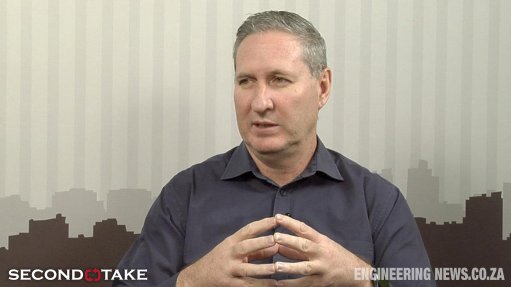
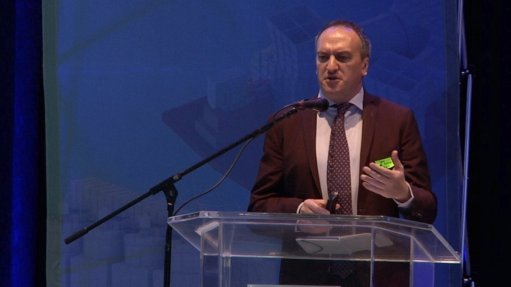
The Power Company Gauteng regional manager Alan Curtis discusses renewable energy potential, and challenges, in South Africa. (24/08/2009) Cameraperson: Nicholas Boyd Video editing by: Darlene Creamer
This video is licensed under a Creative Commons License
GET SELECTED VIDEO
Embed
Selected Video Download (6.75mb)
 
The Power Company Gauteng regional manager Alan Curtis discusses renewable energy potential, and challenges, in South Africa. (24/08/2009)
Cameraperson: Nicholas Boyd
Video editing by: Darlene Creamer
 

The Power Company Gauteng regional manager Alan Curtis discusses renewable energy potential, and challenges, in South Africa. (24/08/2009) Cameraperson: Nicholas Boyd Video editing by: Darlene Creamer