Creamer Media’s Engineering News Online
Advanced Search


We have detected that the browser you are using is no longer supported. As a result, some content may not display correctly.
We suggest that you upgrade to the latest version of any of the following browsers:
         
close notification
powered by
GOLD 1363.00 $/ozChange: -2.82
PLATINUM 1455.50 $/ozChange: -6.20
R/$ exchange 9.46Change: -0.14
R/€ exchange 12.16Change: -0.16
 
 
Group to assess Mpumalanga biomass-to-energy potential
 
9th September 2011
TEXT SIZE
Text Smaller Disabled Text Bigger
 

Engineering, management and specialist technical services group Aurecon and sugar producer TSB Sugar have been contracted by the Mpumalanga Cane Growers Association to undertake a feasibility study to investigate boosting economic development in rural areas in Mpumalanga’s Nkomazi district using renewable-energy projects.

The €400 000 nine-month project, which is partially funded by the governments of Finland and Austria and hosted by the Development Bank of Southern Africa, aims to assist previously disadvantaged small-scale sugar cane growers in increasing their profitability through biomass-to-energy (B2E) interventions.

“This will be done by deter-mining the feasibility of con-verting excess sugar cane residue, which is traditionally burnt on a field, into tradable commodities, such as electric-ity and biofuels,” says Aurecon project manager Jean Bouwer.

The project, which will integrate Aurecon’s Integrated Rural Energy Solution (IRES) initiative, will contribute to local economic development and government’s ‘electricity for all’ undertaking.

Further benefits include reducing deforestation and the ecological impact invader plant species have on the area, as well as the impact of round wood supply, which is diminishing owing to current charcoal practices.

The IRES initiative com-bines three tried and tested development models to further the success of rural develop-ment. These include converting B2E, cultivating energy crops and building capacity in terms of income creating activities in the rural area.

“Advances in renewable energy, including electricity- and heat-generation technol-ogies, have delivered new, more versatile and well-priced B2E conversion plants,” he says.

A small 2 MW generation plant, for example, will create more than 100 permanent jobs, sustained through the sale of about 200 t of charcoal and about 50 000 of bio-oil, says Bouwer.

As more readily available fuels and electricity will be on hand at affordable prices, there will be less dependence on natural wood resources for energy sources, further reducing deforestation and land erosion.

Further, the introduction of an energy crop that yields both commercial produce, such as fruit, grain and sugar, and feedstock is beneficial to the rural community, as energy cannot be produced if the crops are not cultivated.

An energy crop promotes food security and can stimulate economic upliftment through the sale of the excess commod-ities to markets outside the community.

“Meanwhile, basic infrastructure, such as water supply, sanitation, energy and roads, is developed, which underpins socioeconomic development and has the potential to boost the quality of life of the people,” says Bouwer.

The provision of infrastruc-ture can be realised through the revenue generated from the sale of solid and liquid fuels, electricity and commercial produce.

A phased approach to the project is envisaged, where the small-scale growers’ existing operations are being slowly transformed by enabling the growers to produce solid and liquid fuels for the retail market and electricity for their own use while growing sugar cane.

Aurecon’s partners in the project are the Mpumalanga Cane Growers Association, the South African Cane Growers Association and TSB Sugar.

Edited by: Chanel de Bruyn


To subscribe to Engineering News's print magazine email subscriptions@creamermedia.co.za or buy now.

FULL Access to Mining Weekly and Engineering News - Subscribe Now!
Subscribe Now Login
 
 
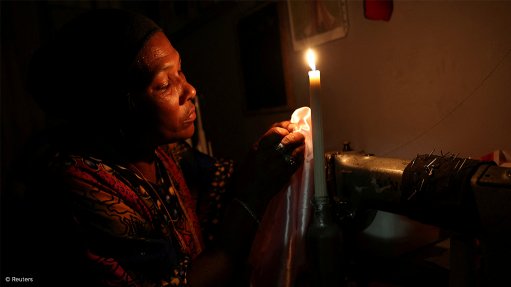
A HELPING HAND Aurecon hopes to assist previously disadvantaged small-scale sugar cane growers in increasing their profitability through biomass-to-energy interventions
 
Picture by: Bloomberg
A HELPING HAND Aurecon hopes to assist previously disadvantaged small-scale sugar cane growers in increasing their profitability through biomass-to-energy interventions