Despite the considerable potential that exists to produce electricity using renewable energy in Southern Africa, renewable-energy projects have, to date, been largely limited to off-grid, small-scale applications.
However, the renewable-energy market in South Africa is expected to grow exponentially in the next few years, largely owing to the announcement of the renewable-energy feed-in tariff (Refit) in March by the National Energy Regulator of South Africa (Nersa).
This is according to a study undertaken by international growth partnership company Frost & Sullivan, which indicates that the revenue earned by the renewable-energy sector is expected to increase tenfold, from $28,4-million in 2008 to about $262,3-million by 2015.
This expected exponential growth is good news for local renewable-energy consulting and project development firms.
One such company is Cape Town-based renewable-energy consulting and project development firm Aurora Power Solutions.
Established 18 months ago, Aurora Power Solutions has a portfolio of 200 MW of solar sites under development and is focused on delivering a host of project development services for the renewable-energy sector.
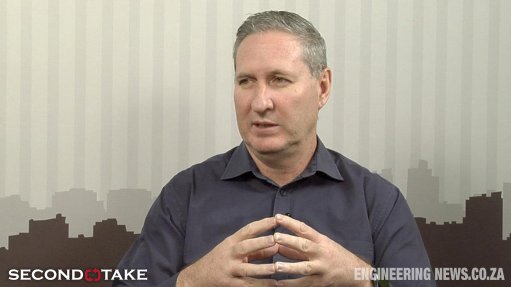
In an interview with Engineering News, Aurora Power Solutions director James Walsh explains that the team of four have skills in engineering, economics and research, and have international experience gain while working on various renewable-energy projects in the US, Spain and the UK.
The company consults on projects and provides expertise for all solar renewable-energy technologies, although Walsh elaborates that the company is particularly focused on the development of solar photovoltaic (PV) technology currently.
The focus on that particular technology is primarily based the recent announcement by Nersa of an R4,48/kWh feed-in tariff for power produced by PV technology, which the company believes, along with concentrating solar power, could finally unlock the doors for the large-scale production of clean, sun-driven energy in South Africa.
Walsh elaborates that PV could be highly successful in South Africa because the country has one of the best solar resources globally, the technology is easily deployed and the project risk can be adequately managed in the South African environment.
Currently, the company is focusing its attention on PV projects over 1 MW in size that will capture Refit.
Walsh states that there is a lot of potential for solar PV projects, especially in the North West province and the Northern Cape province.
However, such projects are expensive, costing between R50-million and R60-million each megawatt of capacity installed a site.
Thus, while the company is currently undertaking prefeasibility studies for potential PV projects, its key priority is to raise funding to take its project pipeline to financial closure.
Walsh elaborates that Aurora Power Solutions is seeking to raise capital through private-equity funds, infrastructure funds venture capital funds.
To date, the company has received limited funding, but Walsh elaborates that the funding has been too little to take any project to financial closure, which requires R10-million to 15-million.
Walsh admits that the current global economic recession is making fundraising difficult, but remains optimistic that an improvement in economic circumstances will lead to more funding. He also notes that South Africa does not have an established venture capital industry that has a mandate to invest in early-risk capital.
The other factor that is inhibiting project development is the lack of a developed offtake market in South Africa.
“We are only able to advance a project from the feasibility stage if we have a 20-year offtake agreement with Eskom or a local municipality,” says Walsh
To date, the industry has not been able to secure such an agreement. However, the company remains optimistic about its future in the local renewable-energy sector and the growth of large-scale PV projects in South Africa.
“The installation of large-scale grid-connected solar PV systems in South Africa provides an efficient way to quickly diversify its power generation portfolio,” says Walsh. “With the potential adoption of the new Nersa feed-in tariff, we now finally stand on the verge of developing a new industry in South Africa.”


e.gif)


.gif)