Creamer Media’s Engineering News Online
Advanced Search


We have detected that the browser you are using is no longer supported. As a result, some content may not display correctly.
We suggest that you upgrade to the latest version of any of the following browsers:
         
close notification
powered by
GOLD 1360.10 $/ozChange: -5.72
PLATINUM 1455.00 $/ozChange: -6.70
R/$ exchange 9.40Change: -0.09
R/€ exchange 12.07Change: -0.07
 
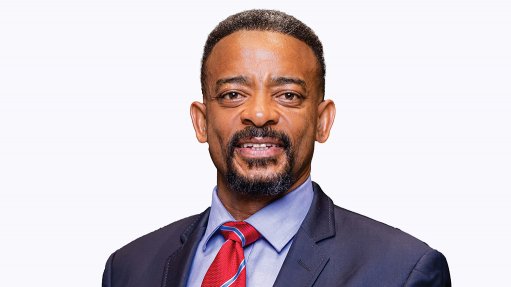
Dr Kemm is a nuclear physicist and is the CEO of Stratek Business Strategy Consultants. He also sits on the board of advisers of the Committee for A Constructive Tomorrow, based in Washington DC - stratek@pixie.co.za
 
 
Recipe for sporting success
 
31st August 2012
TEXT SIZE
Text Smaller Disabled Text Bigger
 

The London 2012 Olympic Games have now passed and will move onto the pages of history. South Africa can be proud of the six medals that the South African team achieved; this was our best showing so far at the Olympics.

Each Olympics event seems to be bigger and more complex than the previous one, with all sorts of sports unfolding in parallel. What this means is that there is a huge variety of sports for athletes to choose from. So, in principle, any young athlete from around the world can find some sport to suit his or her talents.

One thing that also showed again at these Olympics is that international sporting events bring the population of the whole country together. When one athlete succeeds, the whole country celebrates. This should emphasise to the sporting authorities just how impor- tant sport is to the whole country. Just one person winning an event causes mass reaction.

In the excitement of the games, there have been various calls to spend much more money on training facilities for athletes. I have mixed feelings about this.

If there is one thing that came out time and again is that virtually every medal winner from any country emphasised the total dedication needed to succeed. All the expensive training equipment and facilities in the world are not going to help someone who does not have total dedication. Athletes spoke of getting up at 5:00 every day to train for a couple of hours, and also training during the night and over weekends. No fancy equipment is going to induce someone to get up at 5:00 on a cold morning if he or she does not have the fundamental fire of desire.

If we want to win more medals in future, what we have to do, initially, is to hunt for talent all over the country. We have to hunt for the spirit of dedication. Once the fire to achieve has been found, we must then invest in nurturing the person. So, what we have to do is to bring sport to many learners all over the country. They do not need fancy equipment – just an opening break. They need to be shown videos of people achieving. They need to meet Olympic athletes, if possible, to discover that, when you meet them face to face, they do not look superhuman, but radiate excitement.
Investing in loads of equipment and facilities, thinking that will turn an ordinary person into a superstar, will not work.

Uganda won its second medal in its history when Stephen Kiprotich beat a strong Kenyan team to win the men’s Olympic Marathon. I doubt if Kiprotich, or the Kenyans, achieved that because of loads of expensive equipment back home. Perhaps, as a strategy, we need to get Kiprotich here to run in the Comrades Marathon so that young folks can see the gold medallist and be inspired.

I doubt if the Jamaicans have loads of expensive facilities back home but look how well they did in the sprints. There must now be a whole bunch of young Jamaicans running races in the streets, dreaming of being the next Olympic ‘Bolt of Lightning’.

Certainly, once budding stars have been discovered, give them special treatment. The first essential is a coach to take them in hand and to train not only the physical attributes but also the game plan and strategy. These days, nobody wins on physical prowess alone. In the woman’s 800 m race, Caster Semenya came second, but as I watched I was horrified to see her running in last place at the beginning. She then accelerated but it was very late. It looked as if, had there been another 100 m in the race, she would have won. That seemed to me to be poor execution of running tactics and game plan. I have no idea what coaching advice she had been given but, to me, something was lacking.

Bridgitte Hartley picked up a bronze medal in canoeing. She now needs to be used as a role model to find and inspire others, but also needs any professional support she can be given to, perhaps, move up the ranks for the next Games, in Rio, in 2016. The same goes for javelin thrower Sunette Viljoen, who finished fourth. Special training plans need to be developed for 200 m sprinter Anaso Jobodwana and 110 m hurdler Lehann Fourie, who both showed that they have the makings of medals in 2016.

Provide these people with all the facilities and support, and also let them interact with other young hopefuls to inspire them.

We also need much more domestic competition. We need to see more athletics on TV. We need to see more of these sports generally and induce more spec- tators to not only attend but also cheer and shout. Such action would be for the entertainment of spectators and also to ‘spread the word’ to find those hidden gems who will become the dedicated stars of the future. I am sure that they are out there – we have to find them.

Edited by: Martin Zhuwakinyu


To subscribe to Engineering News's print magazine email subscriptions@creamermedia.co.za or buy now.

FULL Access to Mining Weekly and Engineering News - Subscribe Now!
Subscribe Now Login