Creamer Media’s Engineering News Online
Advanced Search


We have detected that the browser you are using is no longer supported. As a result, some content may not display correctly.
We suggest that you upgrade to the latest version of any of the following browsers:
         
close notification
powered by
GOLD 1386.60 $/ozChange: -0.70
PLATINUM 1452.50 $/ozChange: -1.00
R/$ exchange 9.58Change: -0.03
R/€ exchange 12.38Change: -0.05


Real Economy Report
 
19th February 2009
TEXT SIZE
Text Smaller Disabled Text Bigger
 

From Creamer Media in Johannesburg, this is the Real Economy Report. Our top stories this week: we take a look at a new South African flight simulator; we speak to a wind turbine manufacturer about a possible South African wind energy industry; and we speak with the head of ArcelorMittal South Africa about prospects for steel in 2009 and about how the company is coping with the prevailing economic meltdown.

Shannon O'Donnell:
South Africa's first modern locally designed and built flight simulator, the WX-400, is now operational at the Pretoria Flying School. Keith Campbell reports.

Keith Campbell:
The WX-400 was developed by local enterprise Barlog. Company managing member Peter Dooley explains what is different about it.

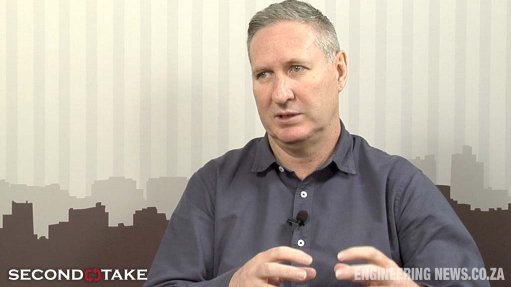
Barlog managing member Peter Dooley

Shannon O'Donnell:
Join us after the break when we discuss renewable energy.

Sarens advert

Shannon O'Donnell:
Christy van der Merwe speaks to leading wind turbine manufacturer Vestas, about a possible South African wind energy industry.

Christy van der Merwe:
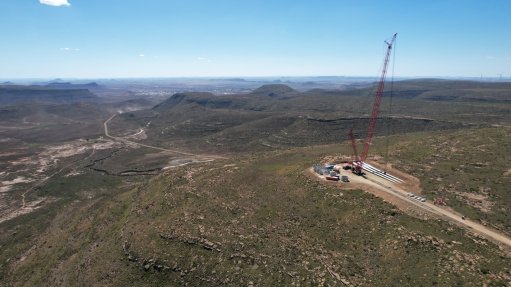
10 000 gigawatt hours of power from renewable sources by 2013 is the target set by the South African government for the country. Wind energy is expected to make up a large part of that target, not only providing power, but creating jobs and downstream industry capabilities.
Danish wind turbine manufacturer Vestas, has indicated an interest in the up and coming South African market.

JØRN HAMMER, MD, VESTAS PACIFIC

Christy van der Merwe:
South Africa has much to learn from countries such as Denmark, which has an installed capacity of 3 200 megawatts of wind power, and has created a secure industry, employing some 22 000 people.

JØRN HAMMER

Shannon O'Donnell:
We'll be back after the break for news on the steel industry.

Bearing Man advert

Shannon O'Donnell:
Creamer Media's Terence Creamer spoke to the head of South Africa's largest steel producer about the industry's dramatic change in fortunes over the past year and what means for South Africa.

Terence Creamer:
Steel has an influence, directly or indirectly, on just about everything we consume. It is a leading, or in recent times, a bleeding, indicator of the fortunes or otherwise of the real economy.

This time last year, there was genuine concern that there might not be enough steelmaking capacity to meet the demands associated, in particular, with China and India's rapid industrialisation. But as from September, the wheels came off, with demand evaporating across sectors and countries.

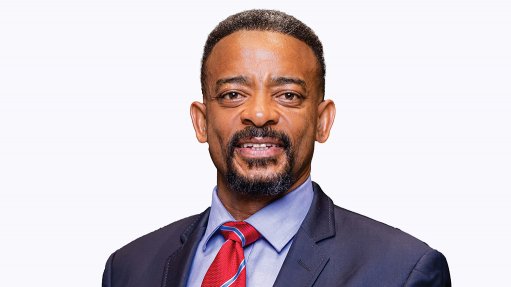
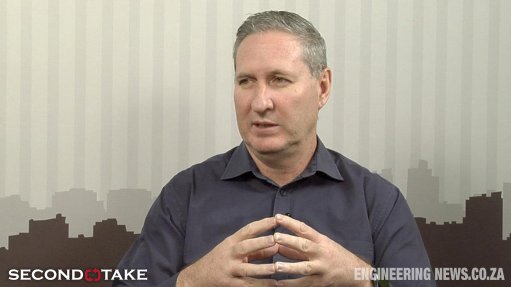
ArcelorMittal South Africa CEO Nku Nyembezi-Heita says it has used the past few months to analyse where and why the collapse has been so dramatic.

ArcelorMittal South Africa CEO Nku Nyembezi-Heita

Terence Creamer:
The group's response has been rapid and dramatic. Its fourth quarter production slashed by a massive 54% against an announced reduction target of between 30% and 35%. The pullback was pursued to align output to demand, and the deep cuts were influenced both by rising stocks, to worrying levels of more than 12 days, as well as a slower-than-usual summer holiday period. But has visibility gotten any better since the New Year?

Nku Nyembezi-Heita

Terence Creamer:
The critical question, though, is how long the group will be able to sustain these far lower levels of output before it will have to resort to retrenchments.

Nku Nyembezi-Heita

Terence Creamer:
The group which raised prices seven times between January and September last year has since cut prices by 40% against the peak of August. And, the current lack of demand certainty has also precipitated a major capital project review.

Nku Nyembezi-Heita

Terence Creamer:
For the immediate term, though, the mantra is all about cost containment and cash preservation. And the company, which has often been accused of holding on to too much cash, feels strongly vindicated by the fact that, despite the crisis and having maintained its dividend cover, it has started what is likely o be a tough year with R8-billion worth of cash in the bank.

Shannon O'Donnell:
And now for a sneak preview of this week's Engineering News magazine:

We report on South Africa's path on the steep and rocky road to Copenhagen.

News that the largest solar heating system in Africa has been installed at the Gaborone Sun Hotel, in Botswana.

And, the Expanded Public Works Programme is set to grow fourfold, creating 4,5-million work opportunities.

And in Mining Weekly this week:

Read how the South African gold industry is looking forward to a year of stabilisation after a challenging 2008.

We report that South Africa's Finance Minister Trevor Manuel has delayed imposing mining royalties in a bid to save jobs.

And, read of financial institution Absa-Barclays warning of a ‘subprime-like' BEE meltdown this year.

That's Creamer Media's Real Economy Report. Join us again next week for more news and insight into South Africa's real economy.


To subscribe to Engineering News's print magazine email subscriptions@creamermedia.co.za or buy now.

FULL Access to Mining Weekly and Engineering News - Subscribe Now!
Subscribe Now Login


RER 47
This video is licensed under a Creative Commons License
GET SELECTED VIDEO
Embed
Selected Video Download (37.8mb)
 
RER 47
 

RER 47