Creamer Media’s Engineering News Online
Advanced Search


We have detected that the browser you are using is no longer supported. As a result, some content may not display correctly.
We suggest that you upgrade to the latest version of any of the following browsers:
         
close notification
powered by
GOLD 1375.95 $/ozChange: -1.92
PLATINUM 1462.00 $/ozChange: 3.00
R/$ exchange 9.55Change: -0.11
R/€ exchange 12.32Change: -0.15
 
CONSTRUCTION MATERIALS
 
Rate of decline in cement demand slowing, says PPC
 
27th May 2011
TEXT SIZE
Text Smaller Disabled Text Bigger
 

South Africa’s cement sales for 2011 could be similar to those of 2010, as the rate of decline in demand has been slowing, the country’s biggest cement producer says.

Pretoria Portland Cement (PPC) says South Africa’s cement sales volumes fell by 4% year-on-year from October 2010 to March 2011, which is the smallest contraction for a six-month reporting period since September 2008.

Cement demand in the Western and Eastern Cape regions is the worst affected, while inland regions are less affected, the company reports, adding that some rural areas recorded slight increases in sales volumes over the previous year.

For the six months to the end of March, PPC’s cement volumes declined by 7%, owing to weaker sales across all divisions and increases in selling prices that are lower than the rate of cost inflation. High exposure to the Western Cape and the Eastern Cape has seen PPC’s cement sales decline by slightly more than the national average.

Headline earnings a share slumped 38% to 71,8c and operating profit decreased by 26% to R823-million. Earnings before interest, tax, depreciation and amortisation (Ebitda) declined by 32% to R1,04-billion and revenue declined by 5% to R3,26-billion.

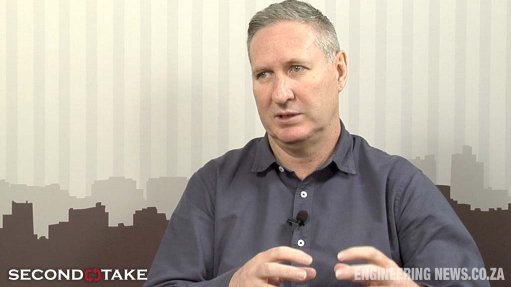
Describing the cement industry as being in a “grind”, and that “basic” operational efficiencies remain key, CEO Paul Stuiver says that PPC’s results reflected industry trends.

“Despite the results not being as good as previously, cash flow generation remains good and the lower margins are still respectable,” he explains.

Capital expenditure (capex) was cut by about R120-million to R480-million for the year – in line with lower capacity requirements. The South Africa-focused capex will focus on maintenance, expansion, new projects and capacity upgrades in the Western Cape.

The lime and aggregates divisions of the business also took a knock, with lime sales declining by 10%, and Ebitda falling by 19% to R77-million. This is the result of being impacted on by key customers in the steel and alloys industries.

The aggregates division experienced a 20% reduction in sales volumes, with Ebitda reduced to R18-million, in line with the downturn in the construction industry.

Exports to neighbouring countries remain challenging and volumes decreased by 35%. Domestic sales increased in Zimbabwe by about 20%, but operating performance is challenged by production problems at the Colleen Bawn factory and price inflation of key items.

Stuiver says the company’s long-term organic growth strategy will seek to expand its operations into countries in Africa.

Despite the weaker performance and the difficult business environment in the local building and construction industry, the company remains well placed to recover, Stuiver tells Engineering News.

“Customer service, keeping control of costs and equipment maintenance remain key into the future. Should volumes improve, we are ready for this – expect quite a lot of operating leveraging coming through.”

As with most industries in South Africa, electricity pricing remains a significant challenge for the cement producer.

“In previous years, the price of electricity contributed about 5% of our costs, and has now crept up to about 8%. But we expect, once Eskom looks into price increases, that this cost will climb up to about 10%,” Stuiver says.

“I continue to be frustrated with this issue. The pricing of liquid fuels and electricity remains a significant challenge for PPC. We have looked at alternative energy prices and need alternative energy suppliers, particularly in wind energy. But such efforts continue to be hindered by uncertainty around the renewable-energy feed-in-tariff rates. The pricing of liquid fuels is also out of our control, despite PPC optimising its logistics,” he tells Engineering News.

PPC says it expects the R3-billion “capacity modernisation” upgrades in the Western Cape to lower costs and improve efficiency. Phase one of the three-phased De Hoek factory started in February and is expected to be completed next year, by which time phase two will have already started.

Detailed proposals for the upgrade of the Riebeeck factory were invited from potential suppliers and the environmental-impact assessment is progressing as scheduled.

“We are hopeful that we can continue in an upward trend into the future, as long as nothing unexpected surprises the industry,” Stuiver says.

Edited by: Martin Zhuwakinyu


To subscribe to Engineering News's print magazine email subscriptions@creamermedia.co.za or buy now.

FULL Access to Mining Weekly and Engineering News - Subscribe Now!
Subscribe Now Login
 
 
LONG-TERM ORGANIC GROWTH PPC’s strategy seeks to expand its operations into countries in Africa
 

LONG-TERM ORGANIC GROWTH PPC’s strategy seeks to expand its operations into countries in Africa