Creamer Media’s Engineering News Online
Advanced Search


We have detected that the browser you are using is no longer supported. As a result, some content may not display correctly.
We suggest that you upgrade to the latest version of any of the following browsers:
         
close notification
powered by
GOLD 1373.42 $/ozChange: -12.51
PLATINUM 1457.50 $/ozChange: -29.00
R/$ exchange 9.55Change: -0.14
R/€ exchange 12.32Change: -0.24
 
MEDUPI BOILER CONTRACT
 
R20bn boiler contract not initially awarded to Hitachi – Eskom
 
18th January 2008
TEXT SIZE
Text Smaller Disabled Text Bigger
 
South African power utility Eskom confirmed last month that the initial letter of award for the R20-billion Medupi boiler contract had, in fact, been extended to the Alstom Steinmüller consortium and not to the Hitachi consortium, which was officially named as the winning bidder on November 13.

However, in a letter sent to Engineering News in December, entitled ‘Summary of the Medupi Tender Process’, the utility also went to some length to emphasise the integrity of the pro- cess and the eventual outcome. The letter quotes extensively from the findings of the external review by Deloitte, which gave the process a clean bill of health.

The contract, awarded to Hitachi Power Africa and Hitachi Power Europe (Germany), is for six 800-MW utility steam generators for a coal-fired power station being built at a cost of R78,6-billion, at a site near Lephalale, in Limpopo province. The consortium will also supply a similar offering for the R80-billion-plus Project Bravo, which is to be built almost simultaneously at a site near Emalahleni, in Mpumalanga.

The revelation of a revised contract award is likely to raise eyebrows, coming as it does on the back of revelations that Chancellor House – which is said to have strong ties with the ruling African National Congress (ANC) and has even been described by the Mail & Guardian as an ANC business front – is the 25% black economic-empowerment shareholder in Hitachi Power Africa.

CONFLICT OVER REFERENCES
Further, it arises in the midst of something of a conflict of opinion between Hitachi Power Africa and Steinmüller over which of the two companies has claim to the 20 000 MWe of boiler tech- nology reference sites that have been installed in South Africa over the last number of decades.

Hitachi claims that, through a series of mergers and acquisitions, it is the current owner of all the know-how and references of the for-mer L&C Steinmüller Group, which includes the Majuba, Tutuka, Duvha and Kriel boilers, even though it did not build these facilities. But Steinmüller Africa MD Hermann Brummer told Engineering News recently that, while it was true that Hitachi acquired the know-how, such ownership could not be considered a sufficient basis for a claim of ‘references’.

Eskom had refrained from commenting on the award, but in its letter, dated December 11, asserted that an independent review by Deloitte had adjudged Eskom to have “acted diligently” and to have “followed due process” in the reassessment of the letter of award to Alstom Steinmüller, and that “given the urgency of the situation, Eskom’s decision to approach Hitachi was justified”.

REAWARD EXPLAINED
Eskom explained that, while it had indeed pre- sented Alstom Steinmüller with the letter of award on August 31, 2007, certain conditions still had to be met before the contract could be officially awarded. Eskom revealed, too, that, on September 3, the Hitachi Boiler Consortium was advised that its tender had been unsuccessful.

“[There were a number] of technical and commercial issues that needed to be resolved with regard to the Alstom Steinmüller boiler tender and the Alstom Steinmüller Consortium did not accept the boiler letter of award. Amongst others, one of the issues related to a different interpretation of the scope of the works. This resulted in a significant difference in the prices originally tendered,” Eskom explained in the letter.

It said that, in an attempt to resolve the matter, Eskom suggested that an agreement be concluded that the outstanding matters be dealt with in terms of the mechanisms of the contract. But the Alstom Steinmüller Consortium rejected that proposal.

The utility then entered into a process of engagement with the con- sortium “in a final attempt to resolve the outstanding issues”, but this process failed and Eskom then informed the Alstom Steinmüller Consortium that it would consider alternatives.

“The choice faced by Eskom was to reissue the tender for the boiler package or to approach the other tenderer, that is the Hitachi Boiler Consortium, regarding the boiler tender. In the light of the delays that would result from a new tender process, the view was that it was necessary to ensure security of supply and it was, therefore, in Eskom’s best interests to approach the Hitachi Boiler Consortium. External legal opinion was also obtained in this regard and confirmed that this approach by Eskom was justifiable from a legal perspective,” the utility explained.

The upshot was a recommendation from the Eskom board tender committee and supported by the Eskom board that the Medupi boiler tender be awarded to the Hitachi Boiler Consortium. The contract was then signed at a function held at Eskom’s Megawatt Park head office, in November.

In the letter, Eskom stressed that the board was particularly concerned about the potential for “conflicts of interests” throughout the tender process and stated that “a detailed integrity check was done on the employees involved in the pro- cess as well as the members of exco, and the board, and that no concerns were reported”.

During this process, the participation of Chan- cellor House as a shareholder was reportedly highlighted in the Deloitte report. But the report concluded that “there was no information that indicated that there was any political influence in this regard”.

FLEET STRATEGY and BRAVO
The utility again acknowledged that it would be pursuing a ‘fleet strategy’ as a result of the limited response received following the issue of tenders for the procurement of the turbine and boiler packages for Medupi. In fact, although Eskom had prequalified 19 potential bidders and 14 had expressed interest in the turbine and boiler contracts, only two eventually submitted bids for both work packages, despite the extension beyond the November 10, 2006, deadline to encourage further bids.

The utility said the objective of the fleet model was to secure a supplier relationship that would allow Eskom to meet its capacity expansion objectives in the most effective and sustain- able manner.

For this reason, negotiations for the turbine and boiler packages for the second coal-fired station, currently dubbed Project Bravo, to be built in Mpumalanga, would also be conducted with the Alstom and Hitachi consortiums respectively.

“The fleet strategy is based on the award of the Medupi tender and, therefore, does not involve a tender process. In this regard, external legal opinions have confirmed that such an approach can be justified as meeting the constitutional requirements of a procurement process that is competitive, equitable, cost effective, fair and transparent,” Eskom stated.

Edited by: Martin Zhuwakinyu


To subscribe to Engineering News's print magazine email subscriptions@creamermedia.co.za or buy now.

FULL Access to Mining Weekly and Engineering News - Subscribe Now!
Subscribe Now Login
 
 
URGENCY STRESSED
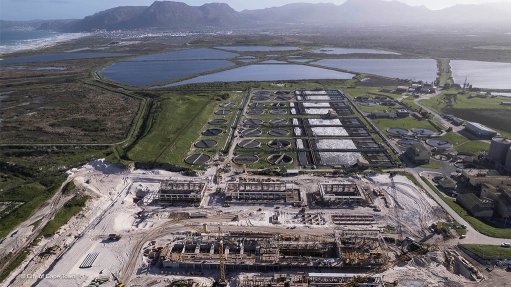
Work under way at the Medupi Site in Limpopo
 

URGENCY STRESSED Work under way at the Medupi Site in Limpopo