By: nkolola halwindi
5th July 2002
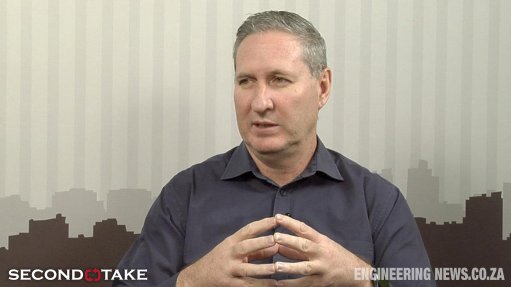
Eskom Enterprises executive director Vusi Ngubeni says that the Eskom/Transtel partnership will invest a further R1-billion into the SNO to boost a smooth take-off when it begins operations.
The investment excludes previous investments in telecommunications on private networks.
For the first time, Telkom will be facing competition from a rival and this will be the harbinger of many interesting developments as, for the first time in South Africa, there will no longer be a monopoly.
Ngubeni says that the SNO will focus on improving services in the rural areas by investing more in these areas, where more than 70% of the population currently does not have access to telecommunications.
"We would like to see more people in rural areas have access to telecommunications for educational, business and training purposes," he says.
He explains that the SNO will improve services and will provide the South African public with an opportunity of choice, thus providing more bandwidth than currently available.
Ngubeni insists that Eskom Enterprises telecommunications infrastructure is already placed throughout the country both in rural and urban areas.
However, he is quick to point out that the extension of the announcement of the 19% black-empowerment entity and the 51% private entity has allowed the present incumbent to lock business by entering into long-term contracts with customers.
The announcement of the company that would have a controlling stake in the SNO was expected in May, but will now only be announced in October, thus extending Telkom's monopoly for a further five months.
"Consequently, the delay creates a barrier to entry for the SNO and provides the incumbent with an advantage to lock up business," bemoans Ngubeni.
He has appealed to the Independent Communications Authority of South Africa (Icasa) to speed up the process or, alternatively, issue a preliminary licence to Transtel, Eskom and a black economic empowerment entity to begin operations.
"We were geared for the May announcements as investments were already in place, hence there is a need to begin sweating the assets," he elaborates.
Ngubeni is optimistic that the SNO will provide quality services, avail customers with a choice of service provider and provide telephone facilities on demand as opposed to so-called begging, noting that it will not force its customers to sign long-term contracts.
There has been scepticism from certain sources who believe that what happened with the cellular phone market, with Vodacom and MTN benefiting from keeping prices artificially high, will occur in this instance, with a duopoly simply replacing the current monopoly.
Nevertheless, Ngubeni states that duopoly is not the best form of competition, but can be viewed as a start to the move towards competition.
He observes that it is a natural process to first institute a duopoly and then liberalise the market fully later, adding that prices drop due to declines in the number of people using the services as they would be shared between the two service providers.
He notes that there is added value to services when they are available and cost-competitive.
Further, Ngubeni believes that to slowly build up a customer base depends on how fast and stable business areas are developed.
Nevertheless, he cautions that there is a need to create a steady balance between commercial business and social responsibility, hence the SNO will work on this policy by investing in the upliftment of rural areas.
Commenting on the ability of Eskom and its partner Transtel to sustain the SNO, Ngubeni boasts that the two firms have experience in telecommunications.
Furthermore, Eskom Enterprises and Siemens Information and Communications group have signed a R400-million contract for the roll-out of Eskom Enterprises' fibre optic network infrastructure.
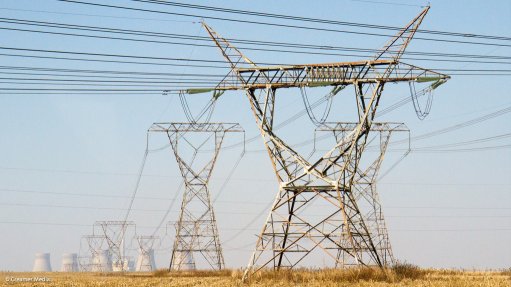
The fibre optic network together with Eskom Enterprises' existing private telecommunications network infrastructure will create the platform for Eskom's participation in the SNO.
Fibre optic cable is already being deployed on the existing Eskom power-line infrastructure. The purpose of this contract is to procure, install and commission the additional telecommunications equipment necessary to complete the desired Next Generation Network solution. Network rollout began in January and was completed by the end of April, in time to connect the first customers shortly after the liberalisation of the fixed tele- communications network.
"Our joint vision is to provide innovative telecommunications solutions and premium customer services for the SNO," says Siemens Telecommunications CEO Alwyn Martin. He explained that Siemens began preparing for deregulation of South Africa's telecoms industry in the mid-90s. Ngubeni explains that Siemens was chosen by Eskom Enterprises over its competitors because of its integrated technology offering, its strong regional presence in South Africa and on the African continent, and its comprehensive telecommunications business solution ability. Currently, Eskom Enterprises, in partnership with Econet Wireless, owns 70% of Lesotho Telecommunications.
After a year of operations in Lesotho, the firm was granted a licence in mobile phones and launched Econet EZI-Cel in May this year.
With the current 10 000 cellphone subscribers in Lesotho, the firm is close to reaching its first-year target of 12 000 subscribers.
In Nigeria, it is also involved in a 50:50 joint venture with NEPA for the fixed-line telecommunications in that country.
Ngubeni believes that electricity and telecommunications work hand-in-hand to enable speedy development of any country.
Edited by: nkolola halwindi
To subscribe to Engineering News's print magazine email subscriptions@creamermedia.co.za or buy now.