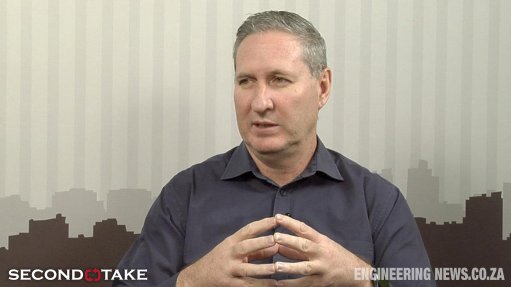
While national standards are sufficient to ensure the quality of pipe- lines, the regulating thereof could be improved, the Southern African Plastic Pipe Manufacturers Association (Sappma) reports.
Sappma CEO Jan Venter points out that pipelines are at the heart of a country’s infrastructure and should, therefore, be functional and reliable for many years.
He stresses that water distribution, waste disposal, irrigation and telecommunications all rely on pipelines to function and adds that more than 50 years is not an unusually long time for pipes to function.
“It stands to reason that the products should be of a high quality and comply fully with the relevant standards. Most customers insist on pipes and fittings that have the South African Bureau of Standards (SABS) mark of approval; however, the regulating system is not always water- tight,” Venter says.
He adds that thousands of metres of piping finds its way onto the South African market every month, noting that, under- standably, it is difficult for the SABS to regu- late all the products.
Budget constraints most likely restrict the SABS from increasing its monitoring in the market and this might be one area that needs the attention of the Department of Trade and Industry, says Venter.
To support the industry in promoting high-quality products, Sappma assists the SABS in matters of standards and quality through the implementation of various quality-assurance measures and initiatives, as well as demanding additional good practice measures from its members.
One such initiative is the welder identification system, which Sappma affiliate, the Installation and Fabrication Plastics Pipe Association (Ifpa) has implemented to ensure the consistent high-quality welding of pipes.
The system requires that the welders of all Ifpa members be issued with identification stamps, which track them to every welding task they perform.
This ensures that members continuously adhere to the high standards of plastic pipe fabrication and installation.
Ifpa chairperson Mike Smart says welders were required to be recertified before they were issued with their stamps.
“The yearly recertification of welders was instituted in 2000 by a representative of the South African plastics industry, Plastics SA, to further ensure the high quality of practical work.
“However, in September 2010, it was decided that Ifpa members would be able to recertify their welders once every three years, while non-Ifpa members would be required to certify their welders yearly,” says Smart.
Every Ifpa welder has been issued with a unique number printed on an identification card, which includes his or her photograph. Every Ifpa member company is required to follow the system of traceability with the use of the stamp on each weld, displaying the Ifpa company number, the welder’s number and the Ifpa logo.
“Sappma fully endorses and supports this programme, which proves our commitment to go further on the quality value chain. This move has also been welcomed by customers, who appreciate the level of transparency and accountability that Sappma tries to introduce and maintain,” says Venter.
Industry Perspective
Meanwhile, Venter points out that, while the South African pipes industry has been subjected to low demand for products from the construction industry during the last few years and, therefore, low profitability, conditions seem to be improving.
Nevertheless, the pressure and rising input costs that the gold and platinum mining sectors are facing are also affecting the pipe industry.
Meanwhile, to increase output and efficiency, the industry is continuously upgrading production machinery and investing in laboratory test equipment.
But the industry needs skilled people, such as polymer technologists and extrusion operators with a proper work ethic. Plastics SA is tackling this problem through a range of short training courses that can be applied in the pipe industry.
However, Venter says government also needs to deal with problems that result from skills shortages.
“It is important that every citizen has access to clean water and that waste is properly disposed of; therefore, the expansion and maintenance of piping infrastructure in South Africa should be a high priority for government because the plastic pipes industry is able and ready to do its part to achieve this goal,” says Venter.
To subscribe to Engineering News's print magazine email subscriptions@creamermedia.co.za or buy now.