Creamer Media’s Engineering News Online
Advanced Search


We have detected that the browser you are using is no longer supported. As a result, some content may not display correctly.
We suggest that you upgrade to the latest version of any of the following browsers:
         
close notification
powered by
GOLD 1360.10 $/ozChange: -5.72
PLATINUM 1455.00 $/ozChange: -6.70
R/$ exchange 9.40Change: -0.09
R/€ exchange 12.07Change: -0.07
 
PUBLIC TRANSPORT
 
Public transport in Gauteng flawed, but not dysfunctional, says UJ’s Walters
 
15th August 2012
TEXT SIZE
Text Smaller Disabled Text Bigger
 

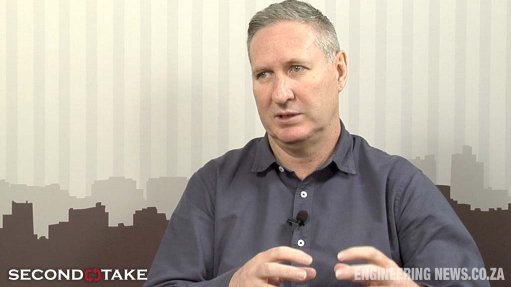
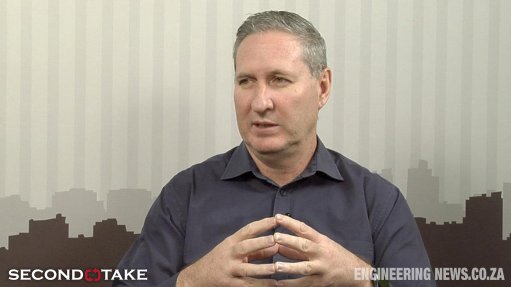
The public transport system in Gauteng is “not dysfunctional”, as it moves large numbers of people each day, but it does have “major flaws”, says Professor Jackie Walters, head of the University of Johannesburg’s Department of Transport and Supply Chain Management.

“Many people are working very hard to support and change the system.”

Walters is a member of a government-appointed steering committee responsible for developing a 25-year Integrated Transport Master Plan for Gauteng.

He says one of the challenges that exists within the Gauteng public transport system is that the general public has not seen any tangible improvements, despite the money earmarked to improve public transport.

Some major communities are also still left without access to public transport.

The frequent change in role players on a provincial and national government level are also leading to a lack of institutional memory to execute public transport projects, which often have a long lead time.

“We need long-term stability in managing public transport systems,” says Walters. “Transport plans should transcend political changes.”

Another factor hampering the developing of effective public transport is that projects are planned and executed with municipal boundaries in mind, while successful systems would transcend these boundaries.

With the three spheres of government also often involved in projects, it is not clear “who leads and who coordinates”, says Walters.

Another challenge is the uncoordinated focus on specific modes of transport, instead of a holistic public transport focus.

Public transport is “inadequately distributed” across the Gauteng city region, adds Walters.

Public transport systems are also short of funds, despite the major increase in Gauteng’s population over recent years.


Safety remains an issue on many public transport systems, notes Walters, especially in terms of maintenance and overloading.

Another challenge is the lack of “a coherent nonmotorised transport strategy”, such as for bicycles.

“They can be very effective over a short distance,” says Walters.

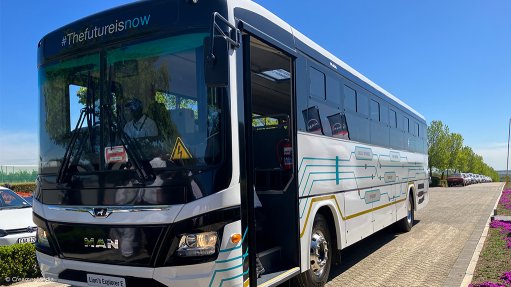
Bus operators are provided short-term contracts but “must invest large amounts of money in fleets and infrastructure”, which he places on the list as another challenge.

“There is also unnecessary and destructive competition between transport modes.”

In the end, says Walters, public transport systems in Gauteng are simply not attractive enough to convince car users to leave their vehicles parked in the garage.

Offering some broad-brush solutions, Walters believes the province requires “strong institutional structures”, with expertise in many fields, such as scheduling, marketing and engineering.

Public transport systems also require a high level of policy integration, such as in the fields of land use and transport planning.

Eighteen-hour operations are preferable, as well as preferential right-of-way for public transport vehicles, such as special bus lanes.

Funding security from government, and strong participation from the private sector would also ensure a strong public transport system.

It must also be accepted that public transport will, in general, be subsidised, notes Walters.

Edited by: Creamer Media Reporter


To subscribe to Engineering News's print magazine email subscriptions@creamermedia.co.za or buy now.

FULL Access to Mining Weekly and Engineering News - Subscribe Now!
Subscribe Now Login


Picture by: Duane Daws