Bulk earthworks and civil engineering specialist Protech Khuthele’s African safari turned sour in the financial year ended February 29, as two mining projects in Tanzania and one in the Democratic Republic of the Congo (DRC) pushed the company firmly into the red.
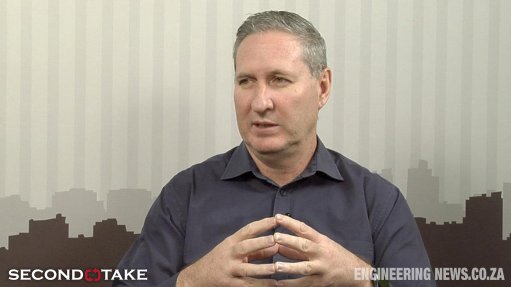
Protech CEO Anthony Page said on Monday that all three projects had been with lesser-known mining companies, with one client in Zambia running into financial difficulty, while the other faced environmental complexities.
“There are also tax and VAT issues that we have been unable to resolve.”
The DRC project had not moved beyond the first phase, while there were also some “tax issues”.
However, noted Page, these projects would no longer be a drain on the company’s resources, as Protech had exited them in full.
Despite these bad-apple projects, he emphasised that the company had not been chased from the continent. It had, however, been forced to review its risk matrix.
Aside from more rigorous project selection, the company would now also consider more carefully who it worked with in Africa.
For example, Protech’s list of remaining clients in Africa were largely blue-chip, such as AngloGold and Randgold, both in the DRC, noted Page.
Protech was also still active in Sierra Leone and Zambia.
Page said Protech was more willing to do work in Africa with “clients we know and have worked with in South Africa”.
Country selection was also important, with countries where the company had worked before and where it understood the tax regime and politics, more likely to be viewed favourably.
“If it is a new country, we have to make sure we understand it before we go there,” said Page.
“A last consideration is cash. Can we get an upfront payment?” he noted.
THE NUMBERS
Protech Khuthele saw revenue for the year ended February 29 decrease by 10% compared with the previous financial year, to R965.8-million.
Operational expenditure increased 18% to R286.3-million, with the major impact flowing from the impairments recognised on the three projects in Africa which had not progressed beyond the first phase.
The full effect of these projects had been accounted for in the 2012 financial year.
The group reported an operating loss before interest and taxation of R3.8-million, compared with an operating profit of R77.1-million in the previous year.
A loss a share of 3.1c and a headline loss a share of 1c were recorded for the year.
When looking at the different business units, contracting, which made up 84% of group revenue, showed an 8% decline in revenue to R865.8-million.
The business unit reported an operating loss of R17.9-million.
While Africa had stung the company in the year under review, South Africa had not presented much opportunity either.
“Despite large infrastructure investment budgets, public sector spending continued to be slow. The economic uncertainty led to drawn out decision-making and erratic spending patterns among top mining companies. Accordingly, tenders and new project opportunities are highly contested, with lower margins on new contracts,” reported the company.
The geotechnical business unit, which primarily serviced Protech`s contracting business unit, achieved a 24% increase in revenue to R23.4-million, with a 97% growth in operating profit to R7.1-million.
The readymix unit, which was responsible for 14% of group revenue in the financial year, recorded a turnaround and posted an operating profit of R5.5-million, following a 2011 loss of R1.5-million.
Looking ahead, the group had seen evidence of improved tender activity since the beginning of the new financial year, both in the mining sector and commercial infrastructure.
“Renewed commitments from the South African government to accelerate infrastructure investments are encouraging, particularly in the transport and energy sectors which are strategic focus areas for Protech,” reported the company.
The group’s total order book amounted to R1.1-billion at February 29.
In addition, the total value of work tendered, submitted and awaiting adjudication and award to the successful contractor was currently valued at some R2.4-billion on a probability weighted basis.
Initiatives to extend Protech’s capability in specific areas of the construction value chain were on track, including the recent announcement to establish a civils division.
This civils division should grow to a reasonable size over the next three years, said Page.
He said this division would not move into the buildings arena for example, but focus more on building road-over-rail bridges, for example, or concrete aprons.
Page said he expected the company to return to profitability in the current financial year.
To subscribe to Engineering News's print magazine email subscriptions@creamermedia.co.za or buy now.