Engineering, procurement and construction management company TWP Projects, part of the Basil Read group, established a planning school this month as part of its efforts to mitigate the shortage of skilled project managers and engineers in South Africa.
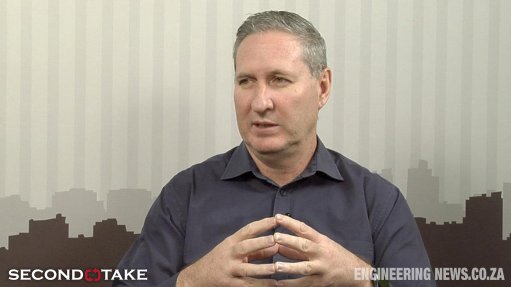
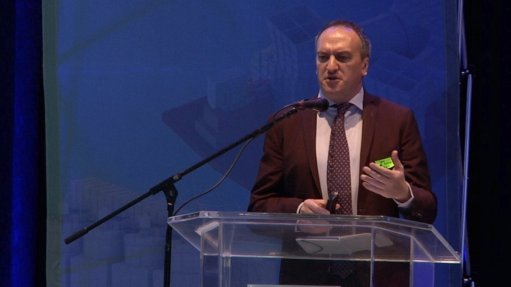
“The upskilling of people in this industry is a challenge. It is, however, a challenge to which we are able to react,” TWP Projects project delivery officer Pieter Louw tells Engineering News.
He points out that often, when looking for a project planner, companies find people who are able to use only project planning software and lack other planning skills, such as leadership, experience, industry knowledge and people skills.
TWP Projects has selected six trainees from applications it received from university graduates, other companies’ employees and matric pupils for enrolment at the planning school.
“We looked for logical thinkers with the ability to understand the technical complexity of planning projects.
“We have completed the development of the curriculum,” reports Louw.
The trainees will learn about the planning process and how to use the planning software used by TWP Projects correctly.
The company uses specialised software packages for all aspects of a project and trainees will be taught how to use them effectively.
“The aim is to help them understand the software better, further understand what planning involves, as well as what is expected and required of them by us and our clients.
“They are then certified as specialist planners through the Project Management Institute’s Scheduling Professional certification course,” says Louw.
He adds that TWP Projects can provide clients with the software packages and are now also able to link this to various software packages used by clients, even if they are from different developers.
“This allows for an integrated approach to project management and is well received by our clients,” he says.
Further, TWP Projects is also upskilling its existing planners through the planning school by further improving their ability to effectively work with the planning software.
The company is also training its project managers to become project management professionals.
Such professionals are well trained and experienced in the industry; they under- stand projects and project management processes, are able to understand and meet client expectations and are able to deliver projects on time and within budget, while also meeting quality standards.
Meanwhile, Louw says the company has also had success with the accredited draughting school it started at the beginning of the year.
Accredited by both the South African Qualifications Authority and the National Qualifications Framework, the school has the capacity to train 30 students at any given time. It is currently training 25 draughtspersons.
Louw notes that the school provides draughtspersons with an accredited qualification that can be used as an entry to further engineering studies.
“Going forward, our aim with the draughting school is to train draughts- persons for TWP Projects and provide them with training that will enable them to start a career in draughting and possibly, simultaneously, broaden their studies in the field of engineering,” he says.
Louw points out the training courses take on average about 12 months to complete, which excludes the time taken for on-site field experience.
Further, TWP selects students who have completed either construction management courses at various universities or project management courses at the University of Pretoria to undergo experiential training.
“We train them, put them on site, and make sure they understand our way of managing and delivering projects, as well as what our clients expect of them,” says Louw.
Improvements
Despite the skills challenge, Louw highlights there are also some encouraging developments in the industry.
“The availability of project-tracking technology is continuously improving through aspects such as updated planning software. We have to ensure that all the work we do is of good quality and cost effective,” he says.
He adds that the company is building on its existing software systems and databases to improve their use for reference on future projects.
“We can record all the data and this allows us to see what we did well in the past and where we went wrong. This will assist us in constantly improving the quality of our work with each project completed,” he says.
Louw emphasises the importance of communication in the project-management discipline.
“Communication is one of the most important aspects of this business. These electronic databases provide our employees with easy access to information, at any time,” he says.
TWP Projects is also implementing benchmarking tools for each project, which enables the company to compare the costs and the duration of similar projects.
“The aim of the benchmarking tools is to apply best practice in project manage- ment so that we are constantly learning what to do better. We are also able to see how long a prospective project could take and how much it could cost.
“In fact, the benchmarking tools give us a competitive edge, as project information is stored in a central database and is always readily available to be accessed from any mobile or computer device,” he says.
The company also makes project information available to its clients.
“We use our electronic portals to make project information, such as the status and delivery, available to the client at any time. This is particularly useful for projects at remote sites, as the client cannot always be on site, but is still able to track the progress of the project.
“These portals also assist our employees, as they can access the project policies and procedures at any time if needed,” he says.
The usefulness of these portals was displayed when the TWP team went to Ghana to propose a project to a client.
“The team logged on to the portal using a free Wi-Fi system at the hotel where they were staying and were able to show the clients a virtual representation of the project,” says Louw.
He adds that technological developments have made communication easier.
“These portals even work on the satel- lite connections that are most often found on remote sites used for mining and exploration activities,” he notes.
Future Growth
TWP Projects hopes to expand further into South America.
“We have an office in Peru, which looks after the South American client base. The Peruvian office has grown exponentially since it opened its doors about two years ago,” says Louw, adding that the company is now considering opening an office in Santiago, Chile.
“At TWP, we like to operate as close to our clients as possible to best understand their strategic business plans. There are several copper mines in South America and we would like to position ourselves there should any opportunities arise,” he says.
The company, which also has offices in Australia and Mozambique, now includes the services of an India-based design company to assist with certain designs on projects.
To subscribe to Engineering News's print magazine email subscriptions@creamermedia.co.za or buy now.


lr1_2.gif)