Creamer Media’s Engineering News Online
Advanced Search


We have detected that the browser you are using is no longer supported. As a result, some content may not display correctly.
We suggest that you upgrade to the latest version of any of the following browsers:
         
close notification
powered by
GOLD 1367.35 $/ozChange: 0.26
PLATINUM 1440.50 $/ozChange: 2.50
R/$ exchange 9.94Change: 0.02
R/€ exchange 13.31Change: 0.00
 
Green Building
 
Climatic understanding key to informing green design
 
10th August 2012
TEXT SIZE
Text Smaller Disabled Text Bigger
 

A thorough understanding of domestic climatic conditions and a detailed set of quantified climatic data are essential prerequisites for the development of suitable passive design strategies in construction and the subsequent performance analysis.

Council for Scientific and Industrial Research (CSIR) built environment senior researcher Dr Dirk Conradie asserts that wide-scale research on local weather patterns has confirmed that South Africa’s position as a water-stressed region will worsen in the near future, and will dictate the need for water- saving techniques to be included in contemporary building design.

“Climate-change patterns suggest that water will become far scarcer, and the result is that designers will have to seriously consider the incorporation of rainwater harvesting systems and the use of permeable surfaces in reducing runoff and ensuring that underground sources are replenished,” he maintains.

In the CSIR’s Green Building Handbook, Conradie states that sun protection measures should also be considered in areas such as Pretoria, which have high-quality sunshine and solar radiation as well as a mild climate.

These conditions present opportunities for the exploitation of the sun in the design of energy efficient buildings using a combination of accumulated knowledge and modern simulation software.

“Architects are aware of sun protection measures, but in many cases are informed by fashion rather than reason, which is often observed in their infatuation with the overglazing of windows. This could lead to both overheating in summer and under-cooling in winter,” Conradie explains.

He adds that designers can go much further by incorporating thermal mass, insulation, ventilation and solar penetration considerations into the design phase of building projects.

Advanced software products make it far easier to qualify and quantify the effect of a particular building design prior to construction and Conradie advocates that this may lead to a far greater understanding of the basic principles of environmentally conscious, energy efficient architecture.

One such method is the use of a bioclimatic chart to define potential building designs that employ natural energy resources and minimise conventional energy use.

While South African building legislation SANS 204-2 does currently recognise six major climatic regions in the country, in an attempt to introduce a quantified view of climate into the national building standards, Conradie warns that this is a coarse oversimplification of existing conditions.

“If this classification is compared with more detailed research work, it becomes clear that a greater degree of refinement is required to support designs within the built environment,” he claims.

The standard provides solar exposure factors as well as coefficients of various overhang and height factors for each of the six identified climatic zones. It is used most often for initial calculations, but should be quantified with more detailed calculations using simulation software.

He warns that indications point to a substantial degree of climate change in South Africa, which will have a profound impact on both the existing built environment and the manner in which future buildings will be designed.

Edited by: Martin Zhuwakinyu


To subscribe to Engineering News's print magazine email subscriptions@creamermedia.co.za or buy now.

FULL Access to Mining Weekly and Engineering News - Subscribe Now!
Subscribe Now Login
 
 
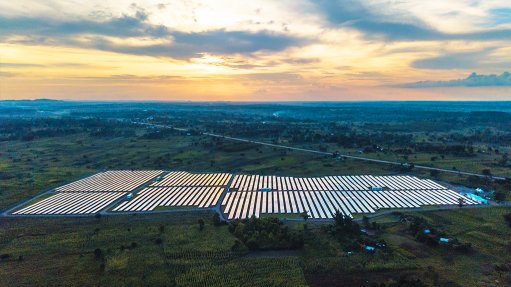
BLUE SKY THINKING Advanced software products make it far easier to quantify the efficiency of a particular building design
 
Picture by: Duane
BLUE SKY THINKING Advanced software products make it far easier to quantify the efficiency of a particular building design