Creamer Media’s Engineering News Online
Advanced Search


We have detected that the browser you are using is no longer supported. As a result, some content may not display correctly.
We suggest that you upgrade to the latest version of any of the following browsers:
         
close notification
powered by
GOLD 1346.35 $/ozChange: -28.17
PLATINUM 1407.50 $/ozChange: -19.00
R/$ exchange 10.20Change: -0.19
R/€ exchange 13.53Change: -0.14
 
PASSENGER RAIL
 
Prasa moves to align safety strategy with skills development
 
25th May 2011
TEXT SIZE
Text Smaller Disabled Text Bigger
 

The Passenger Rail Agency of South Africa (Prasa), which would spend about R250-million on skills development this year, would move to align its safety and skills strategies, CEO Tshepo Lucky Montana told Engineering News Online on Wednesday.

Following two recent train accidents, in Tshwane and Soweto, where the latter resulted in 857 commuters being injured, he said that skills development was a “clear and high priority”.

“Prasa is spending R97-billion on a rail rolling-stock programme over the next 18 years – we can have new equipment, trains and technology, but investment in safety would be further complemented and more effective though investment in ensuring that workers are properly trained and that we have the right skills.

“We have relatively young drivers – most of them skilled but not experienced. Skills development remains key for our drivers, as well as retaining experienced engineers and artisans,” he told Engineering News Online.

Montana added that the global shortage of rail engineers continued to be a challenge for Prasa, which resorted to ‘poaching’ from industry. In 2010, there were about 300 engineers working at Prasa, and this increased to 408 in 2011.

In response to the two accidents, the rail agency would also be reviewing current driver training programmes to find a balance between route knowledge and the technical aspects of train driving. “Before qualifying as a train driver, recruits must first become Metro guards and/or have extensive knowledge of the rail operating environment," Prasa Rail CEO Mosenngwa Mofi said.

Metrorail, which operates 2 200 trains a day and commutes about 2,4-million passengers daily, employs 1 108 train drivers across South Africa, with an average age of 35.

“Training for drivers lasts 18 months. Despite a lack of confidence that may exist in the public, I want to reinforce that drivers are trained adequately and it is up to management to review and ensure that drivers are obeying the rules and that they respect the safety environment,” Montana said.

Prasa would also be looking into the recruitment of a select number of retired train drivers on a short-term basis to serve as mentors to new train drivers.

COMPENSATION FOR INJURED COMMUNTERS

The “reckless and negligent” driver involved in the accident in Soweto on May 19, was identified as being responsible for the accident, and was dismissed earlier this week, Montana told journalists in Johannesburg.

The driver was found to have been driving at 85 km/h in a 35/h-km zone, with the speed at impact reduced to 33 km/h, and to have ignored two danger signals.

Prasa has allocated R20-million for the commuters injured in the train accidents in Tshwane and Soweto. Payment to commuters would start on May 30.

A once-off payment of R7 500 would be paid to injured commuters, and up to R10 000 for commuters with serious injuries. Eighteen of the 857 commuters injured in the Soweto incident were still receiving treatment in hospital.

The agency has set up walk-in offices at the Johannesburg Park station and Orlando station, while the office at the Tshwane office has already been opened.

In November, the agency would be introducing a commuter insurance cover, based on a no fault system, to all valid train ticket holders injured or killed in train accidents.

Commuters trying to defraud the system would be arrested, Montana warned.

Further, key initiatives to be rolled out following a meeting on May 21, to evaluate safety measures within the Metrorail and Shosholoza Meyl train operations, included the introduction of a compulsory stop at all T-signals, which required authorisation before proceeding.

Strengthening its human factor management programme was also identified, and all drivers who have violated safety rules in the past three to six months would be withdrawn from service and undergo refresher training courses.

Six drivers were currently participating in the refresher training courses and 19 drivers are currently facing disciplinary hearings for offences ranging from speeding to passing signals at danger.

The accident in Soweto resulted in R30-million damage to rolling-stock.
 

Edited by: Mariaan Webb


To subscribe to Engineering News's print magazine email subscriptions@creamermedia.co.za or buy now.

FULL Access to Mining Weekly and Engineering News - Subscribe Now!
Subscribe Now Login


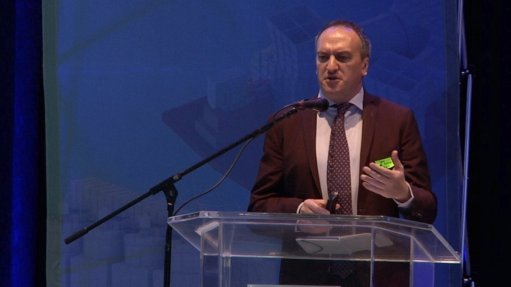
Prasa CEO Tshepo Lucky Montana discusses skills development and the agency’s safety strategy
GET SELECTED AUDIOCLIP
Embed
This article's audio Download (1.78mb)
 
Prasa CEO Tshepo Lucky Montana
 
Picture by: Duane Daws
Prasa CEO Tshepo Lucky Montana