Creamer Media’s Engineering News Online
Advanced Search


We have detected that the browser you are using is no longer supported. As a result, some content may not display correctly.
We suggest that you upgrade to the latest version of any of the following browsers:
         
close notification
powered by
GOLD 1720.51 $/ozChange: -2.86
PLATINUM 1622.97 $/ozChange: 2.45
R/$ exchange 7.57Change: -0.01
R/€ exchange 9.91Change: 0.00
 
BUSINESS & 2009 ELECTIONS
Political parties unpack economic policies
 
4th March 2009
TEXT SIZE
Text Smaller Disabled Text Bigger
 

Political parties were on the campaign trail on Wednesday explaining their manifestos to the business community in Johannesburg.

The Chamber of Commerce and Industry invited South Africa's key political players to unpack the economic policies of their election manifestos.

African National Congress secretary general secretary Gwede Mantashe said the business community was part of society, and increasing access to electricity and water would not only benefit communities but the business sector as well.

"I don't see the difference between what is of interest to business and what is of interest to society," he said.

He outlined the ruling party's five-point list of priorities in what is likely to be its next term in government.

This included poverty alleviation and job creation, education, health, rural development and crime.

On ANC economic policy Mantashe said: "Over the last 15 years... we targeted the fiscal policy and the monetary policy and we are getting results from that, that's why in the face of the deep global economic crisis our economy remains resilient.

"We are now saying lets take a step forward and focus on the real economy, that's why we put industrial policy at the centre of the policy intervention this year.

"Number two, we should focus on the trade policies... we must protect what is ours and create a balance so that the interventions we are making help the developing economies of which we are part," he said.

Mantashe attempted to dispel the "myth" that South Africa's labour laws were rigid, saying research proved the contrary.

There was a "proposal to revisit regulation of contracting out labour broking casualisation", he said.

Democratic Alliance leader Helen Zille punted an "open opportunity society in stark contrast to the closed crony society, comrade capitalism and everything else that goes with it.

Institutions of the state should limit and prevent power abuse by the ruling party. The state should not become an extension of the ruling party and use the instruments of the state against its opponents, Zille said.

DA chief whip Ian Davidson outlined the party's economic policy, calling for more flexibility in labour regulations.

Congress of the People president Terror Lekota also cautioned against a closed society where only a handful benefit from policies and programmes.

He said South Africa was at a turning point where it had to decide between a "party of liberation" or a "modern political party".

"SA is at a point at which the issue before our country is whether SA needs a party of liberation or a modern political party geared toward governance.

"The tragedy of very many liberation organisations... instead of gearing themselves with a new task, they continue to seek to reward themselves with the loyalties of yesterday with appointments to position of responsibility," he said taking a swipe at the party to which he previously belonged.

He said the poor needed economic empowerment to tackle unemployment and to ensure that those who were "unemployable" were skilled and equipped to participate in the economy.

Cope, Lekota said, would strive for stability by maintaining the constitution of the country and also by tackling the problem of crime and corruption.

It was agreed by all parties that crime was a problem which required urgent attention.

The African Christian Democratic Party said beefing up the number of police on the streets would not solve the problem. Rather, adequately skilling those already in the employ of the South Africa Police Service was a more beneficial starting point.

The Inkatha Freedom Party's Narend Singh said his party hoped to regain control of Kwazulu-Natal, which it lost due to floor-crossing.

He also urged the business community to provide financial support to smaller political parties as well in order to stimulate multi-party democracy.

Singh said at present business focused mainly on larger political parties creating a "David and Goliath" scenario where smaller parties struggled to manage financially.

United Democratic Movement leader Bantu Holomisa added his voice to Singh's appeal, saying it was necessary to regulate party funding in the country.

He said financing a political party should not be a donation that expected to garner opportunities and buy favours and tenders.

Holomisa's final words was a message to the youth: "It is time to put down the AK or what you call the mshini wam and take up the laptop, it is time to put down the panga and take up the calculator."

SACCI described the event as "successful", saying it was a vehicle for its future engagement with government.

Eleven political parties were contesting the upcoming election nationally and provincially - the Independent Democrats, ANC, IFP, ACDP, United Christian Democratic Party, DA, Freedom Front Plus, African People's Convention, UDM, Pan Africanist Congress of Azania, and Cope

Edited by: Sapa
FULL Access to Mining Weekly and Engineering News - Subscribe Now!
Subscribe Now Login


Hide Comments  
 
Readers Comments
 
image image
Let the best policies win....
image image 
image
Matthews Bantsijang on 08 Sep 09
 
 
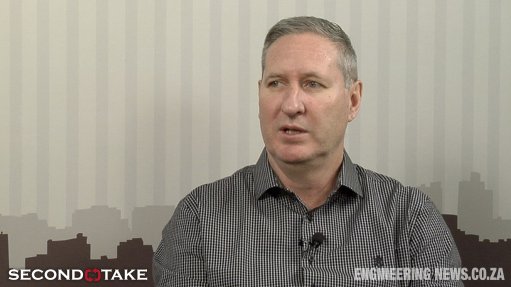
Gwede Mantashe, Ian Davidson, Mosiuoa Lekota speak on their parties economic policies Cameraperson: Danie de Beer Editing: Darlene Creamer
This video is licensed under a Creative Commons License
GET SELECTED VIDEO
Embed
Selected Video Download (19.09mb)