Creamer Media’s Engineering News Online
Advanced Search


We have detected that the browser you are using is no longer supported. As a result, some content may not display correctly.
We suggest that you upgrade to the latest version of any of the following browsers:
         
close notification
powered by
GOLD 1389.94 $/ozChange: 4.01
PLATINUM 1478.00 $/ozChange: -8.50
R/$ exchange 9.46Change: -0.05
R/€ exchange 12.18Change: -0.10
 
PLATINUM
 
Pilot plants on way for platinum, titanium value-add – Science Minister
 
25th September 2012
TEXT SIZE
Text Smaller Disabled Text Bigger
 

JOHANNESBURG (miningweekly.com) – Pilot plants were on the way for both platinum and titanium beneficiation, Science and Technology Minister Naledi Pandor revealed on Tuesday.

Delivering the inaugural address at a beneficiation workshop of the Centre for Science and Technology of the Non-Aligned Movement (NAM) countries held in Boksburg, Pandor said a fledgling company had already sold 18 platinum-using fuel cells to South Africa’s mobile phone sector and that determined mineral beneficiation efforts under way were aimed at the country giving birth to new fully fledged industries as progressions of South Africa's leading positions in platinum and titanium.

She spoke to strong applause after NAM Centre for Science and Technology New Delhi Professor Arun Kulshreshtha told the workshop that South Africa had been selected to host NAM Science and Technology’s thirteenth general council meeting next September, after which it would assume the presidency of the institution until 2016.

Pandor said it was now the turn of Africa to make the best of its considerable resources while at the same time steering well clear of the resource curse through the introduction of beneficiation and localisation, two overlapping processes, which the Minister conceded were both “complicated and complex”.

But South Africa had introduced policies for both, aimed at “promoting development at home”.

In platinum, South Africa had established Clean Energy, a South African fuel-cell company that would initially market and eventually assemble and manufacture fuel cells in sub-Saharan Africa in partnership with Anglo American Platinum and Altergy Power Systems.

Although Clean Energy was still in its market development stage, it had already sold 18 fuel-cell back-up power systems to mobile phone service provider Vodacom. Platinum serves as a catalyst in the hydrogen fuel cell process.

South Africa had also made progress with Hydrogen South Africa (HySA) Catalysis and HySA Systems, its two four-year-old centres of platinum-linked competence, which had secured partnerships with the private sector abroad.

Those partnerships would enable HySA to penetrate the global fuel market, following an agreement being negotiated with a Norwegian partner for the commercialisation of a hydrogen storage material, plus the co-funding and upscaling of the pilot plant into a fully-fledged manufacturing plant.

In titanium, the Department of Science and Technology was championing the development of an industry across the entire titanium value chain, from the raw mineral to primary metal powder and ultimately to the forming of metal mill products – plates, bars and tubes – and components, such as titanium castings as well as their machining and components manufacturing.

The titanium metal powder industry was estimated to have the potential to generate a turnover of R3.5-billion a year, which further beneficiation could increase to a downstream industry that would have the potential of turning over some R30-billion a year.

A titanium industry would require 450 workers, engineers and technologists in metal production and 2 000 workers, engineers and technicians in downstream component manufacturing.

The Council for Scientific and Industrial Research (CSIR) has developed a novel process in which titanium metal could be produced from titanium mineral ore, of which South Africa was the world’s second-largest supplier, but currently with negligible value added to the mineral before export.

New capabilities could position South Africa as a world leader in the cost competitive production of high-grade titanium metal powder.

“Titanium is a sought-after metal especially in the aerospace industry where aircraft and satellites need to be lighter in weight to consume less fuel,” Pandor said.

The pilot plant to be built at the CSIR in 2012 would accelerate the development of strategic capability.

“These efforts mean that, in the near future, South Africa will have a new industry built around titanium,” Pandor forecast, adding that a third mineral with beneficiation potential was fluorspar, of which South Africa hosted the world’s largest reserves.

South Africa’s rich fluorspar endowment had given rise to the planned 2013 listing on the JSE of a company which mines fluorspar 80 km north of Pretoria and which intends using it for the manufacture of fluorochemicals 52 km away, in Bronkhorstspruit.

Professor Kulshreshtha told the workshop that minerals beneficiation was an area of “immense potential” for developing countries well endowed with abundant mineral resources, which needed to share know-how and skills with one another.

It was unfortunate that a lack of skills, innovative research and technology, infrastructure and a new world trade regime were preventing developing countries from exploiting their mineral endowments to the extent that economically benefited a far greater number of citizens.

For example, mineral-rich Africa was lagging behind mineral-poor countries on a wide range of developmental indicators.

He said that India had woken up to the folly of exporting vast quantities of iron-ore at dirt-cheap prices to Japan and buying back steel at prices infinitely higher.

There was a need for policy makers, scientists, academics and technologists to address ways of filling the skills gap.

The NAM Science and Technology Centre, made up of 46 developing countries, had conducted 59 international workshops and 26 training programmes and published 54 technical books in the last 15 years.

It would be adding to its five fellowships with a new expenses-paid research fellowship scheme for scientists of developing countries.
 

Edited by: Creamer Media Reporter


To subscribe to Engineering News's print magazine email subscriptions@creamermedia.co.za or buy now.

FULL Access to Mining Weekly and Engineering News - Subscribe Now!
Subscribe Now Login


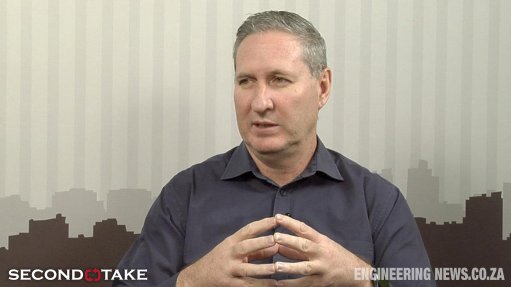
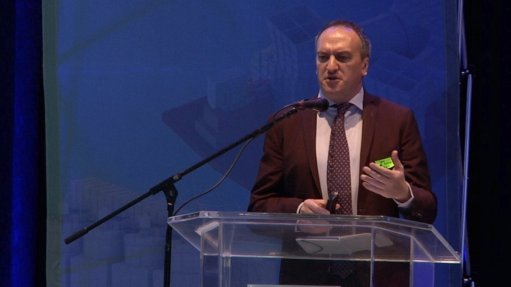
Science and Technology Minister Naledi Pandor tells Mining Weekly Online's Martin Creamer of the latest platinum and titanium value-add developments in opening the International Minerals Beneficiation Workshop in Boksburg.
This video is licensed under a Creative Commons License
GET SELECTED VIDEO
Embed
Selected Video Download (26.3mb)
 
Naledi Pandor and Martin Creamer
 
Picture by: Duane Daws
Naledi Pandor and Martin Creamer