By: System Author
13th August 1999
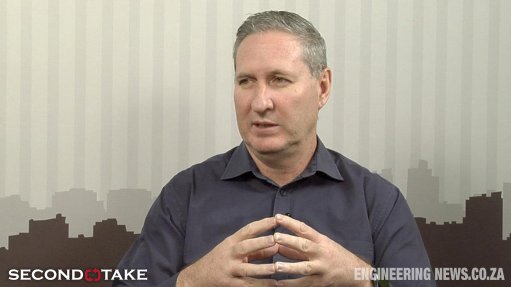
“We are focused completely on the future, and we have decided to move into the project finance and operations and maintenance area, which offers considerably better prospects for us in the long term,” says EVN director Andre Greyling.
In order to facilitate its success in these diversified disciplines, the company has merged with consulting engineer Otto Langeneger & Partners (OL&P),which specialises in water and wastewater process design, as well as the operation and maintenance of water and wastewater plants.
Allied to this merger is the formation of a new electrical division, and a shareholding by black-empowerment finance company, Zader Investment.
These changes to the overall structure of the company are part of EVN’s long-term goal of selling a range of soft and hard engineering services in order for clients to reap ‘one-stop-shop’ benefits.
Once fully operational, the new business units will focus jointly on privatisation opportunities within the country’s water sector, as well as in exploiting private–public partnerships in the burgeoning municipal- service arena.
Selecting Zader as a strategic partner, in particular, is seen as a masterful stroke.
By selling the empowerment group a share in the company, certain equity criteria are fulfilled, and the substantial financial muscle of the new partner can be brought into play.
This will facilitate a much-needed shift of dependency away from public-sector funding – so long the lifeblood of engineering consultancies – which is becoming increasingly thin on the ground.
Greyling is certain that the black-empowerment stake in the company will increase substantially in the medium term as the synergies between the companies are realised.
In order to entrench the relationship, EVN has invited Zader founder and chairperson Enos Banda to sit on the company’s reshuffled board as vice-chairperson.
Far from being a token placement, Banda brings some heavyweight connections to the company, which should help sustain or boost its impressive 20% year-on-year growth.
The erstwhile exile has completed a master’s degree in finance accounting and a doctorate in jurisprudence and corporate law at Georgetown University of the US, enabling him to practise as an attorney in New York and as an advocate in the South African supreme court.
Add to this his record as chairperson for both the National Electricity Regulator and the Development Bank of Southern Africa’s municipal infrastructure investment unit, and the strategic implications of his appointment are evident.
Greyling does not envisage the company’s 70:30 (public:private) workload-split changing, although he does predict an increase in overall activities arising from the revamped structure and the in-house finance connection.
The partnership with OL&P is already paying dividends, with the company’s achieving leading status in the build, operate, train and transfer (Bott) of water projects in Mpumalanga.
It is also a member of Metsico, the consortium responsible for the Bott programme in the Northern Province.
“The challenge in the water sector is no longer in the design phase of the project, but rather to design for the right reasons, to implement at the right time, and to invest at the right tempo.
“Project sustainability is becoming more and more important, and we are equipping ourselves to adapt to this change in mentality,” says Greyling.
Another area which is enjoying attention from the company is Gauteng’s low-cost housing market.
The company is pitching for the design of bulk-infrastructure for a number of new affordable-housing developments, as well as for the anticipated municipal-service delivery.
Although the EVN and OL&P brands are well-established in South Africa, the group management is taking a bold step to entrench the vitality of the company, and also its new range of services.
All of these structural changes will be backed by a name change – as of the beginning of this month, 28-year-old revamped EVN has been renamed Bigen Africa.
The new corporate identity is aimed at unlocking doors in Africa’s growing project market, which is dominated by European and US firms at present.
“We are keen to reinforce the notion that African companies should handle projects in Africa.
“As we compete more and more against international firms for work, we are seeing that big clients are tired of working with foreigners who are not taking a hands-on approach.
“They are doing a lot of remote work, and they are simply not familiar with local conditions,” stresses Greyling, echoing the sentiment of many local consultancies.
Hard currency earned from export work has only just started flowing into the company’s coffers, and contributes only 5% to its bottom line at this point.
Greyling is confident, however, that the best efforts of the export marketing team – as well as the new structure – will fuel export growth across the borders by 500% in the next four years.
Edited by: System Author
To subscribe to Engineering News's print magazine email subscriptions@creamermedia.co.za or buy now.


lr1_2.gif)