Creamer Media’s Engineering News Online
Advanced Search


We have detected that the browser you are using is no longer supported. As a result, some content may not display correctly.
We suggest that you upgrade to the latest version of any of the following browsers:
         
close notification
powered by
GOLD 1360.86 $/ozChange: -14.23
PLATINUM 1461.50 $/ozChange: -11.00
R/$ exchange 9.58Change: -0.03
R/€ exchange 12.30Change: 0.04
 
 
Outlook for defence industry positive
 
28th February 2003
TEXT SIZE
Text Smaller Disabled Text Bigger
 
For most South Africans, the election of the ANC to power proved to be a boon, with the arrival of democracy, and the opening up of the local economy – but this was not quite the case for local South African defence contractors.

Engineering News spoke to brigadier-general (ret) John Wesley, executive director of the South African Aerospace, Maritime and Defence Industries Association (AMD), the former air force pilot reporting that the cut in the defence budget since the late 1980s affected the indigenous defence industry quite dramatically.

Wesley says that, since the end of the Cold War, Namibian independence, and the withdrawal of Cuban and South African troops from Angola, as well as the unbanning of the ANC and other black liberation groups in 1990, the South African Defence Force capital budget shrank by 80%.

Many companies had to cut back and, in the words of former State President and Defence Minister PW Botha, defence concerns had to “adapt or die”.

This resulted in many companies focusing on niche applications, and becoming more commercially and export-orientated.

Wesley, a former jet fighter pilot and helicopter pilot tells Engineering News that, in certain fields, such as remotely-piloted aircraft, aircraft upgrades, guided missiles, avionics, aircraft monitoring systems and electronic warfare equipment, South African companies are now among the world leaders.

Increasingly, European companies and firms are realising that South African technical expertise and products can compete with the best in the world.

An example of this is the sale of Umkhonto surface-to-air missiles made by Kentron for the Finnish navy.

Although the government’s industrial participation (IP) programmes oblige foreign companies to invest in local companies and procure products and services from local companies, many corporations from abroad source products and services from home-grown companies over and above that required by the industrial participation programmes, because of the price and quality of work provided.

One of the main challenges to the defence industry is to develop the smaller engineering and manufacturing companies into primary exporters.

Although a large proportion of small companies’ output goes to export, it is as products and services integrated into larger goods exported by large defence companies.

Direct exports would ensure bigger growth both for companies, and for the country’s economy.

AMD has also been involved with Trade and Minister Industry Alec Erwin’s stated aim of developing the South African aerospace industry.

The government is hoping to begin an initiative similar to the Motor Industry Development Plan, and make South Africa a world-class aerospace technology centre.

Wesley is of the opinion that, unless the best use is made of current IP programmes, this could become more difficult in future as, at present, the industry enjoys the benefit of IP on major government contracts – such as French company Airbus supplying South African Airways (SAA) with a new fleet.

When companies such as SAA are privatised, there will be no more IP obligations forthcoming.

Wesley sees the future of the South African defence industry as positive, rather than bright.

He sees the country cementing its position as a high-quality supplier of niche products.

As the South African industry matures, the trend to partnerships with international companies will become more widespread.

When it comes to major aerospace programmes, such as next-generation large commercial transport aircraft, the international trend is for risk and revenue share type cooperation.

A company buys into the programme, and then is responsible for part of the development and manufacture.

The company then profits from this in the future when the end-product is sold, earning a portion of the revenue.

However, the only South African defence company that currently has the resources to become involved in such schemes is Denel.

This is because in most multinational research and development (R&D) projects it is necessary to share some of the risk, while also having a chance to share in possible profits.

The catch is that claiming even a small stake in a project can cost well over a billion rands.

The flipside is that any company that foots a percentage of the R&D costs is entitled to have that same percentage of projects developed in its home country.

Wesley says a 2% stake in a big international project can create as many as 400 engineering-related jobs, along with the numerous spin-offs.

These include technology transfer.

Numerous success stories regarding technology transfer and international cooperation are already evident.

Wesley cites the example of a German company that had developed an artillery piece with a range of over 40 km.

However, the group did not have ammunition able of achieving this distance, but a South African company did.

Both the German and South African concerns benefited from working together.

Although there has been some controversy in the past over the sale of weapons to unsavoury regimes, with less than perfect human rights records, Wesley assures Engineering News that there are a number of checks and balances, allowing government to ensure weapons are only sold to regimes that are above board.

These include the Non-Proliferation Council (NPC) and the National Conventional Arms Control Committee (NCACC).

The NPC ensures that local industries comply with the requirements of the various international treaties and agreements on weapons of mass destruction, and the proliferation of chemical and biological weapons that the government is a signatory to.

The NCACC has to approve all sales and exports of items that have a military, or possible military use, says Wesley.

In considering the merits of each case, the NCACC looks at issues such as UN sanctions, whether the sale would benefit South Africa’s foreign policy objectives, and at the recipient’s human rights record, and the potential for increasing conflict in the area of sale.
Edited by: Marius Roodt


To subscribe to Engineering News's print magazine email subscriptions@creamermedia.co.za or buy now.

FULL Access to Mining Weekly and Engineering News - Subscribe Now!
Subscribe Now Login
 
 
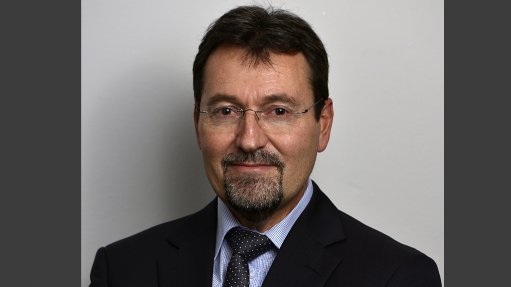
John Wesley
 

John Wesley