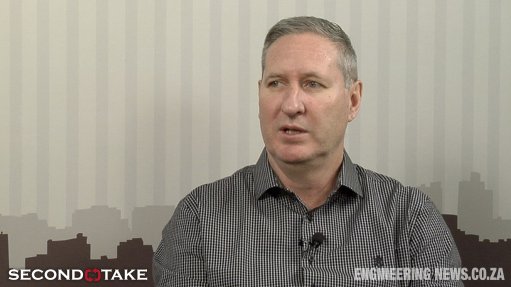
Every Friday morning, SAfm’s AMLive’s radio anchor Jeremy Maggs speaks to Martin Creamer, publishing editor of Engineering News and Mining Weekly. Reported here is this Friday’s At the Coalface transcript:
Maggs: Let’s start with gold, you say that South Africa has been stripped of its gold crown by China, but now Australia is poised to become the first country to excel at mining on the ocean floor.
Creamer: Yes, top a Canadian Professor at the University of Toronto has tipped Australia to excel in mining gold from the sea bed. There are two companies that are actually located in Australia but listed on the Toronto exchange and also the London exchange and which have got very seafaring names, Nautilus and also Neptune.
Those companies are now setting about mining the ocean floor and particularly pursuing gold and copper. Besides having the crown for good gold production, South Africa has also worn the crown for being able to mine at depth, but they say it is far easier to put a pipe 3km down through the water than to sink a shaft through rock.
They also point to the sea-floor’s massive sulphides that they are targeting, which contain large quantities of gold and copper. They are using some South African technology, of course, because De Beers has always been an expert on mining diamonds in the sea and in fact the world’s most advanced company at doing that, but when it comes to gold, it’s another issue.
It’s now foreseen that Australia will possibly be the first to succeed and excel at getting the gold and copper treasure off the sea floor.
Maggs: Pretty much a mining theme to our discussion this morning. Vast quantities of raw chromite ore are still being allowed to leave the country’s shores in what, you say, is an unbeneficiated form. This would deny the country wealth and obviously job opportunities as well.
Creamer: That’s right. Just when we thought the hullabaloo of last year had made sure that there is legislation to prevent our chrome ore going out in raw form, we are now still selling family silver at a tenth of what we should be getting for it.
This kills jobs and revenue and it demoralises those who are spending a lot of money to beneficiate. So, the government promised quite emphatically last year that it would introduce legislation to stop this. That legislation unfortunately wasn’t put through separately, it was combined with big changes to the minerals legislation and it has now got bogged down in Parliament and thrown back to the Parliamentary Portfolio Committee.
During the same period of time, the Indians have managed to slap good tariff protection twice over and we have actually as South Africans done nothing and we are a far more mature industry when it comes to chromite ore and beneficiation of chrome.
Now with the power crisis, of course, a lot of the people doing it will say that it is far less energy intensive just to mine this ore and send it out rather than beneficiate it. So, it looks like we are just going to continue selling the family silver at a tenth for what we should be getting for it.
Maggs: Problems as well, or concerns with the country’s coal quality. You say it is going downhill so fast that use needs to be found urgently for this mountain of reject coal that is currently being built up.
Creamer: Eskom warned about this build up of reject coal at a recent conference. They said that we need to look at ways to try and use this. You can see it in two ways, either it’s an environmental scurge that you have got, the build up of huge quantities of reject coal, or you can say that there is energy in there and turn it to account.
Well, Eskom are looking towards the latter, where they will kill two birds with one stone and remove this mountain of discard coal that has built up over the years, about a billion tons worth and growing at about 60 000 tons a year. At the same time use technology known as fluidised bed technology in order to generate power from this.
This is something that hasn’t happened in South Africa before, where we make use of fluidised bed technology to turn this into power and electricity, but it does happen elsewhere in the world. So, it is now urgent that we do something as our coal in Mpumalanga goes downhill, the quality drops.
We are going to get more duff coal as they call it and before the Waterberg actually starts taking over and providing a better quality of coal, there could be technology put to use so that we can take this reject coal and turn it into valuable electricity.
Maggs: Thanks very much. Martin Creamer is publishing editor of Engineering News and Mining Weekly, he’ll be back with us at the same time next week.
To subscribe to Engineering News's print magazine email subscriptions@creamermedia.co.za or buy now.


lr1.gif)

lr1_2.gif)