Creamer Media’s Engineering News Online
Advanced Search


We have detected that the browser you are using is no longer supported. As a result, some content may not display correctly.
We suggest that you upgrade to the latest version of any of the following browsers:
         
close notification
powered by
GOLD 1376.22 $/ozChange: -9.71
PLATINUM 1463.50 $/ozChange: -23.00
R/$ exchange 9.56Change: -0.15
R/€ exchange 12.34Change: -0.26


On-The-Air (04/04/2003)
 
4th April 2003
TEXT SIZE
Text Smaller Disabled Text Bigger
 
SAfm anchor John Perlman:

As always on a Friday at this time, AMLive is joined by Martin Creamer, Publishing Editor of Engineering News and Mining Weekly. Martin, a very good morning to you.

Wealth from waste citrus products, tell us more about that.

Martin Creamer:
South Africa’s chemical technology incubator, Chemin, has gone to work in the Eastern Cape at Kat River Citrus Co-op. They found that the 28 farmers there, 30 % of them black emerging farmers, export 60 % of their citrus crop and let 40% go to waste. So, they are looking at how they can turn that waste to positive account. They have come up with some good ideas of new technologies and some business plans which they’ll apply to extract citrus oil, citrus aromas and also fruit acids. They will also get a high-value liquid fertiliser from the biomass. Before they extract that from the biomass, they will also look to getting pectin out of the biomass. Pectin is a gelling agent that is used in foods like jellies, jams and yogurt. We import over 400 t of pectin a year from mainly Denmark and Germany. Chemin now wants not only the Kat River Citrus Co-op, but all citrus producers in South Africa, to come together and to try to create a proper pectin plant, possibly at Coega in the Eastern Cape, so that South Africa can first substitute imports of pectin and then later also export it.

John Perlman:
Vehicle tyres, what is the plan for that?

Martin Creamer:
South Africa is sitting on a mountain of discarded vehicle tyres and a Gauteng company has won a contract to do the final study on how South Africa can turn what is a cost centre into a revenue centre. The United States Trade and Development Agency has put forward funds to the Richards Bay Spatial Development Initiative and they invited tenders from the US for a company to study the problem and recommend how it can be overcome. Although these tenders were invited in the US, a South African company has actually won the contract. That company is Bateman Engineering, which is now 60% in to the study of how to deal with South Africa’s mountain of used vehicle tyres. Of course, we think immediately of the environmental problem, but the study has so far thrown up an even bigger problem, a safety critical problem. What is happening is that these tyres are being badly regrooved and resold into the system, sometimes by people who are not at all scrupulous. They even on occasion re-groove discard tyres that have breaches in the under-tread. There is a lot of evidence to show that silicone and black polish are being used to disguise torn under-treads. Once these torn under-treads hit the road, it is only a matter of time before they cease to be operational and that can, of course, cause serious vehicle accidents.
John Perlman:
We talk about power stations from time to time on AM Live, but a privately-funded power station I believe is quite new.

Martin Creamer:
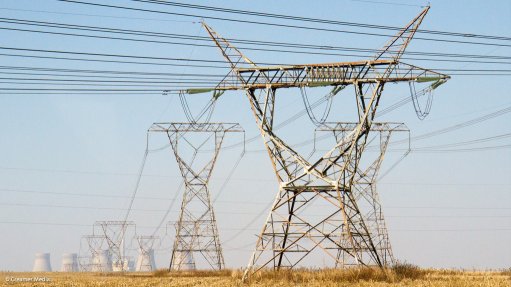
South Africa’s first new privately-funded power station is now on the cards in Richards Bay in Kwazulu Natal. Again, the United States Trade and Development Agency has put forward some funds, as has South Africa’s State-owned Industrial Development Corporation. The R13-million feasibility study has now reached the point where the initial scooping has been done for the environmental impact study. A draft scope report has also now been opened to public debate. What Rainbow Millennium Power Company want to establish, is a 240 MW power station at a cost of R2,5-billion. They will use a technology that is slightly different, circulating fluidised-bed technology. This coal-based technology gives off fewer emissions, so that there is less of a pollution problem. It also facilitates a relatively smaller power station in relation to its output. The area, Richards Bay-Empangeni, is very power hungry. Just the aluminum plant there alone is South Africa’s third-largest user of electricity after the cities of Cape Town and Durban. So, they plan to site it in the right place and it seems like the biggest take-off will be from heavy industries. They are hoping that in 2004, if all goes well with the scoping studies and the environmental impact assestment, that they will start building this power station for it to come on stream three years later.

John Perlman:
Martin Creamer is publishing Editor of Engineering News and Mining Weekly and he will be back with us at the same time next Friday.


To subscribe to Engineering News's print magazine email subscriptions@creamermedia.co.za or buy now.

FULL Access to Mining Weekly and Engineering News - Subscribe Now!
Subscribe Now Login
 
 
On-The-Air (04/04/2003)
 

On-The-Air (04/04/2003)