Creamer Media’s Engineering News Online
Advanced Search


We have detected that the browser you are using is no longer supported. As a result, some content may not display correctly.
We suggest that you upgrade to the latest version of any of the following browsers:
         
close notification
powered by
GOLD 1389.15 $/ozChange: 14.06
PLATINUM 1456.00 $/ozChange: -16.50
R/$ exchange 9.57Change: -0.02
R/€ exchange 12.36Change: -0.02


On-The-Air (02/11/2007)
 
2nd November 2007
TEXT SIZE
Text Smaller Disabled Text Bigger
 

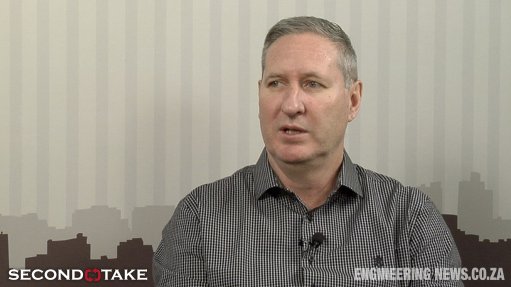
Every Friday morning, SAfm's AMLive's radio anchor Tsepiso Makwetla speaks to Martin Creamer, publishing editor of Engineering News and Mining Weekly. Reported here is this Friday's At the Coalface transcript:

Makwetla: Now Martin, I am told that Botswana is taking firm steps towards realising its diamond dream of becoming Africa's Antwerp.

Creamer: The President of Botswana Festus Mogae has made it clear that he wants Botswana to be no less a diamond centre then Antwerp is, or that Jerusalem or Mumbai are. He has taken firm steps and has already licensed 16 diamond cutters and polishers. Six of them are already operating and the remaining 10 will be operative within the next three years. This will be an industry which will employ 3 000 additional people and they will be cutting and polishing diamonds worth between R3-billion and R4-billion a year. They are building up their intellectual capacity for this and at any one time Botswana has at least 19 000 students in global universities around the word on full international scholarships. 98% of those people come back and jobs are now being created to take in these new people. You have got a billion dollars and more being spent in Botswana on a new science and technology university. You have also got a lot of energy projects coming through, the one is $7-billion and that will be a power station linked to a coal mine that will supply energy into South Africa. The country itself is rebuilding its own energy infrastructure and is putting $1,2-billion into its own Morapuli power station.

Makwetla: I believe exciting ventures for South Africa with the United States ordering another batch of 500 South African-made armoured vehicles.

Creamer: Yes, the United States Department of Defence is really taking a liking to the armoured vehicles it gets from South Africa. The armoured vehicles we are talking about here are special armoured vehicles called mine-resistant and ambush protected vehicles. They have now ordered another 511 of the bigger version of these and 89 of the smaller version. That takes the total on order at the moment to 1 755 and it is a mixture. Some of these are going to be built in South Africa, when we talk South Africa it is the Land Systems OMC of Benoni and others will be assembled in the United States. All in all this is to South African design and South Africa will either get the royalty or will actually export the finished vehicle. In Benoni at the moment they are expanding their premises. They were producing something like one of these vehicles a day and are now ramping up to six of these vehicles a day between now and March. The US orders have really established South Africa as the supplier of these mine resistant and ambush protected vehicles to such an extent now that designs are also being considered by the Ministries of Defence in the UK and Poland.

Makwetla: Finally, a South African aeronautics company is planning to launch Africa's first commercial space rocket. Quite exciting.

Creamer: South African aeronautics company Marcom Aeronautics and Space are intent on launching Africa's first commercial space rocket. The person heading this is Mark Comninos. He is an aeronautics engineer with training in South Africa and also in the US. He sees a commercial gap in Africa at the moment because we know that 26 countries in the world are creating space agencies and there is a lot of demand for space transport at the moment. In South Africa if you think of a space agency developing here we already have the ground part of it and that is the Satellite Application Centre at the Council for Scientific and Industrial Research. We also have a company in Stellenbosch, SunSpace already building microsatellites. What we don't have is the ability to launch these into space. This is the gap that he wants to fill and he believes that he can do it at lower cost and 98% of the materials that he will use for his Cheetah 1, this is particular the rocket that he is planning to build, a two stage rocket, 98% of that raw material will come from South Africa itself. He believes that this can be built in three phases. The first phase, he says, could be done in 12 months at a capital cost of about R20-million. Already there is foreign funding interest, people from outside who see that we can possibly come down the cost curve on satellite launch vehicles for payloads up to about a ton, which would be what South Africa needs at the moment with SunSpace, which is awaiting a launch by the Russians, for instance. So he believes it is highly feasible to do this and we would also make a re-use of the Overberg test range. That would require a launch pad and other facilities to be built.

Makwetla: Always enjoyable chatting to you. Thanks very much. Martin Creamer is publishing editor of Engineering News and Mining Weekly, he'll be back with us at the same time next week

Edited by: Creamer Media Reporter


To subscribe to Engineering News's print magazine email subscriptions@creamermedia.co.za or buy now.

FULL Access to Mining Weekly and Engineering News - Subscribe Now!
Subscribe Now Login


Multimedia 2 November 2007
This video is licensed under a Creative Commons License
GET SELECTED VIDEO
Embed
Selected Video Download (12.59mb)