Creamer Media’s Engineering News Online
Advanced Search


We have detected that the browser you are using is no longer supported. As a result, some content may not display correctly.
We suggest that you upgrade to the latest version of any of the following browsers:
         
close notification
powered by
GOLD 1389.95 $/ozChange: 14.86
PLATINUM 1460.50 $/ozChange: -12.00
R/$ exchange 9.67Change: -0.12
R/€ exchange 12.46Change: -0.13


On-The-Air (26/06/09)
 
26th June 2009
TEXT SIZE
Text Smaller Disabled Text Bigger
 

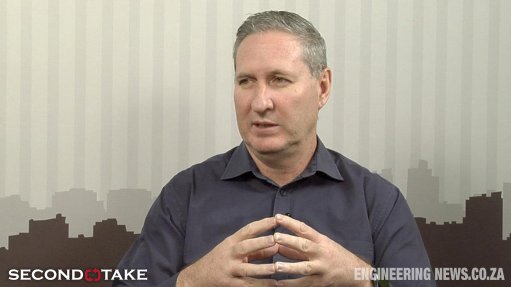
Every Friday morning, SAfm's AMLive's radio anchor Tim Modise speaks to Martin Creamer, publishing editor of Engineering News and Mining Weekly. Reported here is this Friday's At the Coalface transcript:

Modise: Good to have you with us, Martin. South Africa's satellite has arrived in Russia to prepare for its launch into space in August.

Creamer: Yes, we've had a lot of delays with this satellite. It is a South African-built satellite, but we need someone to launch it and the last time, when we put our SunSat satellite into space, in 1999, the Americans launched it for us. This time, with Sumbandila, which is the Venda language for ‘lead the way', we have got the Russians to assist us. But there have been a lot of delays and, finally, we have got our satellite to Kazakstan, which is the cosmodrome that is controlled by the Russians there. So we won't be responsible for any of the delays now, but we are not primary payload, we are secondary payload on the Soyaz rocket.

The rocket is there, ready, but the primary payload should come in by Saturday. That then takes another 40 days to attach it to this rocket and we will have that time, so the pencilled-in date now is August 20, and we should be able to meet that.

Modise: Now, the new toll road system is being introduced in Gauteng, but a huge billing challenge awaits the introduction thereof.

Creamer: Yes, those that are bidding for these tenders now, to do the billing system for this new era that we're entering into where we pay to go to Pretoria along roads that we never used to pay before, they will be tolled, but they will be tolled in a way where you won't have a tolling booth where you've got to pull out some money and pay physically. This is a situation where you continue driving and you get billed. There'll be gantries overhead that track your electronic tag - provided you've got one in your car, under your mirror or they will have cameras to take pictures of your number plate - and then they will bill you directly.

There's a lot of legal backing there to make sure that this is quite strict and people have to pay. But one of the concerns now, by the people bidding for this contract, is that South Africa is pretty unique in that of the three-million people using this, less than half are banked, so where do you send the bill? Many of them have vehicles, but they don't seem to have fixed addresses, so where do you send the bill? And they don't want a situation where few are paying for these roads, which are now R76-million per kilometre, so pretty expensive stuff. So they want to make sure they can build so they are linking it to the demerit system. If people continually don't pay, you'll suffer demerits, and you may lose your driver's licence. They are also linking it to an intelligent licence plate introduction so that there will be fewer people who have false number plates. Hopefully, billing will come through so that they can collect something like R250-million a month.

Modise: And the water supply to Durban is going to be improved with a R700-million pipeline.

Creamer: There has been unprecedented growth and demand for water in the western and northern areas of Durban, and they've had to rush in with this new western aquaduct. The first 20 km of pipeline is already under way, which they started in January. The second phase will come early in 2010 of this R700-million. But the big part is on the second phase, with R550-million spent there for 55 km of pipeline to bring additional water into these areas that have grown in an unprecedented fashion.

But it's very interesting to see a little exciting addition to the way they are doing their pipeline development on this western aquaduct and it is related to energy. We know that energy costs are going up and we know that when water travels down these pipelines there's a potential for hydropower. We've never actually exploited that before and sometimes that water runs at quite high pressure and there's excess pressure and what Durban is going to do is invite private companies to set up generator sets, so that from that water movement you can actually generate some electricity and then they will buy that 10 MW that will be generated from the companies that do that.

Modise: That's Martin Creamer, the publishing editor of Engineering News and Mining Weekly. He will be back At the Coalface at the same time, next Friday.


Edited by: Creamer Media Reporter


To subscribe to Engineering News's print magazine email subscriptions@creamermedia.co.za or buy now.

FULL Access to Mining Weekly and Engineering News - Subscribe Now!
Subscribe Now Login


podpol_26062009
GET SELECTED AUDIOCLIP
Embed
This article's audio Download (4.99mb)