Creamer Media’s Engineering News Online
Advanced Search


We have detected that the browser you are using is no longer supported. As a result, some content may not display correctly.
We suggest that you upgrade to the latest version of any of the following browsers:
         
close notification
powered by
GOLD 1383.59 $/ozChange: -4.58
PLATINUM 1434.00 $/ozChange: -17.00
R/$ exchange 9.99Change: -0.02
R/€ exchange 13.34Change: -0.06


On-The-Air (05/06/09)
 
5th June 2009
TEXT SIZE
Text Smaller Disabled Text Bigger
 

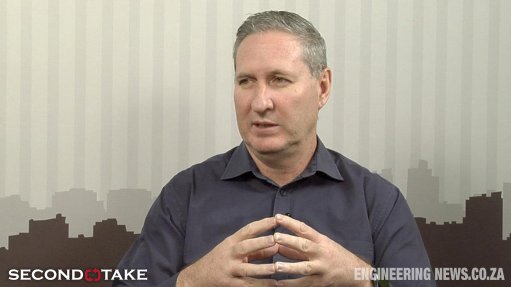
Every Friday morning, SAfm's AMLive's radio anchor Tim Modise speaks to Martin Creamer, publishing editor of Engineering News and Mining Weekly. Reported here is this Friday's At the Coalface transcript:

Modise: A new microdot technology is available that puts car thieves on the spot. This seems like very good, positive technology that we should be excited about.

Creamer: What is happening now is there's a new technology, a microdot technology, which is sprayed onto your vehicle. You get about 10 000 dots sprayed onto your vehicle, and sometimes up to 15 000 dots. Just one of those dots has the identity of the vehicle. It's got space for 17 digits. When we're talking about these dots, they're as small as a grain of salt, like a pin-prick, and there are 10 000 of them on 88 different parts of the car.

What has been happening with car theft is that car thieves take the cars and file off the chasis number, they take away the vehicle identity number, so people don't even know who's car it is. The police recover about 12 000 vehicles a year worth about R1-billion, but they have to destroy them because nobody knows who the owner is. Half of the cars that are stolen and hi-jacked get a new identity and they come back on the road. Another 30% get chopped up for parts and 20% get exported.

Now, you'll have cars with an actual DNA so that their identity cannot be destroyed. They've tried to experiment now by putting these microdots on vehicles and blowing these cars up and you can still find that identity and, by using ultraviolet light and magnifying lenses, you can pick up from those tiny grains of salt-sized dots what the ownership is.

Modise: The determination of the world to reduce its carbon footprint may lift the price of palladium that is mined in South Africa. How so?

Creamer: The darling of the platinum group metals has been platinum, which has been in demand and grown so vigorously because of the demand for diesel vehicles, where it is actually used. But the world now wants to get rid of CO2, as that is public enemy number one. On the drawing boards now of the automotive industry companies, although they're down at the moment, they will come back, and what they're planning is a big emphasis on much smaller vehicles, turbo charged vehicles, engines that are gasoline driven, which will mean that the same growth in that demand for platinum won't be there, but fortunately, we've got platinum group metals and within those platinum group metals is palladium and many see that the future demand is going to have an emphasis on palladium going forward.

That has always been a Russian story in the past because the Russian's are seen as very big suppliers of palladium, but South Africa is also a very big supplier of palladium and some manufacturers are forecasting, like GMSA, that the next decade looks like being a palladium decade.

Modise: Still staying with mining, Zimbabwe is taking steps to attract billions of dollars of investment in its neglected mining sector. What's happening there?

Creamer: Zimbabwe's new prime minister Morgan Tsvangirai has been doing his sums and he is looking for new investment opportunities in Zimbabwe, and the one that is really looking promising is the mining opportunity.

The Zimbabweans are calculating that, by 2011, there will be a new demand for mining commodities and we'll be out of the slump and back into the boom. What they're doing is retailoring their mining policies to attract investors now. Those policies haven't been investor-friendly in the past and the policy of indigenisation, where 51% of the mines would have to be owned by local Zimbabweans, slows down the investment.

But, he calculates that between 2011 and 2018 they could attract something like $16-billion worth of investment into mining and we know that their agricultural sector is not doing too well, they need something to boost them and this is what they're looking to because they are endowed with very good metals and minerals. They are the second-biggest potential producer of platinum. We do know that some of the South African companies have gone through the bad times there, like Implats and Aquarius Platinum, who are still in there. But there is a lot of opportunity for more activity within the platinum group metals space and then there's also gold, copper, coal and nickel so they are looking towards this new era, the comeback of demand in commodities, and we even saw the prices rise again and that there will be this comeback in demand and they want to be prepared for it with good policies to attract strong investment.

Modise: That's Martin Creamer, the publishing editor of Engineering News and Mining Weekly. He will be back At the Coalface at the same time, next Friday.


To subscribe to Engineering News's print magazine email subscriptions@creamermedia.co.za or buy now.

FULL Access to Mining Weekly and Engineering News - Subscribe Now!
Subscribe Now Login


podsafm_05062009
GET SELECTED AUDIOCLIP
Embed
This article's audio Download (5.87mb)