Creamer Media’s Engineering News Online
Advanced Search


We have detected that the browser you are using is no longer supported. As a result, some content may not display correctly.
We suggest that you upgrade to the latest version of any of the following browsers:
         
close notification
powered by
GOLD 1345.02 $/ozChange: -20.80
PLATINUM 1445.50 $/ozChange: -16.20
R/$ exchange 9.41Change: -0.09
R/€ exchange 12.08Change: -0.08
 
Cash Handling
 
On-site retail cash recycling a growing trend
 
10th August 2012
TEXT SIZE
Text Smaller Disabled Text Bigger
 

Cash recycling, when money received is securely dispensed after being recorded, will increasingly happen on-site at retail outlets and banks. Businesses will have to sort notes for fitness in the near future without sending the currency back to the South African Reserve Bank, says Global Payment Technologies (GPT) operations manager JJ Kelly.

In the past, all notes had to be sent to the Reserve Bank for the sorting and destruction of unfit notes.

“However, banks, retailers and businesses will have to sort currency for fitness in-house, send damaged currency to the Reserve Bank and reuse the cash that it has, either by sending it to where it is needed in a local area and reducing the distance the money must travel, or reusing it on-site after it has been sorted and reconciled for accounting purposes,” he said at the GPT cash movement conference in July.

The showcase displayed several international cash movement technologies, such as automated transport of medical samples and cash along tubes, as well as money verification and sorting technologies.

There is a trend among retailers and banks to turn tills and pay points into safe deposit and withdrawal points, where money in the till is kept to a minimum and deposited money is automatically counted, verified, reconciled and deposited into a category-four safe on the premises, he said.

From these recycling safes, money can then be sent to nearby automatic teller machines (ATMs), till floats can be dispensed directly to cashiers when they come on shift, or if two or more share a till, separate floats can be used. Money can also be withdrawn by individuals or sent to the banks, as required.

“An example of such a system in South Africa is East Gate retail mall, in Johannesburg, where pneumatic tubes transport cash from stores to an underground vault, from where it is used to refill ATMs on the premises, or sent to the banks. Legislation for standards and specifications will enable easier integration of these systems among different companies.”

However, companies must select the cash movement and handling technology that best suit their processes, he specified.

Cash recycling also improves the safety of patrons by reducing the movement of money in and out of stores and shopping centres. It also improves reconciliation by checking notes received for secu- rity features and enables safe deposits to be made from the tills, he said.

“The localised use of money reduces the distance and volume of cash in transportation. It also improves distribution. However, this will mean that retailers, as well as the banking and business sectors, will have to resort to technology to sort cash received for fitness before it is dispensed.

“New systems are increasingly being implemented worldwide. Some of these will enable retailers to use new technologies, such as near-field control on smart devices that can securely be used as an electronic wallet, further reducing the need to move cash. Banks and industry must invest in the infrastructure needed to support these systems in the future,” concluded Kelly.

Edited by: Creamer Media Reporter


To subscribe to Engineering News's print magazine email subscriptions@creamermedia.co.za or buy now.

FULL Access to Mining Weekly and Engineering News - Subscribe Now!
Subscribe Now Login


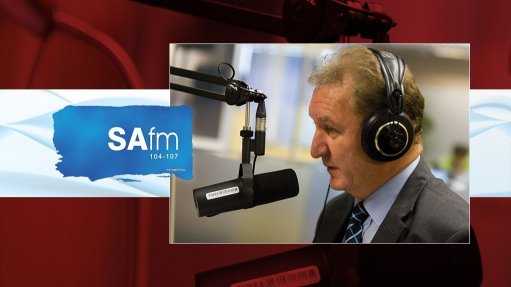
Global Payment Technologies operations manager JJ Kelly discusses cash movement technologies in South Africa. Camerawork: Nicholas Boyd. Editing: Darlene Creamer.
This video is licensed under a Creative Commons License
GET SELECTED VIDEO
Embed
Selected Video Download (4.36mb)