Creamer Media’s Engineering News Online
Advanced Search


We have detected that the browser you are using is no longer supported. As a result, some content may not display correctly.
We suggest that you upgrade to the latest version of any of the following browsers:
         
close notification
powered by
GOLD 1347.25 $/ozChange: -27.27
PLATINUM 1417.50 $/ozChange: -9.00
R/$ exchange 10.22Change: -0.21
R/€ exchange 13.54Change: -0.14
 
NUCLEAR
 
Nuclear project development needs to reach feasibility
 
24th August 2012
TEXT SIZE
Text Smaller Disabled Text Bigger
 

There is much work to do in terms of project development to get State-owned power utility Eskom’s nuclear build programme to feasibility stage, says professional services firm KPMG South Africa director of global infrastructure Mohsin Seedat.

The nuclear build programme is aimed at generating 9.6 GW of nuclear capacity in South Africa by 2030. Government committed to this programme in its Integrated Resource Plan 2010 (IRP 2010) for electricity.

However, Seedat says the challenge of this programme is that it is an investment that requires significant capital outlay upfront.

“The benefits are realised over a 60-year period, which yield cost-effective power in the long term, but the upfront costs could be significant for the country,” he says.

Project development work is required, in part to determine how South Africa will finance the projects. The level of State support and whether government will opt for a completely State-financed programme or a partnership approach with another country or utility that has the credentials to build nuclear plants will have to be considered.

Many countries look at different models when they consider funding these projects, such as State-financed projects or projects that are part or wholly financed by the private sector, Seedat notes.

Further, he says, globally, public–private partnerships are formed, with private companies taking an interest in a nuclear project, for instance, to benefit from the long-term offtake of power from the generation plant.

Other challenges facing the South African nuclear power generation industry are the availability of skills and local manufacturing capabilities, and whether these should be planned for and incorporated into the programme through procurement or State-driven initiatives.

“A significant share of skills is required, which is common to any infrastructure build project.

“We have some capacity in South Africa regarding the more technical skills, but it is not enough. As a result, we have to source some of the highly technical expertise involved in the construction of new nuclear plants from the global market,” states Seedat.

Although the programme will present job creation opportunities, skills are also required in the financial services and related areas, he asserts.


The Koeberg nuclear power station in the Western Cape has successfully provided the bulk of the province’s energy requirements for the last few decades and Seedat says that is testimony to the value of a nuclear plant.

From a carbon emissions perspective, it is a very clean power plant, compared with Eskom’s coal-fired power stations, he asserts.

As a result, Seedat believes that, if South Africa has a few more nuclear power plants, it would be easier to draw a proper conclusion about the effectiveness of nuclear power in terms of its power generation potential.

However, he acknowledges that there are concerns about nuclear energy and suggests that legitimate concerns pertain to nuclear waste, as well as plant decommissioning and dealing with nuclear events or risks. Seedat believes that, to date, and in the case of Koeberg, these risks have been well managed.

This is a key consideration for government, which has put forward policy ensuring that radioactive waste is properly managed and processed for generations to come.

However, he says the advantage of nuclear energy in high quantities is that it is the cleanest baseload technology South Africa can pursue.

“We don’t have significant hydroelectric power generation potential and there are also concerns about the ecological impact of large hydroelectric stations. The alternative is to pursue coal or gas, but both are carbon emitting,” he notes.

However, Seedat warns that, as South Africa progresses with building more coal-fired plants, the country is at serious risk of incurring higher carbon taxes that will impact on the economy.

From a carbon-modelling perspective, the 9.6 GW of nuclear power generation will contribute two-thirds of South Africa’s targeted carbon reduction and the 18.7 GW of renewable energy will contribute one-third of the targeted reduction up to 2030, he states.


Meanwhile, other alternatives for electricity generation, such as shale gas, are being explored. Seedat argues that, if the country is confident it can extract this gas safely, without causing adverse environmental harm, shale gas will become a starting point for energy generation.

“Shale gas competes in the gas market and, if we exploit it, the country needs to build a gas network and develop more infrastructure. A gas market would then be the primary market of shale gas, followed by an electricity generation market,” he suggests.

Meanwhile, he says, solar energy is maturing as a technology and it holds great potential for South Africa and the rest of Africa.

The economic viability of solar power is improving, with some countries, such as those in the United Arab Emirates, planning to use nuclear energy only until renewable energy becomes competitive on a baseload basis.

He points out that, if the cost of solar energy continues to decline over the next few years, South Africa can find itself considering solar energy as a serious contender in the next decade, should the country be able to improve the energy storage capability of solar-power plants.

Edited by: Chanel de Bruyn


To subscribe to Engineering News's print magazine email subscriptions@creamermedia.co.za or buy now.

FULL Access to Mining Weekly and Engineering News - Subscribe Now!
Subscribe Now Login
 
 
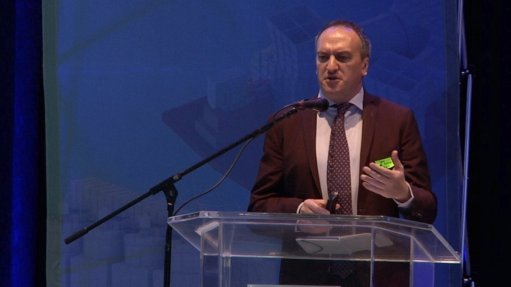
MOHSIN SEEDAT The level of State support will have to be considered
 

MOHSIN SEEDAT The level of State support will have to be considered