Creamer Media’s Engineering News Online
Advanced Search


We have detected that the browser you are using is no longer supported. As a result, some content may not display correctly.
We suggest that you upgrade to the latest version of any of the following browsers:
         
close notification
powered by
GOLD 1386.60 $/ozChange: -0.70
PLATINUM 1452.50 $/ozChange: -1.00
R/$ exchange 9.58Change: -0.03
R/€ exchange 12.38Change: -0.05
 
TELECOMS
 
New undersea cables to lower cost of doing business in SA – Neotel chief
 
12th June 2009
TEXT SIZE
Text Smaller Disabled Text Bigger
 

South Africa could look forward to increased telecommunications connectivity, as the country should have three of four undersea cables coming into the country in the next 12 months, to 24 months, said Neotel CEO Ajay Pandey, addressing delegates at a South African Institute of Electrical Engineers breakfast on Friday.

These undersea cables would lower the cost of international connectivity, and boost bandwidth, which would allow faster download speeds, and could significantly lower the cost of doing business.

“The prices of accessing Internet, the speeds at which people would be accessing the Internet - I think that would be that much more consumer friendly,” said Pandey.

He added that this could trigger a new wave of growth in the industries of information technology (IT), and business process outsourcing (BPO).

These four undersea cables that could be operational in South Africa in the next few years were the SAT-3 cable, which is already operational and lands at Melkbosstrand near Cape Town, and has a capacity of 120Gbs/s.

Second, was the privately owned Seacom cable, which was scheduled for switch-on at the end of June, and stretches from the UK, France and India, and along the East Coast of Africa to KwaZulu-Natal.

“Seacom, is going to change the way business is done in terms of availability of international bandwidth. It’s phenomenal,” Pandey added.

Third, was the East African submarine cable system (Eassy), from the Sudan along the east Coast of Africa, terminating in South Africa, with an expected capacity of 1,4Tb/s, and anticipated to be ready by June 2010.

The fourth possible undersea cable was the $600-million West African Cable System (Wacs), with a tremendous capacity of 3,84Tb/s, that would bring bandwidth from the UK along the West Coast of Africa, and terminate in South Africa.

Pandey emphasised that Neotel was the only company among South African telecoms players which had a link in each of the four submarine cables that will connect with South Africa. In fact, Neotel is the anchor tenant for the Seacom cable at Mtunzini in KwaZulu-Natal, where the cable joins the beach. Neotel has constructed a terrestrial network from KwaZulu-Natal to Gauteng, and the cable’s capacity will continue on to Neotel’s newly constructed data centre in Midrand.

“Seacom … is phenomenal. It is a physical cable, kept inside the ocean close to the sea bed, it's an engineering marvel,” enthused Pandey, appreciating the engineering intricacy of the project.

South Africa has, to date, relied on the SAT-3 cable for international connectivity.

“I think the higher cost of telecommunications have been a big hindrance to what is called the BPO industry, and the IT industry getting off the ground here in South Africa. We are sitting on multiple advantages, on the same time zone as Europe, multiple languages … What was hampering, was the cost of telecommunications,” he reiterated.

Edited by: Mariaan Webb


To subscribe to Engineering News's print magazine email subscriptions@creamermedia.co.za or buy now.

FULL Access to Mining Weekly and Engineering News - Subscribe Now!
Subscribe Now Login


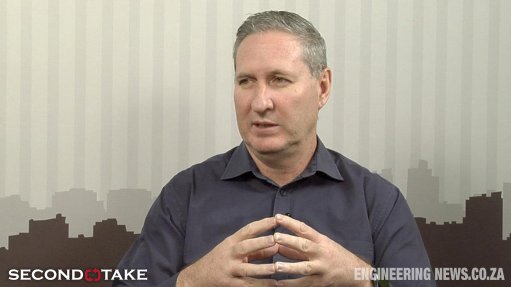
Neotel CEO Ajay Pandey discuessed the future of bandwidth in South Africa
This video is licensed under a Creative Commons License
GET SELECTED VIDEO
Embed
Selected Video Download (10.01mb)
 
Neotel CEO Ajay Pandey discuessed the future of bandwidth in South Africa
 

Neotel CEO Ajay Pandey discuessed the future of bandwidth in South Africa