Creamer Media’s Engineering News Online
Advanced Search


We have detected that the browser you are using is no longer supported. As a result, some content may not display correctly.
We suggest that you upgrade to the latest version of any of the following browsers:
         
close notification
powered by
GOLD 1360.10 $/ozChange: -5.72
PLATINUM 1455.00 $/ozChange: -6.70
R/$ exchange 9.40Change: -0.09
R/€ exchange 12.07Change: -0.07
 
TRANSPORT
 
New transport plan aims to increase Gauteng’s competitiveness
 
31st July 2012
TEXT SIZE
Text Smaller Disabled Text Bigger
 

Addressing the inefficiencies of Gauteng’s rail transport sector would go a long way in relieving congestion on the province’s roads, thereby enhancing its international competiveness, Gauteng Department of Roads and Transport head Mavela Dlamini said Tuesday.

Speaking at a media briefing on the 5-Year Gauteng Transport Implementation Plan (GTIP5) that was released for public comment last week, he stated that there was a need to work with other stakeholders such as the Passenger Rail Agency of South Africa (Prasa) and freight logistics group Transnet to discuss the moving of passengers and goods on rail.

“We believe that we could relieve so much road space if we allowed freight to be taken off our roads,” he noted.

Dlamini said the assessments done in composing the GTIP5 confirmed that Gauteng roads were carrying a significant amount of freight, owing to inefficiencies in the rail sector.

“As provincial government we have to assist in overcoming this; if we do not, congestion will continue, which will impact on our competiveness in terms of carbon emissions, efficiency, delays, the cost of doing business and accidents,” he warned.

The closing date for public input on the GTIP5 is August 31. The plan is aimed at fast-tracking the implementation of key transport initiatives and, thereby paving the way for the implementation of the 25-year Integrated Transport Master Plan (ITMP25) for Gauteng.

Gauteng Department of Roads and Transport member of the executive committee Ismail Vadi said that GTIP5 would be finalised by the end of October, with the first programmes to be rolled out in the beginning of next year.

He indicated that over the next five weeks specialised bilateral discussions would be held with stakeholders in the freight, bus, taxi and rail sectors, while adding that meetings with other spheres of government about privatisation of roads between local government and municipalities over the next five years would also be undertaken.

The GTIP5 highlights 11 key initiatives to fast-track a shift to a public-transport-prioritised future transport system for Gauteng.

Among the priorities identified is the formation of a province-wide transport authority to coordinate and integrate the transport system across municipalities and economic development nodes in neighbouring provinces.

Vadi stated that the aim was for the authority to be operational by next year.

The plan also envisions a freight network that is integrated with Prasa’s commuter rail corridor modernisation project, while the importance of codetermining the future of airports in Gauteng is emphasised in the plan, particularly in deciding on which should be used for domestic or international traffic and expansion.

Vadi stated the GTIP5 predicted high migration into Gauteng over the next 25 years, with the province’s population projected to grow from the current 11-million to over 16-million by 2037. Long-term average yearly economic growth of 4.5% was also assumed.

With this in mind, the GTIP5 suggests using public transport as the backbone of the future urban structure of the province, leading to densification, mixed land use and infill development along all major public transport routes and railway stations.

Further, the plan put forward that the funding formula for road-based public transport would have to be restructured to incorporate taxis and serve as an instrument to leverage the use of ‘greener’ public transport vehicle technologies.

However, chairperson of a steering committee that drew up the Gauteng ITMP25 and Gautrain Management Agency CEO, Jack van der Merwe, said the taxi industry would have to be restructured into corporate business units to be eligible for subsidies.

He said R1.6-billion a year was currently being spent on Gauteng bus subsidies and that the contracts rolled over on a month-on-month basis, but that a public transport tender system was now being considered.

The plan further promotes continued provincial-wide mobility based on a hierarchy of transport modes ranging from rail, bus rapid transit, buses, taxis and bicycles.

GTIP5 also singled out pedestrian paths and cycle ways as priorities, suggesting that 50 km of pleasant walkways and cycle lanes would enable improved management of city traffic congestion.

FUNDING

Van der Merwe stated that apart from funding from the public purse, the GTIP5 suggested that other sources of funding, including toll fees, the issuing of bonds, borrowing, and private sector investment should be considered.

A Gauteng transport investor conference would be held before the end of the year to set out the investment opportunities in the transport sector.
 

Edited by: Mariaan Webb


To subscribe to Engineering News's print magazine email subscriptions@creamermedia.co.za or buy now.

FULL Access to Mining Weekly and Engineering News - Subscribe Now!
Subscribe Now Login


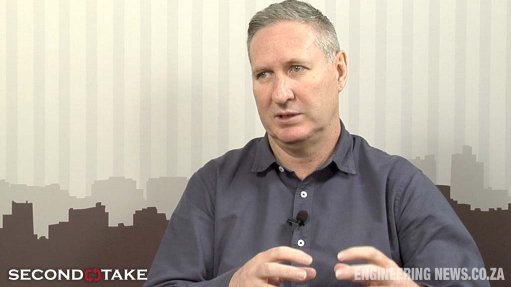
Gauteng Department of Roads and Transport Mavela Dlamini, Guateng Roads and Transport MEC Ismail Vadi and Gautrain Management Agency CEO Jack van der Merwe discusses Gauteng's transport future and the new GTIP5 plan. Camera work: Nicholas Boyd, Editing: Darlene Creamer
This video is licensed under a Creative Commons License
GET SELECTED VIDEO
Embed
Selected Video Download (9.35mb)
 
 
Previous Play Next