By: candice haase
12th September 2003
The concept of providing clients with improved reliability fixed-fee contracts is one that was developed by John Crane’s British outfit, which worked extensively on the oilrigs in the North Sea.
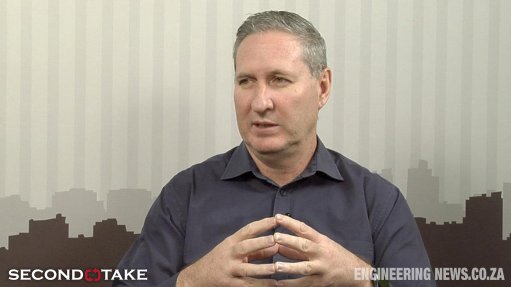
“Performance Plus was developed to improve the life and productivity of total rotating equipment on the oilrigs, by becoming performance based,” explains MD David Stock.
As this approach to managing a plant gains momentum, so too is the Performance Plus business, based on this concept.
A great deal of analysis is required before a reliability fixed-fee contract is reached.
This type of relationship with a customer requires that Performance Plus be seen as part of the team on a project site.
The outcome of this type of contract is to make a particular piece of equipment last longer, Stock explains.
To this end, the contract varies from plant to plant, as operating conditions vary among different operations.
A performance reliability contract can encompass the total rotating equipment at a plant.
This would include everything – from pumps to electric motors.
“The more rotating equipment under Performance Plus control on a site, the quicker reliability will be improved,” Stock states.
A supply contract for mechanical seals would be the lower scale contract for the John Crane business unit. The South African arm of Performance Plus is responsible for the management of the mechanical seals of 6 000 pumps for petrochemical giant Sasol.
In this way, the company simultaneously adds value to its products and its clients’ facilities.
“South African companies are becoming aware of the cost of holding stock at their operations,” Stock notes.
These days, there is an emphasis on keeping stock levels down and improving productivity.
Consequently, local companies now have access to improved reliability performance-based contracts that allow them to shed the business practices that were necessitated when the country existed in isolation from the global economy, says Stock.
Thus, local companies no longer need to retain strategic stock on their premises.
Selling performance and reliability contracts comprises 25% of the international company’s business.
“It is a concept that African business is beginning to adopt,” Stock states.
The expertise generated by Performance Plus’s activity in oil-rich countries, like Saudi Arabia, provides the local division and its clients with the intellectual resources to enhance their productivity and improve the life of their equipment.
However, the experience of Performance Plus and John Crane employees in South Africa also provides the international group with a valuable resource.
John Crane’s local operation falls under the ambit of the Middle East, Africa and Asia (MEAA) operations of the company’s division responsible for Europe, Africa and Asia (EAA).
Stock envisions that Angola will represent a significant amount of the John Crane group’s growth in the West Africa region.
The development in the region will be supported by the company’s operations worldwide. Stock notes that the UK office of the EAA division has technical experience, while the com- pany’s central drawing office is housed in India.
These human resources are supported by the company’s sizeable product portfolio.
Most research and development activity within the John Crane group is undertaken by the global outfit’s US and UK operations.
However, Stock maintains that, although mechanical seals continue to evolve, most change centres around refining existing products, while development is based primarily on market demand.
Product development is aligned to customer demand and the customer base has a tendency to have a conservative attitude to change.
For example, the John Crane Type 1A mechanical seal remains a staple in the product range after more than 20 years.
The international company is now trying to rationalise its range of products.
For many years, the local arm of the company was ignored by its parent company, Stock indicates. However, the South African John Crane, and its Indian and Chinese counterparts, have been recognised as low-cost manufacturing centres.
One operations director is responsible for co- ordinating the manufacturing efforts of these three centres.
John Crane’s Chinese outfit is responsible primarily for low-cost high-volume manufacture, while the local concern produces mainly low-volume high-tech ranges to international petroleum industry standards, Stock explains.
“I believe that South Africa’s future is in exports,” Stock states.
“We have the expertise and the infrastructure to compete with our manufacturing counterparts in the group,” he states.
While India does not have adequate infrastructure and China a history of bureaucracy, South Africa’s greatest challenge to becoming a manufacturer of note is the rand’s recent strength.
“We need to export our products to grow and stimulate the local economy in order to create jobs,” Stock emphasises.
Edited by: candice haase
To subscribe to Engineering News's print magazine email subscriptions@creamermedia.co.za or buy now.