Creamer Media’s Engineering News Online
Advanced Search


We have detected that the browser you are using is no longer supported. As a result, some content may not display correctly.
We suggest that you upgrade to the latest version of any of the following browsers:
         
close notification
powered by
GOLD 1386.60 $/ozChange: -0.70
PLATINUM 1452.50 $/ozChange: -1.00
R/$ exchange 9.58Change: -0.03
R/€ exchange 12.38Change: -0.05
 
ELECTRICITY PRICING
 
Nersa postpones power price hearings as it receives notice of policy review
 
23rd January 2012
TEXT SIZE
Text Smaller Disabled Text Bigger
 

The National Energy Regulator of South Africa (Nersa) has decided to postpone public hearings, scheduled for February 3, into its multiyear price determination (MYPD) methodology.

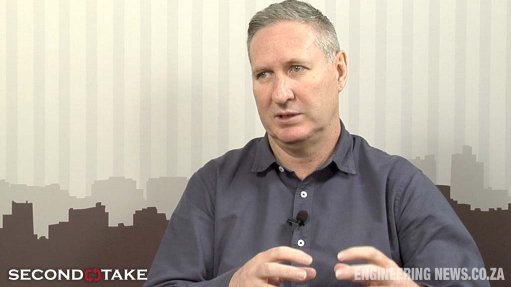
Full-time regulatory member for electricity Thembani Bukula told Engineering News Online on Monday that notice of the postponement would be communicated soon.

The decision had been made owing to the fact that Nersa had received a letter from Energy Minister Dipuo Peters “last week” stating that government intended revising the electricity pricing policy (EPP).

“Our public hearings would have been based on the old pricing policy. But we have now received a letter – in fact we received it last week – from the Minister that indicates, formally, that there is a relook at the pricing policy and that she wants our input. Therefore, we will not proceed with those hearings,” Bukula explains.

He said that the letter had not elaborated on the nature of the possible changes being considered, but that further information was likely to be made available in the not too distant future.

In October, the regulator published a consultation paper on the MYPD methodology and called for public comments by November 14.

However, during that period Peters, as well as Department of Energy director-general Nelisiwe Magubane, made several references to the fact that government intended reviewing the EPP in a bid to moderate the rate at which South Africa’s power prices were set to rise.

In December, Peters indicated that the changes could affect the methodology used by the regulator to determine power utility Eskom’s tariffs.

The current method used by the National Energy Regulator of South Africa (Nersa) is premised on a rate-of-return methodology and based on the replacement cost of the assets. Nersa has adopted the depreciated replacement cost method for asset valuation, which was itself based on an “objective” calculation of the modern equivalent asset value.

Under the prevailing EPP, the tariff is also required to move towards the long-run marginal cost (LRMC) within five years of its adoption.

But Peters said government was considering an approach that delayed the tariff increases, which might be achieved by lowering the return to the utility, which would result in Eskom moving towards the LRMC position in a period longer than five years.

But she also indicated that such a change would only be considered during the next tariff determination, for the period starting in 2013. In other words, it was unlikely to affect increases that had already been approved by Nersa under the second multiyear price determination period, or MYPD2. During that period three increases of around 25% a year had been approved for 2010/11, 2011/12 and 2012/13.

However, business would like the intervention to take place before 2013, with several sectors warning that the power price increases were undermining growth, employment and competitiveness.

Many have also pointed to the strong improvement in Eskom’s financial position as evidence that the price increases could not be justified. The State-owned utility reported a profit of R12.8-billion in the six months to the end of September, up from R9.5-billion in the comparable period a year earlier.

But Eskom, which told Engineering News Online that it had no knowledge of Peters’ letter to Nersa, had repeatedly stressed that its return on assets remained modest at 3.7%. It also warned that its debt would rise to over R300-billion over the coming five years.

Eskom had repeatedly called for regulatory stability in light of its reliance on debt to fund its capital programmes and had cautioned against changes that could negatively affect its credit rating.

The utility also indicated on Monday that it was still preparing its next tariff application on the basis of the current MYPD methodology.
 

Edited by: Creamer Media Reporter


To subscribe to Engineering News's print magazine email subscriptions@creamermedia.co.za or buy now.

FULL Access to Mining Weekly and Engineering News - Subscribe Now!
Subscribe Now Login
 
 
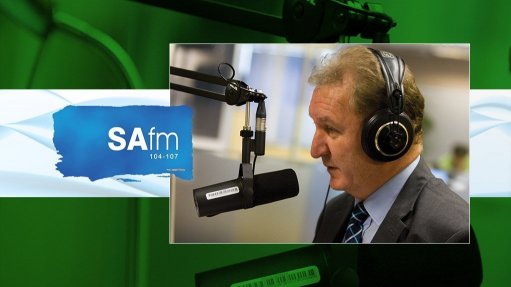
Nersa full-time regulatory member for electricity Thembani Bukula
 
Picture by: Duane Daws
Nersa full-time regulatory member for electricity Thembani Bukula