Power utility Eskom and other energy sector participants on Thursday expressed concern over a lack of consultation in the initial drafting of the regulatory rules for energy efficiency and demand-side management (EEDSM), including the standard offer programme (SOP).
Various stakeholders attending the National Energy Regulator of South Africa's (Nersa's) public hearings into the EEDSM, following the release of a consultation paper in June, complained about a lack of consultation, as well as a lack of clarity presented by the documents.
The consultation document was based on a policy document drawn up by the Department of Energy.
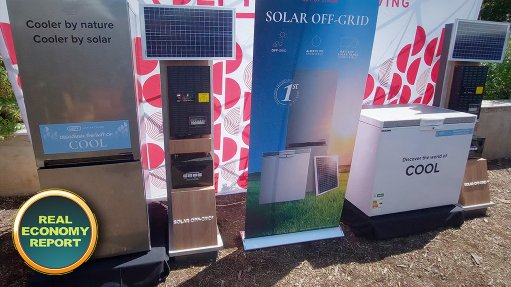
It was largely put forward that solar water heating (SWH) initiatives had to be divided by market segments, and that the SOP might be appropriate for lower income markets, but could not be applied to all sectors of the market.
The contract period and whether the SWH rebate should be paid over a number of years as kilowatt-hour savings were achieved, or as a full payment after the installation of the system, was also debated.
Stakeholders were also looking for more clarity on a number of issues, including, approval processes, time frames, technologies, as well as the relationship between the EEDSM SOP and other incentives that existed.
Various participants agreed that, in the long term, the responsibility for EEDSM should not lie within Eskom, as this presented a conflict of interests.
However, the utility has established a division to tackle this task, and has already committed R5,4-billion over three years to various energy-efficiency projects.
Eskom received the funding from electricity tariffs through the second multiyear price determination (MYPD2) process.
This money had been specifically allocated through a rigorous process, and it was questioned whether this could be changed.
"Current governance mechanisms to achieve energy efficiency should be maintained. We realise the concerns on the conflict of interest, but while nothing else is in place, we cannot stop the initiatives that are already being implemented. Don't stop what can be delivered," stated Eskom representative Mohamed Adam.
"We realise that the home for EEDSM should not be in Eskom, but we are reluctant to disrupt a scheme that is now showing growth," agreed Sustainable Energy Africa representative Andrew Janisch.
South African Association of Energy Services Companies (Escos) representative Hope Mashele also supported the view, but said that existing structures needed to be improved.
Mashele said Escos found it difficult to work in the energy-efficiency arena, particularly when project approvals took between six months and two years to materialise.
Adam stated that the SOP, as put forward in the consultation document, could delay the achievement of energy savings, as the creation of new structures would take time to implement.
He also stressed that the policy and rules put emphasis on SWH, and did not rely on a portfolio of energy saving initiatives. For example, mining and industrial energy efficiency programmes were excluded.
"Excessive funding of solar water heating could lead to limited exploitation of other initiatives," Adam reiterated.
Currently, R1,15-billion of the R5,4-billion for DSM within Eskom was earmarked for SWH initiatives, explained Eskom representative Corrie Visagie. Of that amount, some R700-million would be used to reach the target of rolling out some 190 000 SWH systems to middle-income homes. The rest of the SWH budget was earmarked for low-pressure SWH systems, and in total, the unit hoped to install about 450 000 SWHs over the three-year period.
"We believe that in its current form, the SOP does not constitute a viable model," Adam said.
Business Unity South Africa (Busa) energy committee member Lorraine Lotter said that the SOP was not the only instrument for energy efficiency, and it could not fit all solutions, although it was worthy of support in certain cases. She also stated that the tax allowance rebate scheme was an example of another initiative that was particularly appropriate for business and should be fast-tracked.
The issue of monitoring and verification of energy savings was also highlighted, and it was suggested that the SATS 50010 protocol should be used, as it was internationally recognised, and that accreditation of professionals should be handled by the South African National Accreditation System.
Nersa electricity sub-committee chairperson Thembani Bukula said that he understood the urgency of the stakeholders who were keen to see the rules finalised.
"I can guarantee you that this document will not sit in the black hole for more than three months," Bukula quipped, after comments from Busa that often after public hearings, there was no further word on the developments.
To subscribe to Engineering News's print magazine email subscriptions@creamermedia.co.za or buy now.


-lr1.gif)