Africa's largest steel producer ArcelorMittal South Africa (Mittal) has completed its due diligence of an unnamed iron-ore exploration prospect in the Northern Cape and would move to buy the resources once it had received the necessary approvals from Mineral Resources Minister Susan Shabangu.
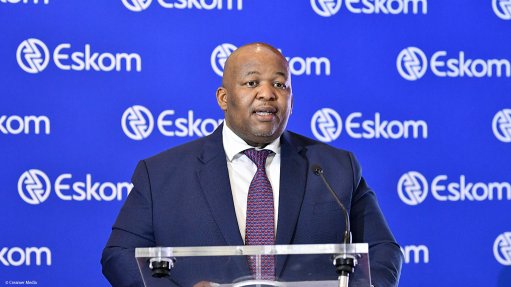
CEO Nonkululeko Nyembezi-Heita did not disclose the acquisition value nor the identity of the counterparty, but indicated that the deal was "imminent".
Once all approvals had been secured the JSE-listed group would move ahead with an exploration and development programme, for which it had budgeted. Nyembezi-Heita indicated that the work was likely to begin during the course of the year.
CFO Rudolph Torlage did not provide a specific capital expenditure (capex) figure, but said it would be sufficient to advance the prospect to a point where Mittal could make a decision on whether or not to invest in a new mine.
Overall, the group was not anticipating that its capex for 2012 would exceed the R1.2-billion of 2011.
The acquisition formed part of the group's programme to secure its own resources of steelmaking materials, including iron-ore and coking coal.
It had also tested coal from Vale's mine, in Mozambique, and would buy some 450 000 t from the operation in 2012. It is also looking for other coking coal opportunities, including through Coal of Africa Limited, in which it had a 15.9% interest.
The group was also engaged in various processes to secure its cost-plus supply of iron-ore from Kumba Iron Ore's Sishen mine. That process received a legal boost in December when Judge Raymond Zondo concurred with Mittal's assertion that the Sishen Iron Ore Company (SIOC) had converted 100% of the rights at the Northern Cape operation and that the Department of Mineral Resources (DMR) had, thus, acted incorrectly by granting a prospecting right over a portion of Sishen to Imperial Crown Trading (ICT).
Arbitration proceedings between Mittal and Kumba on the status of a contested cost-plus 3% supply agreement for 6.25-million tons a year of Sishen material had been put on hold pending the outcome of legal proceedings related to the rights and ICT. The DMR and ICT had lodged an application to appeal Zondo's December ruling, which meant legal proceedings could well continue into 2013.
INTERIM IRON-ORE MISMATCH
Nyembezi-Heita indicated that there was a mismatch between the likely time it would take to resolve the mineral rights dispute and the interim supply agreement between Mittal and Kumba, which was due to endure until mid-year.
Therefore, a new arrangement would need to be negotiated before July, but Nyembezi-Heita refused to be drawn on whether the steelmaker would seek different terms from those prevailing currently.
Immediately following the December ruling, however, Mittal had argued that the judgement served to "confirm our view that SIOC remains obliged to supply 6.25-million tons of iron-ore to us at cost-plus three per cent in terms of our agreement”.
Mittal was paying an average price of $65/t for the material it was sourcing from Sishen, which was well above the $35/t level that would have prevailed under the disputed 2001 supply agreement, which Kumba moved to terminate in 2010. For 2011, Mittal estimated that the differential added R1.1-billion to its iron-ore purchase bill.
Mittal, which reported a R52-million loss in 2011 and a cumulative loss of R720-million in a dismal second half, was experiencing a margin squeeze as raw material and energy costs increased at a rate ahead of its ability to raise prices.
In February, prices were generally rolled over, but some decreases were announced and Nyembezi-Heita indicated that the group was unlikely to be in a position to increase prices during the first quarter, despite some early indications of a recovery in demand.
Nevertheless, the group still expected earnings for the first quarter would improve significantly on better production stability and higher sales volumes. But the performance could be offset by lower international steel prices.
During 2011 production was severely affected by a four-month unplanned shutdown at the Newcastle mill and a 43-day planned shutdown at Saldanha. The Newcastle outage also led to shortages of steel in the local market, particularly reinforcing steel, or rebar.
In total, the group produced only 5.4-million tons of steel in 2011, which was down from the 5.7-million tons of 2010 and well off the 7.1-million achieved in 2006. It also only shipped 4.7-million tons, which was 7% lower than 2010, with exports falling 26% and domestic sales climbing only 3%.
The disruptions coincided with a sharp rise in imports, which rose to 900 000 t, or 19% of the domestic market - the highest level since 1975.
However, the group was optimistic that imports would “normalise” during 2012, as much of the steel imported last year was used to fill the gap left by the production disruptions associated with the Newcastle outage and the Saldanha shutdown.
“We do not see it as an established trend . . . but we will be monitoring it quite closely,” Nyembezi-Heita said.
To subscribe to Engineering News's print magazine email subscriptions@creamermedia.co.za or buy now.