The 4 800 MW Medupi power plant, in Lephalale, Limpopo, is on track to deliver first power to the grid before the end of 2013, State-owned power utility Eskom CFO Paul O’Flaherty has confirmed.
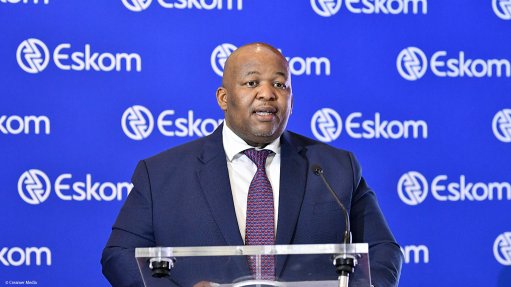
Speaking at the utility’s 2011/12 results presentation, he stated that Eskom was taking strict measures to ensure that the construction phase stayed within budget.
The hydrostatic pressure test of the first boiler at Medupi was also completed earlier this month, with President Jacob Zuma initiating the final phase of the test on June 8.
“I am delighted with the progress made with this project and the impact it is having on the community,” Zuma said.
Eskom reported that there were more than 17 000 workers on site, of which 95% were South African and of those 47% were from the Lephalale area.
The project has also expanded Lephalale’s gross domestic product (GDP) by about 95%. About R2.3-billion has also been invested in upgrading road, power, sewage, water and power infrastructure, as well as on the establishment of new schools and clinics, the utility added.
The boiler is at the heart of the power plant and the hydrostatic pressure test is an essential step in the commissioning of each unit once construction of the boiler has been completed.
“This was an exciting milestone for Medupi and for Eskom and an important step on the way to getting our new power stations on line and generating power for all South Africans in the next few years,” Eskom CEO Brian Dames commented.
Construction of the power plant, at a cost of about R91-billion, started in 2007. When complete, it will be the fourth-largest coal-fired power station in the world, as well as the world’s largest dry-cooled power station. It will have a life span of about 50 years.
The first unit, Unit 6, is expected to operate with greater efficiency than the older genera- tion coal-fired power stations, reducing its adverse impact on the environment. “We are excited about this project given its potential. Once all its units are completed, Medupi will be able generate enough elec- tricity to power almost the whole of Gauteng,” said Zuma.
During the results presentation, Eskom stated that 78% of its R300-billion funding plan was in place to finance its capacity expansion programme to 2019.
The utility’s total borrowings stood at R182.6-billion at the end of March, up from R160.3-billion at the end of the previous financial year.
The total is expected to grow to over R300-billion over the next three years as Eskom draws down on the loan agreements it has in place to complete the capacity expansion programme, it noted.
Earlier this month, Engineering News reported that the utility was in a position to invest at a yearly tempo of R65-billion for the remainder of the current build phase.
During its previous two financial years, the utility had failed to meet its capital expenditure (capex) targets, under investing against the budget by a massive R25.1-billion in 2010/11.
The group spent capex of R44.3-billion last year, short on its capex budget of nearly R70-billion.
“Eskom has installed a total of 5.8 GW of new generating capacity, 3 899 km of high-voltage transmission lines and 20 195 MVA of new transformer capacity since the start of the capacity expansion programme in 2005.
“The programme, which includes two new coal-fired stations, Medupi and Kusile, a pumped storage scheme, Ingula, and new transmission infrastructure, will add a total of 17.1 GW to the grid by the time it is completed in 2019,” the utility stated.
On June 8, Zuma said that the Kusile power station was about 17% complete, with R39-billion having been spent to date. The project is expected to cost about R121-billion. “The project has an estimated 25% impact on the Delmas town’s GDP,” he noted.
“Lessons learned at Medupi will be implemented at Kusile. We have a better idea of where we are regarding the construction of the Medupi site and we know what to expect in the future,” said O’Flaherty.
Further, Zuma said that the R23- billion Ingula pumped storage scheme was more than 42% complete, with R11- billion having been spent to date.
“[Ingula] is expected to have a 7% impact on the Ladysmith’s local GDP. These new power stations will provide the electricity capacity needed to grow the economy, attract investment and create jobs,” he said.
The Medupi, Kusile and Ingula projects will create about 40 000 job opportunities – 35 500 direct jobs during construction and operation, and about 4 500 indirect jobs supporting the programme.
“Medupi is expected to absorb a number of relevant university graduates as well as artisans. In that way, it will contribute to growing South Africa’s supply of engineers, artisans and project management experts,” he stated.
Further, Eskom spent R1.4-billion on training during the past financial year, up from R1-billion in the previous year. The company now employs 43 473 people directly and a total of 130 000 within its full scope of activities.
Other than the three new power stations, Eskom had, by March, commissioned two of its three return-to-service (RTS) power stations – Camden and Grootvlei. The third RTS power station, Komati, is two-thirds complete.
Meanwhile, the utility revealed that 155 213 households had been electrified during the financial year.
To subscribe to Engineering News's print magazine email subscriptions@creamermedia.co.za or buy now.