Creamer Media’s Engineering News Online
Advanced Search


We have detected that the browser you are using is no longer supported. As a result, some content may not display correctly.
We suggest that you upgrade to the latest version of any of the following browsers:
         
close notification
powered by
GOLD 1392.75 $/ozChange: 17.66
PLATINUM 1464.00 $/ozChange: -8.50
R/$ exchange 9.60Change: -0.05
R/€ exchange 12.37Change: -0.03
 
REAL ECONOMY: RESOURCES & INDUSTRY
 
Maximum benefit
 
20th July 2012
TEXT SIZE
Text Smaller Disabled Text Bigger
 

Much attention has been paid over the past few months to South Africa’s aspiration for greater value addition, or beneficiation, of its minerals ahead of export.

However, there appears to be a growing realisation that greater developmental benefits could, in fact, flow from the exploitation of the so-called backward and lateral linkages associated with mining. To be sure, having the mineral is not always a cost advantage for an industry seeking to move downstream.

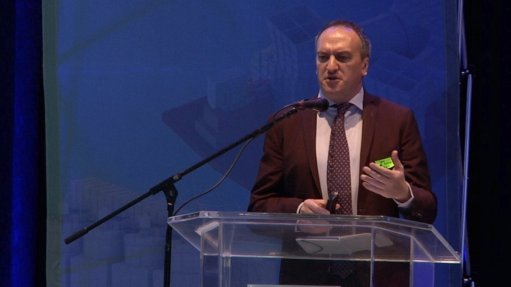
During a recent presentation on the ‘State of the Minerals Sector’, or Sims, report, which was commissioned by the African National Congress in 2010 and released in early 2012, one of the coauthors emphasised this point.

Dr Paul Jourdan argued that South Africa should aim to replicate those countries that became industrial through the use of minerals – countries such as Finland, Sweden and Germany.

“They used minerals and natural resources to push input industries, particularly capital goods, services and consumables,” he said, listing a slew of brand names that had emerged through that process.

“Today they export more minerals technology than minerals,” he enthused.

Such backward linkages are not only knowledge intensive, but they generally spawn enterprises that are flexible enough to reinvent themselves in other sectors – a process known as lateral migration.

The problem is that the foundations for backward-linkage success in South Africa have been seriously eroded.

The first problem lies at the basic-education level. At the root of any process designed to exploit backward linkages is an education system that ensures high levels of maths and science competence. This, in turn, provides the feedstock necessary for the expansion of the engineering talent pool.

In South Africa, the performance in this area leaves much to be desired and, unless there is a dramatic turnaround, a key industrialisation ingredient will remain absent.

Besides this human capital building block, the other key to pursuing an industrialisation-through-resources economic development trajectory lies in research and development (R&D).

Here, too, South Africa has regressed.

Jourdan points out that, in 1994, there were about 2 000 individuals dedicated to minerals-related R&D. Today, the figure is about one-third of that.

The decline is most notable at the Council for Scientific and Industrial Research, which previously had large mining programmes but has since closed many of these down. But there are also said to be weaknesses and skills deficits at Mintek, which focuses on minerals processing and metallurgical engineering, as well as the Council for Geoscience.

Therefore, as South Africa debates Sims, as well as ways to secure more advantages from its natural resources, much attention will need to be given to both these challenges.

Failure to arrest the decline in R&D and turn around the education problem will prove fatal.

******

Finally, I need to point out that, as of this week, the Engineering News magazine will no longer be carrying tender pages. However, the information will still be available online at http://www.engineeringnews.co.za/page/tenders.

In the weeks ahead, we plan to upgrade the online tenders pages to take advantage of the reduced lead times, as well as the online publication’s ability to make information searchable.

Edited by: Terence Creamer


To subscribe to Engineering News's print magazine email subscriptions@creamermedia.co.za or buy now.

FULL Access to Mining Weekly and Engineering News - Subscribe Now!
Subscribe Now Login