Creamer Media’s Engineering News Online
Advanced Search


We have detected that the browser you are using is no longer supported. As a result, some content may not display correctly.
We suggest that you upgrade to the latest version of any of the following browsers:
         
close notification
powered by
GOLD 1368.44 $/ozChange: 1.35
PLATINUM 1438.50 $/ozChange: 0.50
R/$ exchange 10.01Change: -0.05
R/€ exchange 13.41Change: -0.10
 
 
Local engineers take on blood plasma fractionation project
 
25th May 2012
TEXT SIZE
Text Smaller Disabled Text Bigger
 

Custom design specialist and stainless steel processing equipment manufacturer Anderson Engineering has completed the upgrade of a unique blood plasma fractionation facility for nongovernmental organisation the National Bioproducts Institute (NBI) and says the project has pushed the boundaries of medical and pharmaceutical engineering in South Africa.

Preliminary discussions between the two parties began in 2007 and, in 2010, the project started gaining momentum. This is the biggest turnkey project ever undertaken by Anderson Engineering, says managing member Hans Coertse, who believes the plant to be one-of-a-kind in the country.

Anderson Engineering put together the designs for a range of equipment to meet the NBI’s stringent specifications. The project came with significant physical constraints and the equipment had to be designed accordingly.

“The NBI had an existing building it wanted the project to work in and there was no additional space available, so it was quite a challenge,” he notes.

The equipment manufacturer also designed the equipment to cope with extreme temperatures, ranging from –30 °C to 122 °C, which are needed for the processing method and to achieve sterility – a key aspect from a pharmaceutical hygiene perspective.

“In the process design, we had to ensure that everything was hygienically designed and executed accordingly,” he adds.

The insides of the vessels had to be mirror-polished, which is achieved by using various grades of polishing materials. “This leads to the highest possible level of hygiene,” he says. “If you continue polishing the surface with finer and finer grades of materials, it becomes a mirror polish. But this is only necessary in extreme circumstances – which this was.” The total surface area of mirror polishing required on the vessel internal surfaces was 158 m2.

The upgraded fractionation facility comprises clean-in-place equipment custom-designed to fit into one of the smaller areas within the facility, as well as a main process room with four 6 500 ℓ fractionation vessels, a 2 000 ℓ dissolution vessel, a buffer dispensing system and control panels, which can be accessed by means of an upper level platform.

The facility also includes a control room, which is separated from the main process room by a glass viewing window. The utilities and glycol chilling plant, which has a 5 000capacity, are installed on the level above the process room as these function under the normal ventilation conditions in that area.

Anderson used stainless steel and granite in the control area to achieve the standard of hygiene levels required in the fractionation facility.

Further, the company had to work synergistically with air conditioning, refrigeration, electrical and control systems specialists contracted to complement the Anderson Engineering team.

This project also marked Anderson Engineering’s first complete adherence to the International Society for Pharmaceutical Engineering’s Good Automated Manufacturing Practice guidelines, established in 1994, to ensure that pharmaceuticals companies worldwide adhere to standard operating procedures, ensuring the high standards of quality expected in the industry.


The fractionation process involves separating the various components of blood plasma to manufacture pharmaceutical products, such as human albumin (water soluble protein) solutions, human immuno- globulin (antibody) preparations and human coagulation (clotting) factor proteins.

The processing method requires absolute control over four critical parameters, namely alcohol concentration, temperature, pH level and ionic strength, to extract and purify therapeutic proteins in plasma.

Because of the sensitivity of the project, which required comprehensive needs analyses and several revisions of the scope of work, the NBI was very particular when choosing a company to meet its requirements

Ultimately, Anderson Engineering was chosen based on its capacity and compliance. “We took into account the quality of Anderson’s workmanship, its experience in the pharmaceuticals and food industries, as well as its references,” says NBI CEO David Stubbings.


The design phase of the project began in May 2008 and Anderson started with project orders in 2009. The equipment delivery was scheduled for March 2010 and installation was completed by the end of May 2011.

Because of some logistical hold-ups at the end of the installation phase, which extended the process, the commissioning phase only began early this year, and is progressing well, says Coertse. “We are very near the completion of the water trial phase and, within a few weeks, the NBI intends to go into full-scale production.”


Anderson Engineering specialises in the design and manufacture of stainless steel processing equipment, which is why two of its key markets are the food and pharmaceuticals industries, which require hygienic, specialised designs.

Coertse says there has always been healthy competition in this sector of the industry, but believes the company has a competitive advantage in terms of its process design capability and the turnkey packages it delivers.

He is also optimistic about the future of the company, which has seen positive growth in the last four years, which coincided with a significant increase in capacity during this time. The company expanded its staff complement from about 60 to 80 employees over that timeframe.

“Our growth has been natural and [was determined] by need. We probably have occupied our premises to the fullest extent,” Coertse says, adding that the company is comfortable with where it stands at present and does not intend to expand anytime soon.

Anderson Engineering has specific and detailed technology and quality control systems in place so as not to compromise the company’s high standards. “One of the aspects we concentrate on is getting our quality right and keeping it right,” says Coertse.

The Pietermaritzburg-based company has a presence across South Africa and further afield in Nigeria, Kenya, the Democratic Republic of Congo, the Seychelles, Tunisia, Zambia and Israel.

Edited by: Chanel de Bruyn


To subscribe to Engineering News's print magazine email subscriptions@creamermedia.co.za or buy now.

FULL Access to Mining Weekly and Engineering News - Subscribe Now!
Subscribe Now Login
 
 
ONE-OF-A-KIND Anderson Engineering has completed a comprehensive upgrade of a blood plasma fractionation facility for the National Bioproducts Institute
 

ONE-OF-A-KIND Anderson Engineering has completed a comprehensive upgrade of a blood plasma fractionation facility for the National Bioproducts Institute
 
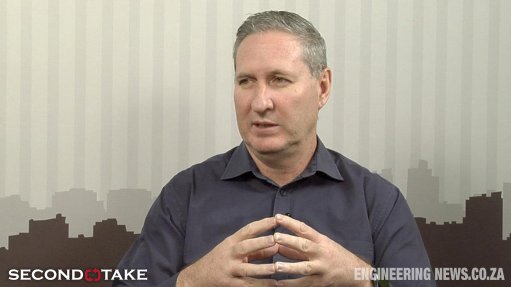
HANS COERTSE Anderson Engineering had to meet stringent specifications, and faced significant physical constraints to meet the project’s requirements
 

HANS COERTSE Anderson Engineering had to meet stringent specifications, and faced significant physical constraints to meet the project’s requirements
 
 
Previous Play Next