Creamer Media’s Engineering News Online
Advanced Search


We have detected that the browser you are using is no longer supported. As a result, some content may not display correctly.
We suggest that you upgrade to the latest version of any of the following browsers:
         
close notification
powered by
GOLD 1386.83 $/ozChange: 8.96
PLATINUM 1468.50 $/ozChange: 9.50
R/$ exchange 9.55Change: -0.11
R/€ exchange 12.34Change: -0.18
 
Smrcka is an information resources consultant and translator - ksmrcka@volny.cz
 
 
Life in 2050
 
5th August 2011
TEXT SIZE
Text Smaller Disabled Text Bigger
 

We are on the threshold of a new era. The spring 2011 edition of the publication Pictures of the Future warns: “Our planet’s climate is at risk, the century of oil is coming to an end and the world’s energy supply must be put on a new and sustainable foundation.”

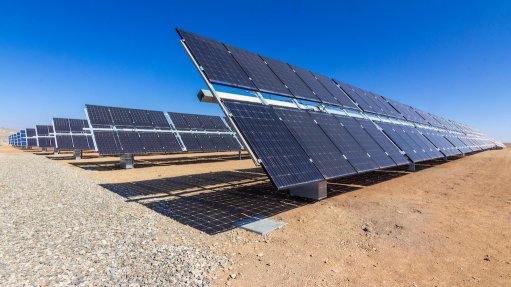
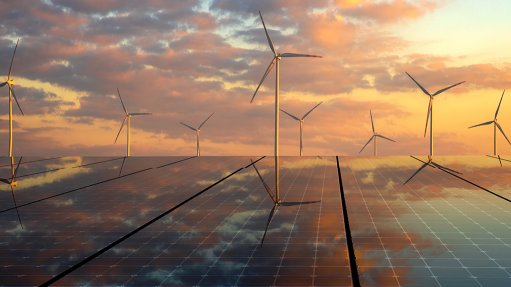
Renewable-energy sources are expected to contribute up to 80% of global energy supply by 2050, according to a new report published by the Intergovernmental Panel on Climate Change (IPCC). Following a review of 164 scenarios, the IPCC found that renewables will play a major role in any successful plan to combat climate change.

By 2050, the number of people living in cities will be almost as big as the world’s entire population today and, for the first time in history, there will be more senior citizens than children and young people.

All this means that researchers, inventors and engineers must be more creative than ever before.

Today, we can already see computers as medical assistants, robots acting as household servants or glider robots and autonomous underwater vehicles helping oceonographers in depths we could not dream of a few years ago. We already have sensory organs for electric cars and there are buildings that serve as energy traders. Every week, we read about power plants in deserts and on the high seas and of ocean energy derived from the potential, kinetic, thermal and chemical energy of seawater, which can be transformed to provide electricity, thermal energy or potable water.

We hear of supercomputers the size of peas, virtual universities and online factories – these are not visions but almost tangible realities in laboratories worldwide.

For ten years now, Pictures of the Future has been exploring the world of tomorrow. In 20 issues comprising over 2 000 pages, Pictures of the Future investigated future trends and identified the important technologies that will shape our lives in the coming decades.

In a new book, Life in 2050 – How We Invent the Future Today, Ulrich Eberl, editor-in-chief of Pictures of the Future, provides, for the first time, a compact, clearly structured summary of the key developments that will determine how we live in the decades ahead. Viewed in the light of trends in society, business and politics, these developments point the way forward as we journey into the future.

The book is intended primarily for young readers who are curious about how innovations are born, how various developments affect one another, which professions are needed, and how they can help invent tomorrow’s world.

But being informed about the work of today’s research centres and industrial companies is important for everyone – from schoolchildren and college students to researchers, professors, managers and politicians.

Life in 2050 comprises 240 pages of clearly presented insights into the laboratories of the people who create the future and exciting glimpses of the world of tomorrow.

The book argues that the challenges of the twenty-first century can be mastered – if we keep our minds open to potential solutions and have the courage to act.

Life in 2050 was published by Verlag Beltz & Gelberg. For more information and a video, visit www.siemens.com/ innovation/lifein 2050.

Edited by: Martin Zhuwakinyu


To subscribe to Engineering News's print magazine email subscriptions@creamermedia.co.za or buy now.

FULL Access to Mining Weekly and Engineering News - Subscribe Now!
Subscribe Now Login