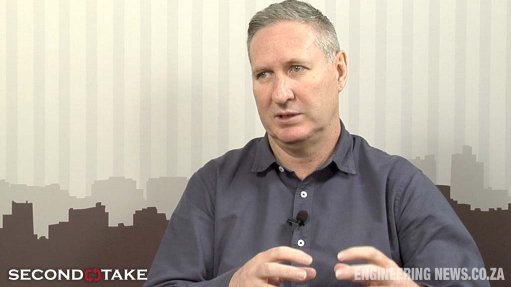
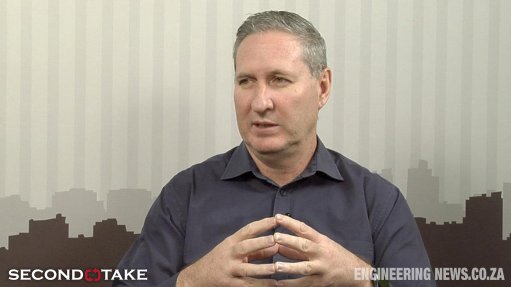
Local cement, concrete and aggregate supplier Lafarge South Africa (Lafarge SA) was facing "tremendous cost increases", said CEO Thierry Legrand on Wednesday.
With electricity and diesel price increases at double digits this year, Lafarge SA’s total cement input costs were 8% higher than in 2011 – well above the inflation rate. Legrand said the company was unable to compensate for these cost jumps through price adjustments on a similar level.
Another challenge was growing sales of cheap imported cement, specifically from India and Pakistan, landing up at small, sell-all shops in many of the country’s coastal regions. Consumers using this cement were often in the low-cost, DIY market.
Legrand said much of this cement was substandard, with some 50 kg bags also not holding the promised weight.
“This is clearly a concern. It is not good for the cement industry.”
Legrand said Lafarge SA had brought the matter to the attention of the National Regulator for Compulsory Specifications. It was also “looking at” whether the importation of this cement could be considered dumping, and whether further action should be taken.
“We want a level playing field,” noted Legrand.
He added that local cement makers, creating jobs while beneficiating limestone to its fullest, should not be disadvantaged should a carbon dioxide (CO2) tax come into effect.
“We want fair competition,” he emphasised.
Legrand estimated that 500 000 t of cement was imported into South Africa in 2011.
“A significant amount of that was not of good quality.”
Another challenge for Lafarge SA was that it would have to carry its share of an €1.3-billion cost-saving programme announced by its parent company for the 2012 to 2015 period.
Legrand did not want to commit to a number on how this would affect the company, saying only Lafarge SA was expected to contribute “at the level of its size”, noting that it added about 3% to yearly group turnover.
Legrand said there were no retrenchments planned for the local group, even though there had been around 60 job losses at the Lichtenburg plant in 2010, with 10% of this voluntary.
He believed the group could rather cut costs through improving efficiencies. Lafarge SA could, for example, use alternative fuels at its plants to achieve energy efficiency. It was also possible to rather use more electricity during cheaper, off-peak periods.
CEMENT MARKET TO GROW MODESTLY
Cement sales in South Africa was up 6.7% in the first quarter of 2012 compared with the same period last year, said Legrand.
“This is good growth, but a little bit disappointing.”
The second half of 2011 had spurred hopes of greater growth for the new year.
However, Legrand now expected to see the local cement market grow by between 4% and 5% in 2012 compared with 2011.
There was growth in the retail market, he said, with the construction and ready-mix markets flat. The residential market was seeing “a little bit more momentum”, with this trend to be aided by the recent interest rate cut. Legrand said Lafarge SA was not counting on government’s big infrastructure push “this year, or [in] the first half of 2013”.
Legrand did not want to forecast when there would be an upswing in the market.
“Today I see the interest rate go in the right direction, but I see clouds over Europe. I don’t want to be too wise, as I’ll be wrong.”
NEW FOCUS FOR LAFARGE
The global Lafarge group was currently focused on growing sales, cash generation and return on capital, rather than the geographical expansion seen earlier in its life cycle, said Legrand.
The focus was also on innovation that would see competitors stalled in coming up with similar products. One such product was HydroMedia, or “leaky” concrete, which allowed water to penetrate the concrete, entering the soil below. This product could, for example, reduce the costs and long-term maintenance of storm water infrastructure.
Lafarge had also shifted its focus to developing countries, with the Africa and Middle East cluster – at 22.5% – now responsible for most of the company’s sales, and no longer Europe and North America.
“These days it is better to have a strong position in countries such as Nigeria,” said Legrand.
To subscribe to Engineering News's print magazine email subscriptions@creamermedia.co.za or buy now.


-lr1.gif)