Creamer Media’s Engineering News Online
Advanced Search


We have detected that the browser you are using is no longer supported. As a result, some content may not display correctly.
We suggest that you upgrade to the latest version of any of the following browsers:
         
close notification
powered by
GOLD 1370.00 $/ozChange: -5.09
PLATINUM 1468.00 $/ozChange: -4.50
R/$ exchange 9.58Change: -0.03
R/€ exchange 12.32Change: 0.01
 
BENEFICIATION
 
Lack of consensus, strategic integration holding back beneficiation
 
17th October 2012
TEXT SIZE
Text Smaller Disabled Text Bigger
 

JOHANNESBURG (miningweekly.com) – Government departments would have to align, coordinate and integrate more strategically to drive mineral beneficiation in South Africa, Professor Ben Turok, chairperson of the Institute for African Alternatives and African National Congress Member of Parliament, said Wednesday.

Speaking at a media briefing following a consultative meeting on beneficiation at the Industrial Development Corporation (IDC) head office, he indicated that many private sector players cited hurdles relating to government departments as hampering their efforts to beneficiate more of South Africa’s minerals.

“Some say they will start beneficiating when it makes commercial sense, but the State has the role of creating the environment for this to happen,” Turok stated.

Linkage issues within the value chain, such as infrastructure and training would have to be addressed.

A lack of consensus regarding what beneficiation entailed was also holding back efforts to go beyond exploration, extraction and processing.

“There is no common understanding of the science and technology and process of beneficiation. Every company or department sees it differently. But we have started the process of creating coherence,” Turok explained.

It was agreed at the meeting that regulation, combined with incentivisation would be a better option than to pressure mining companies into beneficiation initiatives.

As one of the world’s best-resourced countries, South Africa’s low beneficiation rate was a “conundrum”, Turok said.

“South Africa has the largest chrome deposit in the world, but ore is exported raw…we do have companies that can create ferrochrome, they do some smelting, but not full beneficiation,” he said, adding that a great deal of the last stage of the value chain happened abroad.

Turok stated that the country’s export basket was too dependent on minerals and that it would have to be expanded to contain manufactured goods as well.

“We need to address the highly concentrated nature of South Africa’s merchandise export basket, reduce our economy’s vulnerability to cyclical trends and improve our competitiveness in global markets.

“We import too many manufactured goods, we have the capacity to manufacture it ourselves.”

IDC research and information head Jorge Maia said South Africa held 88% of the world’s platinum-group metals reserve base, but that its utilisation was at 0.4%. “There is still a lot of potential for extraction,” he noted.

The country also contained 80% of the world’s manganese reserves and 72% of its chrome ore reserves.

“We must turn this into competitive advantages,” he said, reiterating that further development of these reserves and subsequent beneficiation would be beneficial for South Africa on many levels.

“Beneficiation promotes industrial diversity in the spread of downstream processes and would ensure more balanced growth,” Maia indicated.

It would also build industrial competitiveness and promote skills and technological developments, while playing a central role in attracting foreign direct investment and rejuvenating private sector investment activity.

IDC mining and minerals beneficiation head Mbuyazwe Magagula said the development finance institution would assist with funding and project management, as well as research and development in the drive towards increased beneficiation.

NEXT STEP

Turok said the draft report of the meeting would be finalised and given to the private sector and the Parliamentary portfolio committees of relevant departments, among others, the Department of Trade and Industry and the Department of Mineral Resources.

“Then we will have to discuss how to take the process further,” he said.

Edited by: Mariaan Webb


To subscribe to Engineering News's print magazine email subscriptions@creamermedia.co.za or buy now.

FULL Access to Mining Weekly and Engineering News - Subscribe Now!
Subscribe Now Login
 
 
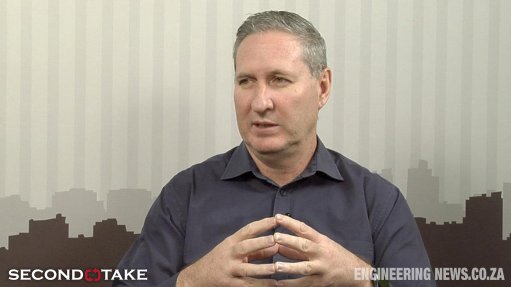
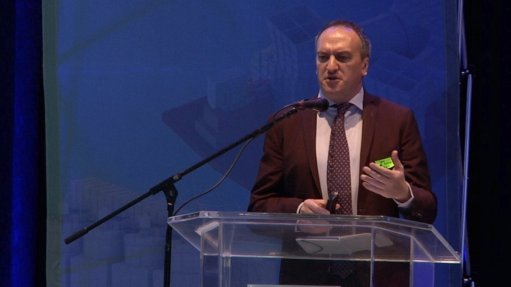
IDC research and information head Jorge Maia
 
Picture by: Duane Daws
IDC research and information head Jorge Maia