Creamer Media’s Engineering News Online
Advanced Search


We have detected that the browser you are using is no longer supported. As a result, some content may not display correctly.
We suggest that you upgrade to the latest version of any of the following browsers:
         
close notification
powered by
GOLD 1370.24 $/ozChange: -4.85
PLATINUM 1468.00 $/ozChange: -4.50
R/$ exchange 9.57Change: -0.02
R/€ exchange 12.31Change: 0.02
 
RENEWABLE ENERGY
 
KES submits proposal to continue KZN solar electrification project
 
4th October 2012
TEXT SIZE
Text Smaller Disabled Text Bigger
 

KwaZulu Energy Services (KES), a subsidiary of French power utility EDF, has submitted a proposal to the Department of Energy (DoE) to continue the installation of solar home systems (SHSs) in its rural electrification project in central KwaZulu-Natal (KZN), CEO Vicky Basson said on Thursday.

Speaking at the French South African Chamber of Commerce and Industry’s French Energy Forum, in Johannesburg, she said the company had concluded its contract to install 10 000 SHSs.

“We have made a proposal for the DoE to continue this [project], because in the areas we are working there is definitely still demand for the service to be provided,” she told Engineering News Online.

The proposal was for the provision of SHSs for the rest of the 2012/13 financial year and until 2014.

KES planned to eventually install 50 000 SHSs in KZN.

The company was also currently involved with a rural electrification project in the Eastern Cape with German investment bank KfW, which provided a €16-million subsidy.

KES was awarded a tender in 2007 to provide about 30 000 Eastern Cape households with SHSs. To date, 7 300 SHSs have been installed.

“We would like to continue with the KfW project, we still have roughly 23 000 houses to do there,” Basson noted.

Basson stated that KES would consider expanding operations to other provinces should the opportunity arise.

BENEFITS AND CHALLENGES

Each household has a solar home system of between 55 W peak and 65 W peak.

“During a month we generate about 96 MW hours of green energy,” Basson pointed out.

Customers rent the prepaid system for R89/m and, depending on the area, the tariff is subsidised by the local government’ free basic electricity policy, which contributes R48/m.

“The SHSs replace more expensive and hazardous energy sources, and exterior lighting offers increased security,” Basson noted.

Institutional delays still posed a challenge to the sustainability of KES’ projects, while a high nonpayment rate overshadowed the company’s projects. She said payment aversion was a social problem that municipalities had to address through grants.

“We have said to municipalities that we will assist in filling in funding.”

Further, operational challenges such as theft and tampering with systems also increased costs.

“How these challenges can be overcome is to continue discussion and dialogue between all the parties. This is complicated, because we have to talk to national government, the DoE, local government and Eskom and get them together at the table to find a clear way forward.”

Between 1996 and 2010, five-million households in South Africa have been electrified by Eskom and players such as KES; with 75% of people in the country having access to electricity in 2010.

The current electrification rate in South Africa was between 150 000 and 200 000 households a year.

Basson indicated that KES was looking to the DoE’s latest Integrated National Electrification Programme Roadmap to identify electrification projects in South Africa for the next few decades, that also clearly outline the role of grid and nongrid electricity.

“If you look at accessing all the people in South Africa, I do not think it is a question of between grid and nongrid, its finding the correct balance that enables us to electrify in the shortest possible time and most effective manner,” she stated.
 

Edited by: Mariaan Webb


To subscribe to Engineering News's print magazine email subscriptions@creamermedia.co.za or buy now.

FULL Access to Mining Weekly and Engineering News - Subscribe Now!
Subscribe Now Login


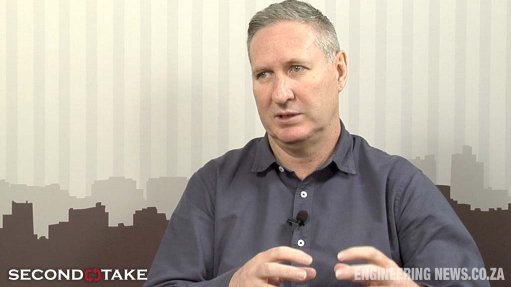
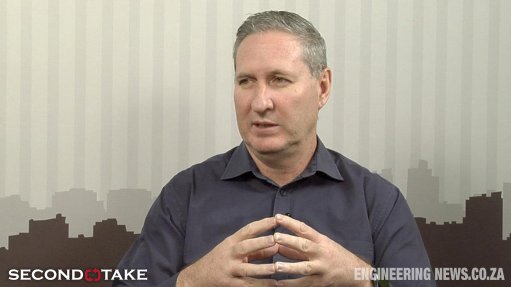
KES CEO Vicky Basson discusses the company's electrification plans. Camerawork: Nicholas Boyd, Editing: Darlene Creamer.
This video is licensed under a Creative Commons License
GET SELECTED VIDEO
Embed
Selected Video Download (6.71mb)