Creamer Media’s Engineering News Online
Advanced Search


We have detected that the browser you are using is no longer supported. As a result, some content may not display correctly.
We suggest that you upgrade to the latest version of any of the following browsers:
         
close notification
powered by
GOLD 1721.85 $/ozChange: -1.52
PLATINUM 1624.22 $/ozChange: 3.70
R/$ exchange 7.57Change: -0.01
R/€ exchange 9.91Change: 0.00
 
Increasing safety in industrial plants
 
19th March 2010
TEXT SIZE
Text Smaller Disabled Text Bigger
 

Industrial gases are used in confined spaces throughout the world, however, site accidents still happen too often, with potentially fatal consequences, warns gases and welding company African Oxygen (Afrox) manufacturing industries business manager Johan Pieterse.

Working in confined spaces for maintenance, repair or statutory inspections, is a common activity in industrial plants. "Employers and personnel must be fully informed about the serious hazards associated with working in these situations. Accidents happen because people are either insufficiently trained or have become overconfident as a result of the repetitiveness of the task," he says.

Afrox has a dedicated risk assessment team that offers a specific focus on working safely with gases in confined areas. Its assessments reportedly result in recommendations to increase safety levels.

He explains that because each industrial site is different, individual risk assessments are critical to ensure the safety of workers and to protect employers from legal action, in the event of a serious accident. These assessments identify, for instance, the properties of the gases being used, to determine if they could potentially combine to form an explosive mixture, enrich the environment with oxygen or act as an asphyxiant," he says.

Gases can accumulate in places such as boilers, pressure vessels, drains, pits and underground work areas and these areas usually have limited or restricted access and have vessels or structures that require ladders, stairs or other means to get in and out, reports the company. It adds that, typically, storage vessels that have contained hydrocarbon fuels and oils, present a very real hazard. For workers in pits, sewers and other below-surface locations, methane is an everpresent danger.

The type of work carried out in these areas usually requires generating heat and electric current for activities, such as cutting and welding, which is potentially hazardous in the presence of flammable gases.

"Enclosed environments also have the potential for atmospheric hazards, such as asphyxiation, which can happen where there is less than 19,5 % oxygen present in the atmosphere," says Pieterse. He explains that oxygen depletion is usually caused by hot work that uses up the oxygen present in the area, or by an inert gas leak that displaces oxygen in the atmosphere. "Recently, this led to the death of two people when argon gas leaked into the pit where they were working," he says.

Oxygen enrichment is reportedly another hazard, where oxygen levels greater than 23% are exposed to an open flame or other ignition sources, as it will result in an explosive condition.

The company reports that toxic industrial gases can also infiltrate confined areas in the form of vapour, mist or fumes and can cause breathing difficulties, irritation to the skin, eyes, and mucous membranes and, depending on the substance, can lead to death.

"Companies are required by law to evaluate the risks that these workplaces pose to employees and then to take steps to prevent them," he says, adding that where work in confined spaces is unavoidable, the onus is on the employer to ensure that it is as safe as possible.

Afrox recommends that where fuel gases are used in confined spaces for preheating, cutting, brazing or soldering applications, only fuel gases with a density less then air, such as acetylene, should be used. This is because acetylene is about 10% lighter than air and, if it escapes, it would rise and deplete safely into the atmosphere. The company reports that acetylene is also safer for preheating processes, with a lower potential for flashbacks, and where fuel gases are heavier than air, leaks will sink to the lowest level, posing a serious hazard.

Proper procedures and guidelines should be strictly followed when implementing hot work procedures in confined spaces. Employers must understand the hazardous work permit system, which governs responsibilities and processes, stresses Pieterse.

He says that as part of the international industrial gases and engineering company the Linde Group, Afrox has conducted extensive research into developing oxyfuel processes that create safer working environments. The latest technology arising from these studies is available to Afrox customers, he concludes.


FULL Access to Mining Weekly and Engineering News - Subscribe Now!
Subscribe Now Login
 
 
Topics in this article


Hide Comments  
 
This article contains no Comments


All comments must be approved by our editors, click here to read the editorial guidelines for comments. Please allow some time for our editors to approve your comment after posting.
 * Required Fields

image
image
 *


image
image
 *
 

image
image
 

Verification Image

image
image
 * Please enter the text you see in the above image.


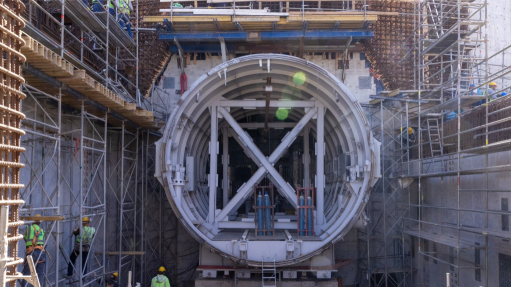
CONFINED DANGER (Source: Bloomberg)
For workers in confined spaces such as pits, sewers and other below-surface locations, methane is an everpresent danger
 
Picture by: Bloomberg
CONFINED DANGER (Source: Bloomberg) For workers in confined spaces such as pits, sewers and other below-surface locations, methane is an everpresent danger