Creamer Media’s Engineering News Online
Advanced Search


We have detected that the browser you are using is no longer supported. As a result, some content may not display correctly.
We suggest that you upgrade to the latest version of any of the following browsers:
         
close notification
powered by
GOLD 1366.75 $/ozChange: -19.18
PLATINUM 1453.50 $/ozChange: -33.00
R/$ exchange 9.56Change: -0.15
R/€ exchange 12.31Change: -0.24
 
 
Joint cane supply projects to promote sustainability, redevelopment
 
6th July 2012
TEXT SIZE
Text Smaller Disabled Text Bigger
 

The sustainability of small-scale growers (SSGs) is important to sugar producer TSB and it plays an important role in the company achieving its goal of improving shareholder value through its core business activities.

There are about 1 200 SSGs in the TSB cane supply area, growing 10 000 ha of sugar cane, which is 17% of the total cane supply to TSB mills.

The sugar producer crushed just under 5.2-million tons of cane in 2010/11 – a record crop for its three mills. This enabled the company to become the biggest sugar pro- ducer in South Africa, it states.

Despite this record, TSB Sugar CEO John du Plessis says there is a gap between the mills’ capacity and cane supply, which has led the sugar producer to implement joint cane supply projects.

The projects will ensure that the sustainability of redevelopment will be initiated effectively.

He believes that, if these projects are implemented successfully, there would be enough cane to meet the company’s current milling capacity of 5.7-million tons.

“Currently, our mills are operating at a capacity use rate of about 75% and we hope to increase this to about 80% by the end of this year so that we can be close to the South African average capacity use rate of 95%,” says Du Plessis.

Since the drought in 2010/11, SSGs have been under pressure to produce cane for the mills.

As a result, TSB has identified the lack of skills, training and financial knowledge among SSGs as preventing the growers from developing their communities. This, in turn, affects the company’s mills.

TSB hopes to rehabilitate 500 000 t of cane supply into production. It plans to expand its land near one of its mills in Pongola, in KwaZulu-Natal.

Since 2009, TSB has been working in partnership with external government departments and organisations to achieve this goal.

“A lot of resources are ploughed back into cane supply for our small-scale and land-claim growers, and the partnership approach with government and communities has assisted us in this regard,” says Du Plessis.

TSB plans to improve the institutional arrangement of the SSGs, as well as the rehabilitation of irrigation infrastructure, the replanting of cane and the delivery of support services.

“To deal with the challenge at hand, we have initiated a four-pillar programme to assist in the development, training and mentoring of the SSGs,” says TSB agriculture COO Dawie van Rooy.

“The institutional arrangement aspect will include changing the current structures, training the SSGs in aspects of basic corporate governance, informing them about cane production and financial management, and also considering if there are sufficient funds to conduct the work.

“Government has been funding the replacement of irrigation infrastructure to ensure supply demands are met and TSB has been assisting government in this regard.

“The replanting of cane is another issue of concern for the future, and the delivery of supply services will also be looked at for possible improvement,” adds Van Rooy.

TSB has been in partnership with the Depart- ment of Agriculture and Rural Development and Land Administration (Dardla) in Mpumalanga, the national Department of Rural Development and Land Reform (DRDLR), the Shared Growth Challenge Fund (SGCF) and the South African Sugar Association (Sasa).

The sugar producer plays a project management role in partnership with the departments. TSB ensures proper implementation of the projects to ensure sustainability and redevelopment in the sugar industry.

The following funds have been leveraged for the 2009 to 2012 period: R24-million from the Dardla for the irrigation infrastructure grant, R2.9-million from the DRDLR towards the rural area development programme (RADP), R2.9-million from the SGCF towards the institutional facilitation grant and, from Sasa, R1.1-million for the seed cane scheme and also R5.3-million for the institutional facilitation grant.

TSB Sugar mentions that there is potential for land reform projects, where fallow land can be reworked back into production as an initia- tive to increase the sugar producer’s current cane supply to fill milling capacity.

To achieve this objective, Du Plessis stresses that time efficiency is key.“It is important for us to try to increase and monitor our milling time so that the mills run for 24 hours seven days a week without breakdowns. There are three aspects of time efficiency that we will primarily focus on to reach our target,” he says.

Aspects of Time Efficiency
“Mechanical efficiency will assess the maintenance of machinery being used. New software will be installed and the moving of parts around the mill will also be assessed.

“The cane supply gap will be monitored. This includes transportation, which has to be continuous and allow for adequate production flow to the mill.

“We also have to try to prepare for natural impacts in advance to ensure our production will not be affected,” adds Du Plessis

The vision that drives TSB is to improve the quality of life in the communities where it operates. It is also TSB’s goal to contribute to the economic development of South Africa by favouring projects that will create jobs.

Du Plessis believes that the expansion of land will create more jobs at its Nkomazi and Pongola mills.

“Our support of the SSGs and land reform has resulted in a more land staying productive. The standard of living is improving in the area and the housing, water and electricity have also improved,” he adds.

Edited by: Chanel de Bruyn


To subscribe to Engineering News's print magazine email subscriptions@creamermedia.co.za or buy now.

FULL Access to Mining Weekly and Engineering News - Subscribe Now!
Subscribe Now Login
 
 
Topics in this article
 
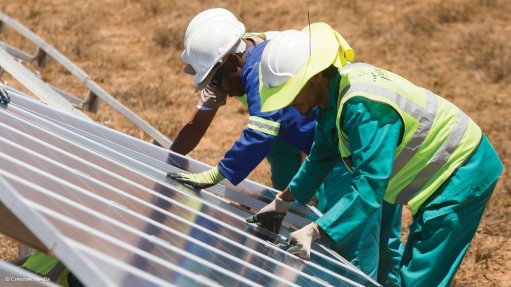
SMALL-SCALE GROWERS The joint cane supply projects, which will be implemented by TSB, are set to benefit the redevelopment and sustainability of small-scale growers
 

SMALL-SCALE GROWERS The joint cane supply projects, which will be implemented by TSB, are set to benefit the redevelopment and sustainability of small-scale growers