Japan now unlikely to phase out nuclear power


International Atomic Energy Agency (IAEA) director-general Yukiya Amano is of the opinion that the new Japanese government of Shinzo Abe (elected by a landslide vote in December) will not phase out the country’s use of nuclear power.
Following the accident at the Fukushima Daiichi nuclear power plant in March 2011, caused by a devastating earthquake and tsunami (which left more than 15 000 people dead and nearly 5 000 missing), the previous Japanese government decided to phase out all nuclear power by the 2030s. In his election campaign, Abe stated he would retain nuclear power.
“In January I went to Japan and had meetings with Prime Minister Abe and other Ministers,” Amano said in response to a question from Engineering News Online. “My impression is that the leaders of the new government are more supportive of nuclear power. They are not talking about phasing out nuclear power by [the] 2030s. This is not the policy being considered by the Abe government. But it will take them time to establish a new energy policy. I don’t think that a new energy policy will be announced shortly.”
In an address to the Institute for Security Studies, in Johannesburg, on Friday, Amano noted that Japan had 55 nuclear power reactors of which only two were currently in operation. “Because of this, Japan has to buy oil. For the first time in 30 years, the country recorded a deficit [because it had to import oil]. The deficit is increasing. Pollution is increasing [because of the great increase in the use of oil, to fuel reactivated old power plants]. Japan is seriously considering changing course.”
He also reported that the IAEA will soon be sending a mission to Japan to help with the decontamination of the area affected by the Fukushima accident. He added that there were now more than 60 technologies available for decontamination.
“The Fukushima accident was a very strong wake-up call on safety,” affirmed Amano. “The IAEA is implementing an action plan to increase safety. Nuclear power is safer now than before Fukushima. All countries with nuclear reactors have conducted stress tests.” The ability of existing nuclear power plants to survive extreme events has been reviewed worldwide and additional safety features have been introduced.
“Fukushima Daiichi was crippled by a great earthquake and tsunami. But there were also human errors. There was a weak regulator,” he warned. Strong regulators are required to ensure nuclear safety.
Article Enquiry
Email Article
Save Article
Feedback
To advertise email advertising@creamermedia.co.za or click here
Research Reports

Projects

Latest Multimedia
Showroom
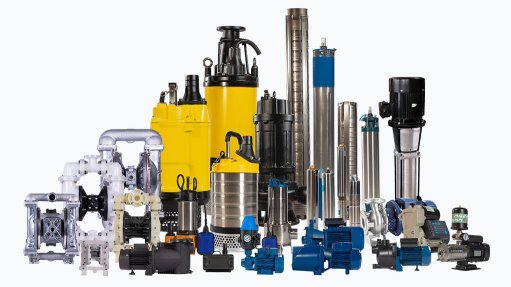
AxFlow AQS Liquid Transfer (Pty) Ltd is an Importer and Distributor of Pumps in Southern Africa
VISIT SHOWROOM
Columbus Stainless, based in Middelburg, Mpumalanga, is Africa’s only producer of stainless steel flat products. In addition, Columbus is the only...
VISIT SHOWROOM

Press Office
Announcements
What's On
Subscribe to improve your user experience...
Option 1 (equivalent of R125 a month):
Receive a weekly copy of Creamer Media's Engineering News & Mining Weekly magazine
(print copy for those in South Africa and e-magazine for those outside of South Africa)
Receive daily email newsletters
Access to full search results
Access archive of magazine back copies
Access to Projects in Progress
Access to ONE Research Report of your choice in PDF format
Option 2 (equivalent of R375 a month):
All benefits from Option 1
PLUS
Access to Creamer Media's Research Channel Africa for ALL Research Reports, in PDF format, on various industrial and mining sectors
including Electricity; Water; Energy Transition; Hydrogen; Roads, Rail and Ports; Coal; Gold; Platinum; Battery Metals; etc.
Already a subscriber?
Forgotten your password?
Receive weekly copy of Creamer Media's Engineering News & Mining Weekly magazine (print copy for those in South Africa and e-magazine for those outside of South Africa)
➕
Recieve daily email newsletters
➕
Access to full search results
➕
Access archive of magazine back copies
➕
Access to Projects in Progress
➕
Access to ONE Research Report of your choice in PDF format
RESEARCH CHANNEL AFRICA
R4500 (equivalent of R375 a month)
SUBSCRIBEAll benefits from Option 1
➕
Access to Creamer Media's Research Channel Africa for ALL Research Reports on various industrial and mining sectors, in PDF format, including on:
Electricity
➕
Water
➕
Energy Transition
➕
Hydrogen
➕
Roads, Rail and Ports
➕
Coal
➕
Gold
➕
Platinum
➕
Battery Metals
➕
etc.
Receive all benefits from Option 1 or Option 2 delivered to numerous people at your company
➕
Multiple User names and Passwords for simultaneous log-ins
➕
Intranet integration access to all in your organisation