Creamer Media’s Engineering News Online
Advanced Search


We have detected that the browser you are using is no longer supported. As a result, some content may not display correctly.
We suggest that you upgrade to the latest version of any of the following browsers:
         
close notification
powered by
GOLD 1371.70 $/ozChange: 4.61
PLATINUM 1439.50 $/ozChange: 1.50
R/$ exchange 9.93Change: 0.03
R/€ exchange 13.31Change: 0.00
 
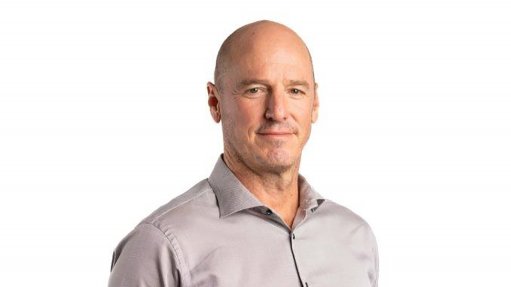
Dr Kemm is a nuclear physicist and is the CEO of Stratek Business Strategy Consultants. He also sits on the board of advisers of the Committee for A Constructive Tomorrow, based in Washington DC - stratek@pixie.co.za
 
 
Given tempo of technological change, we cannot predict far into the future with certainty
 
27th July 2012
TEXT SIZE
Text Smaller Disabled Text Bigger
 

Afew days ago, I went flying in a helicopter in the evening. It was a beautiful evening, with still, clear air. We flew with the doors open and the view was fantastic. It was not my first helicopter flight but, before the flight, as I stood on the runway, looking at the large helicopter, I thought to myself: “How can those four skinny lightweight rotor blades lift that helicopter?” I am a scientist, so I know the maths and physics of how it works, but just looking from a layperson’s perspective, so to speak, it seemed impossible that the helicopter should fly.

There are many other such wonders in our modern world. When I watch a large passenger jet like a Boeing 747 take off, it looks as if it should not fly. The body is huge and the wings seem too small. If the wave of a magic wand could bring the Wright brothers back for a few minutes to see such a Boeing, they would never believe that the aircraft would fly.

These days, people just accept that modern technological wonders are reasonable. They accept without question and without marvelling at why or how these things work at all. For example, think of cellphones. When cellphones first came out, people were amazed that you could sit in a car and talk while the car moved.

Now people just expect to be able to stand under their favourite tree and make a phone call to anywhere in the world. To the average person, it just feels reasonable. Think of the World Wide Web and the Internet. It is mind-boggling that one can type something like ‘elephant migration’ into the Google search engine and in under a second have tens of thousands of articles to look at.

Consider the global positioning system, or GPS – how can a few satellites way up in space direct my car to a specific house and this does not cost me R1-million? What is more, these few satellites direct millions of vehicles all over the world at the same time.

We have a telecommunications cable that runs from the KwaZulu-Natal coast and runs 17 000 km under the ocean through the Red Sea and comes out in London. It is a fibre-optic cable. This means that it is a thin glass tube not much bigger than a human hair and a laser beam is passed through this cable, carrying telephone conversations – thousands of them. Mind blowing!

Only a few years ago, people would never have believed that cellphones were possible – or GPS or fibre-optic cables . . . the list goes on. But now such technological advances are just accepted as reasonable. Only five or ten years ago, many of these technologies were in the realm of science fiction and magic.

Scientific advance continues, and this means that, in five to ten years, we will have everyday technologies that in this day and age seem like science fiction and magic.

It is, therefore, dangerous to predict too far into the future with any certainty.

This is why companies need to carry out scenario planning. Scenario planning is a case of looking into the future and trying to project the extremes of what may happen so that one can guide the company on a growth path. A standard future projection, which is what most companies do, is known as the default scenario. It is also known that the default scenario is always wrong, so most companies plan on a future projection which is wrong the day they start.

I do scenario planning with organisations and it is always amazing and interesting to witness what comes out of such an exercise when it is done correctly. The participants are always surprised, and then pleased, when they see what they have been able to produce.

The future will have so many unexpected turns, combined with technology advances that will be like magic spells falling on companies that one really needs to stay awake to not be caught out.

Edited by: Martin Zhuwakinyu


To subscribe to Engineering News's print magazine email subscriptions@creamermedia.co.za or buy now.

FULL Access to Mining Weekly and Engineering News - Subscribe Now!
Subscribe Now Login
 
 
Topics in this article