Creamer Media’s Engineering News Online
Magazine in Store Now!
Advanced Search
 
 
We have detected that the browser you are using is no longer supported. As a result, some content may not display correctly.
We suggest that you upgrade to the latest version of any of the following browsers:
         
close notification
powered by
GOLD 1252.31 $/ozChange: 6.67
PLATINUM 1556.00 $/ozChange: 24.00
R/$ exchange 7.22Change: 0.08
R/€ exchange 9.27Change: 0.07
 
 
INVESTMENT CLIMATE
SA fares well against peers in investment climate study – Davies
0 COMMENTS  |  
ADD A COMMENT PRINT
 
 
29th July 2010
TEXT SIZE
Text Smaller Disabled Text Bigger
 

South Africa had an opportunity to further improve its business environment, as perceptions towards the country were changing in its favour, Trade and Industry Minister Dr Rob Davies said on Thursday.

Speaking at the launch of the World Bank's ‘Second Investment Climate Assessment', the Minister highlighted that South Africa's overall business environment had fared well against those of countries in its peer group.

In terms of ease of doing business, South Africa was now ranked third among its peers, preceded only by Thailand and Malaysia and followed by Chile and Mexico in fourth and fifth position.

There has also been a significant change in the issues that local businesses saw as major constraints.

When the first assessment had been done in 2003, businesses were most concerned about macroeconomic instability, labour regulations, a shortage of skills and crime.

In the latest survey, which was done in 2008, only crime had remained on the top four constraints list.

Electricity, corruption and access to finance had been the other three top constraints pointed out by businesses.

World Bank country director for South Africa Ruth Kagia noted that the report, along with a number of other recent research data, has shown that South Africa had performed better than its peers in many aspects.

However, some major gaps, which were holding back the realisation of the country's real economic potential, existed, she added.

Iqbal Sharma, deputy director-general of the Department of Trade and Industry (DTI), which participated in compiling some aspects of the assessment, agreed that while the overall trend line was moving in the right direction, this was not happening fast enough.

Davies conceded that some real challenges remained.

The assessment had shown that South Africa's peers had done better in terms of value-added exports, in terms of allocative efficiency, and in attracting foreign direct investment.

Davies stated that there was a real structural imbalance in the country, with the consumption-driven sectors growing at twice the speed of the production-driven sectors.

Similarly, credit and finance was allocated more predominantly towards the consumption-driven sectors, rather than the production-driven sectors of the economy.

Further, small and medium-sized enterprises (SMEs) were still struggling to access finance, while the country should also promote the growth of the informal sector of the economy.

Sharma said that the SME sector would grow more labour and it was thus important to grow this sector.

Davies said that South Africa would use this report as a basis for learning from its peers, which all had successful development finance institutions (DFIs).

He added that the role of DFIs in South Africa should be expanded to ensure more affordable access to finance for businesses in the industrial sector.

The DTI would also critically look at its small business support programmes to ensure that an appropriate support model was developed and that those aspects that worked could be taken forward and its impact expanded.

Overall, Davies said that South Africa's second Industrial Policy Action Plan and the development of a new growth path strategy for the country would assist in dealing with these challenges.

The new growth path strategy that was being developed for the country was especially important, given that the country could not continue to oscillate between unemployment levels of between 22% and 25%, despite the economy growing to some extent.

South Africa's unemployment rate had again increased marginally to 25,3% in the second quarter of this year.

Meanwhile, Davies highlighted that the assessment was, to some extent, based on perceptions, with some additional analysis from the World Bank.

This meant that some perceptions could have changed since the survey was conducted in 2008.

In general, foreign perception was that while returns on foreign direct investment in Africa were good, Africa remained very risky.

The perceptions were, however, undergoing some change and the continent had to build on that, said Davies.

The 2010 FIFA World Cup, in particular, was expected to have improved the perception around South Africa somewhat.

Edited by: Mariaan Webb


Hide Comments  
 
This article contains no Comments


All comments must be approved by our editors, click here to read the editorial guidelines for comments. Please allow some time for our editors to approve your comment after posting.
 * Required Fields

image
image
 *


image
image
 *
 

image
image
 

Verification Image

image
image
 * Please enter the text you see in the above image.


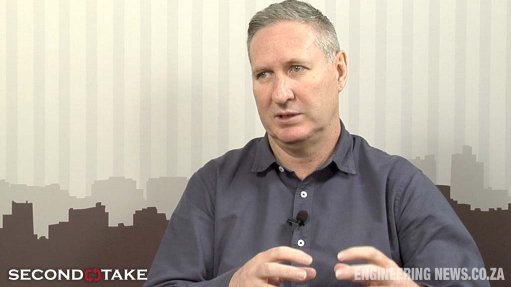
Trade and Industry Minister Dr Rob Davies discusses challenges facing South Africa's economy (Videographer: Nicholas Boyd; Editing: Darlene Creamer)
This video is licensed under a Creative Commons License
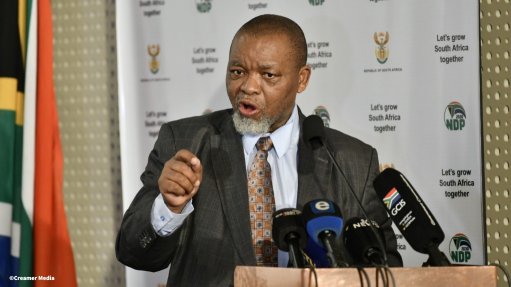
Trade and Industry Minister Rob Davies
 
Picture by: Duane Daws
Trade and Industry Minister Rob Davies
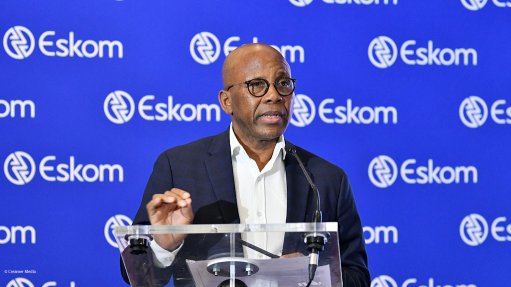
Ruth Kagia
 
Picture by: Duane Daws
Ruth Kagia
 
Previous Play Next