Creamer Media’s Engineering News Online
Advanced Search


We have detected that the browser you are using is no longer supported. As a result, some content may not display correctly.
We suggest that you upgrade to the latest version of any of the following browsers:
         
close notification
powered by
GOLD 1385.30 $/ozChange: -0.63
PLATINUM 1467.50 $/ozChange: -19.00
R/$ exchange 9.51Change: -0.10
R/€ exchange 12.24Change: -0.17
 
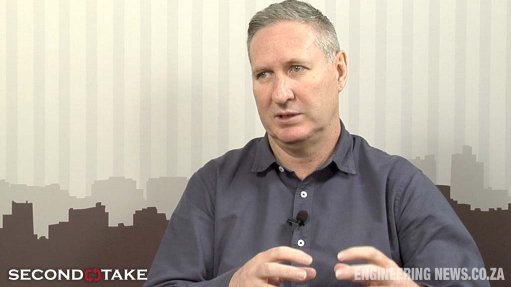
Dr Kemm is a nuclear physicist and is the CEO of Stratek Business Strategy Consultants. He also sits on the board of advisers of the Committee for A Constructive Tomorrow, based in Washington DC - stratek@pixie.co.za
 
 
Introducing learners to chess at an early age will help boost matric results
 
9th November 2012
TEXT SIZE
Text Smaller Disabled Text Bigger
 

Newspapers recently announced the start of the annual matric exam trek for thousands of school learners. One could virtually hear the drum roll as the country waits, with bated breath, to see what the results will be. It is not only the matric pass rate that is of interest, but also the subjects that learners take. Maths and science are always the big-ticket subjects.

To drive our industrial economy, the nation needs people who can actually ‘do’ things; we need people who can think, people who can analyse and come to conclusions.

When some company employs an individual, that company will be investing in what that individual will do for the company in the future – it will not simply be buying what the person knows.

A person who is a walking encyclopaedia but cannot put any of that information to good use is not of much use to the company. It is output that makes money. At times, the public asks why the matric pass rate is not higher. Teachers tell me that, frequently, they can see, in the first couple of weeks of the school year, which learners in the class will not pass. It is rather immoral to allow a person to study all year, knowing that he or she is virtually certain to fail. But what can a teacher do? The substandard learners should not have been promoted into matric, in the first place. In fact, in many cases, the learners should not have been promoted from Grade 8 or even from Grade 6. Whose fault this may be is not the issue – the issue is what should be done about this now.

A major problem with many learners, of all social backgrounds, is that they have poor problem-solving abilities. Therefore, when they confront maths or science, it is like a brick wall to them – they do not know where to begin.

Problem-solving training should start at an early age; preschool, in fact. Some children are lucky enough to have parents who have hobbies or interests that address these issues. The children then ‘look and learn’ and so acquire problem-solving skills.

Problem solving is actually a process whereby the brain attempts different solution paths until one is found that fits the conditions presented. I teach MBA part time and, believe me, there are students in a first-year MBA class who battle to problem-solve issues. It has been found internationally that an excellent way of addressing problem solving in children is to teach them to play chess.

Two years ago, a chess trust was established in Pretoria to bring chess to children across the country. The programme is called Moves for Life (MFL), and I am one of the MFL trustees. The project has spread steadily and we are now proud of the fact that 20 000 children attend our weekly chess classes. We have trained over 300 teachers, and now have chess in schools from Richards Bay to Nkandla, Cape Town, Pretoria, Midrand, Hotazel, Balfour and more. This programme comprises components that address the needs of children, covering the entire spectrum from preschool to matric.

Chess is also a registered approved sport in schools, and this gives us easy access to schools across the country. President Jacob Zuma, who is a keen chess player himself, is our patron. We have also received sup- port and encouragement from Basic Education Minister Angie Motshekga. Both the President and Deputy President Kgalema Motlanthe have asked MFL to roll out our chess programme into all areas where this is possible. International chess star, grandmaster Garry Kasparov, also joined up with us and we brought him to South Africa to see for himself what we are doing. We will be bringing him back again in the near future.

The MFL school programme starts with learners in Grade 1. They really enjoy the game and have great fun – they have no idea that they are also learning the basics of maths and science as they play. It is quite amazing to see the enthusiasm of the Grade 1 learners and, for that matter, even preschoolers at places such as the small Mvelaphanda preschool, in Tembisa, run by the enthusiastic founder, Olga. Our project in this school is featured on YouTube . . . look it up!

Measurements in some of our classes, which have run for a couple of years, have shown a 30% improvement in school performance in children who undergo our chess programme. Chess requires a player to think out a number of potential moves and to think out possible moves that the opponent may make in response, and then to think out ‘plan B’ in the event that ‘plan A’ is blocked by the opponent’s moves. It is these same brain pathways that are used to tackle a maths problem.

Chess is an inexpensive way of tackling the maths and science problem, and also has the advantage of a short implementation time. In essence, the MFL programme is complete in its design and has already been tested for some years on a limited scale. It has produced positive results. Implementation requires enthusiastic and dedicated people, but one should not be so naïve as to assume that it does not need some money too. We are dependent on financial donations to be able to operate in various places and are grateful to our donors, which include BHP Billiton, GE, Great Basin Gold, iwyze, Bright Edge and Spoor & Fisher, besides others.

We are grateful to our sponsors, but we need much more to grow even faster. After all, it is the industrialists and business entities that will be the beneficiaries of improved analytical performance in the workplace.

Chess is easy to learn and play, contrary to some popular belief. Of course, playing to national or international standard is another story, but it is not top-flight players that the MFL initiative is trying to produce – it is the ordinary learner with a brain that needs enhancement. Unless the brains of many thousands of learners are ‘rewired’ at an early age, we are not likely to see any dramatic change in matric results in the foreseeable future.

If we work directly with the fundamental human material, then those brains are likely to be much more absorbent when they come face to face with maths and science in classrooms. Our learners will see a shining light when their brains ‘pattern-match’ chess moves and tactics with those needed for tackling maths and science.

Edited by: Martin Zhuwakinyu


To subscribe to Engineering News's print magazine email subscriptions@creamermedia.co.za or buy now.

FULL Access to Mining Weekly and Engineering News - Subscribe Now!
Subscribe Now Login